
Compost tea has a loyal following among organic gardeners, and it is easy to see why. You take a scoop of compost, steep it in water, and pour the dark liquid around your plants. However, the claims around it have grown much faster than the evidence behind it. This guide gives you a simple compost tea recipe based on university extension advice. It also explains what the tea can realistically do, where the science is weak, and how to use it safely around food crops.
What Is Compost Tea?
Compost tea is a liquid made by soaking finished compost in water. The water pulls out some of the nutrients and microbes, and the result is a brown liquid that you can pour on soil. UConn Extension describes two main types of this liquid, and the difference lies in how they are made.
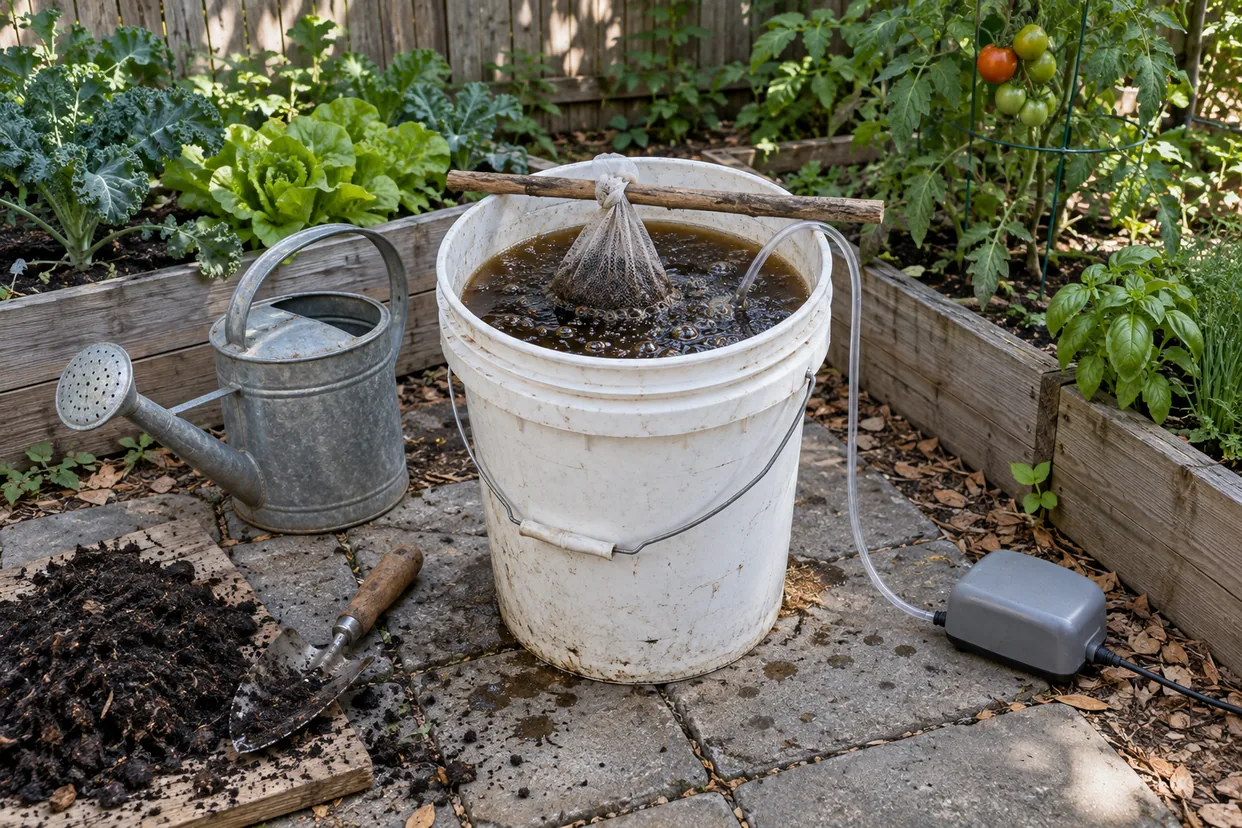
The older type is a compost watery extract. In this method, a shovelful of compost sits in a bucket of water for a few days, with no pump and no stirring machine. According to UConn, its main benefit is as a dilute source of nutrients. The newer type is actively aerated compost tea, often called AACT. Here, an air pump bubbles oxygen through the water while the compost steeps. The aim is to grow more of the aerobic microbes that live in good compost.
What a Compost Tea Recipe Can and Cannot Do
Sellers of brewers and bottled teas often promise lush foliage, bigger harvests and plants free of disease. In a column for Washington State University, horticulturist Linda Chalker-Scott reviewed the published research behind those promises. Her conclusion was clear: the science is not strong for aerated tea on crop plants. In two field studies, aerated teas failed to prevent leaf diseases on apples and potatoes, and disease actually got worse.
Illinois Extension reaches a similar verdict on the same question. It notes that studies often find no effect on disease control. It also points out that plants cannot absorb all the nutrients through their leaves. Part of the problem is variety, because every batch of tea holds a different mix of microbes. As a result, no two brews are quite the same, and results are hard to repeat.
That does not make compost tea useless. As a mild liquid feed for the soil, it can add a little nutrition and some microbial life. However, it is not a fungicide, and WSU notes that no compost tea is registered as a pesticide in the United States. If a disease is already spreading, our guide to powdery mildew treatment covers methods with better evidence.
The Compost Tea Recipe
This compost tea recipe follows the simple home setup that UConn describes in its guide. It makes about 5 gallons, which is plenty for a small vegetable garden.
What You Need for This Compost Tea Recipe
- A clean 5-gallon bucket.
- An aquarium air pump with a bubbler stone and a length of plastic tubing.
- About 1 pound of good, finished compost, roughly 4 cups.
- A mesh bag, an old pillowcase, cheesecloth or a pair of clean pantyhose.
- Unchlorinated water, such as stored rainwater.
- A stick or long spoon for stirring.
Step 1: Prepare the Water
Chlorine kills microbes, and the whole point of the tea is to keep them alive. For that reason, UConn calls unchlorinated water essential. Rainwater works best, and our guide to rainwater harvesting for vegetable gardens explains how to collect it. If you only have tap water, many gardeners let it stand uncovered for a day, or run the pump in it for a few hours. However, this does not remove chloramine, which some water systems use instead of chlorine.
Step 2: Bag the Compost
Next, fill the mesh bag with about 4 cups of compost and tie it closed. You can also add the compost loose and strain the liquid later, as UConn suggests. The bag simply makes the cleanup easier at the end of the brew. Then place the bag in the bucket and fill the bucket with water, leaving a few inches of space at the top.
Step 3: Aerate and Brew
After that, drop the bubbler stone to the bottom of the bucket and switch on the pump. UConn describes a brewing time of 2 to 3 days, with a stir and a quick rearrangement of the bubblers a couple of times a day. Keep the bucket in the shade, away from direct sun and freezing nights. Throughout the brew, the tea should smell earthy, like a forest floor.
Step 4: Strain and Use It Quickly
When the brew is done, lift out the bag and let it drain. Its contents can go straight back onto a garden bed. Then use the tea as soon as possible. UConn warns that tea left standing turns anaerobic, and less desirable microbes take over. One sniff will tell you, because a sour or rotten smell means the batch has gone bad. Pour a spoiled batch onto a compost pile rather than onto your plants.
Skip the Molasses in Your Compost Tea Recipe
Many recipes online add molasses, sugar or fruit juice to feed the microbes. It sounds harmless, but the research points the other way. UConn notes that these sugars may encourage the growth of Salmonella and E. coli. WSU goes further, describing teas enhanced with molasses and kelp as a documented source of these human pathogens.
For that reason, the safest compost tea recipe uses only compost and water. Aeration alone is not a safeguard, since Illinois Extension notes that lab studies have not shown it prevents harmful bacteria. Also avoid raw manure in the bag, and use only compost that has fully finished. If you are unsure how to tell when compost is ready, our guide to composting for beginners walks through the signs.
How to Apply Your Compost Tea Recipe Safely
The way you apply the tea matters as much as the way you brew it. A few simple rules keep the benefits and cut the risks.
Apply It to the Soil
Pour the tea around the base of your plants, much as you would water them. UConn notes that home gardeners often use it full strength as a soil drench. Alternatively, dilute it by half or more before use. Soil is where compost microbes naturally live, so this is also where they are most likely to do some good.
Keep It Off Edible Leaves Near Harvest
Spraying tea on leaves is popular, but it carries the most risk. Illinois Extension raises serious health concerns about spraying compost tea on fruits and vegetables. Therefore, never spray it on crops you are about to pick, such as lettuce, herbs or ripe tomatoes. If you do apply it near edible plants, pour it on the soil and keep it off the parts you eat. As always, wash your harvest well before eating it.
Clean Your Equipment
Rinse the bucket, the tubing and the bubbler after every batch, and let them dry fully. Old residue can hold the wrong microbes and spoil the next brew. In addition, wash your hands after handling the tea, just as you would after handling compost or manure.
When to Use Your Compost Tea Recipe
Timing makes a modest tea more useful. Early spring is a good moment, when you prepare beds and the soil is waking up after winter. A dose of this compost tea recipe at planting time can help transplants settle into fresh soil. Later in the season, a light application every two to four weeks is enough for most vegetable beds. There is no benefit in pouring it every day, because the soil can only use so much at once.
Water the beds first if the soil is dry, so the tea soaks in instead of running off. Likewise, apply it in the cool of the morning or evening, when the sun is not too strong. Container plants can benefit too, since their potting mix runs out of nutrients faster than garden beds do. In that case, dilute the tea by half and pour it slowly until it drains from the bottom. However, remember that tea is a supplement, not a replacement for good soil. If your beds are thin or tired, our guide to soil amendments explains what to add first.
Compost Tea Recipe Variations
Once the basic compost tea recipe works for you, a few variations are worth trying. Each one keeps the same rule of compost and water only.
Worm Castings Tea
Worm castings make a fine, rich base for tea. Use them in place of compost in the same compost tea recipe, in the same amount, and follow the same steps. Our guide to using worm castings explains where castings help most. If you keep worms at home, an indoor worm bin can supply a small, steady amount.
Non-Aerated Tea
If you do not own a pump, you can still make the older compost watery extract. Put the compost in a bucket of water and stir it once or twice a day for a few days. Then strain it and use it the same day on the soil. UConn values it mainly as a dilute source of nutrients, so treat it as a light feed rather than a cure.
Bokashi Tea Is Not Compost Tea
The liquid drained from a bokashi bucket is sometimes called tea too, but it is a different product. It comes from fermenting food scraps, it is very acidic, and it must be diluted heavily before use. Our guide to bokashi composting explains how to handle it.
A Simpler Alternative to Any Compost Tea Recipe
Both WSU and Illinois Extension make the same practical point. The easiest way to deliver the benefits of compost is to put the compost itself on the soil. Illinois suggests spreading a 1 to 2 inch layer around your plants and letting rain make the tea for you. Meanwhile, WSU lists the proven benefits of organic mulch, from better moisture and fewer weeds to less disease.
This approach costs less, needs no electricity and carries no brewing risk. It also builds long-term soil health, which a liquid cannot do on its own. Our guide to organic garden mulch shows how to use compost as part of a mulch layer. For the bigger picture, see our guide to soil organic matter.
If your plants need a real nutrient boost, a tested fertilizer will do more than a tea. Our guide to organic plant food compares the main options. Meanwhile, compost tea can stay what it truly is, a gentle extra rather than a miracle cure.
Frequently Asked Questions
How long does compost tea last after brewing?
Not long at all, so plan to use it on the day you finish brewing. UConn advises using aerated tea quickly, because it begins to turn anaerobic once the pump stops. A few hours is best, and anything that smells sour should go on the compost pile.
Does compost tea prevent plant diseases?
The evidence says it usually does not. Reviews from WSU and Illinois Extension found that most studies showed no disease control, and some showed more disease. Good spacing, healthy soil and resistant varieties remain the better defense.
Can I use tap water for a compost tea recipe?
You can, but chlorine harms the microbes you want to grow. Rainwater is the best choice for any compost tea recipe, since it contains no chlorine. Otherwise, let tap water stand for a day before brewing, and remember that this does not remove chloramine.
Getting Started With Your First Compost Tea Recipe
A compost tea recipe is simple: good compost, clean rainwater, a pump and a couple of days. Brew it without sugars, apply it to the soil, and use it right away. Above all, keep your expectations realistic. The tea is a mild feed and a nice way to stretch a small amount of compost. However, the compost itself, spread on the soil and worked in over the years, does far more of the work.
Check out the author’s book here: The Year-Round Vegetable Garden for Beginners.

Leave a Reply