
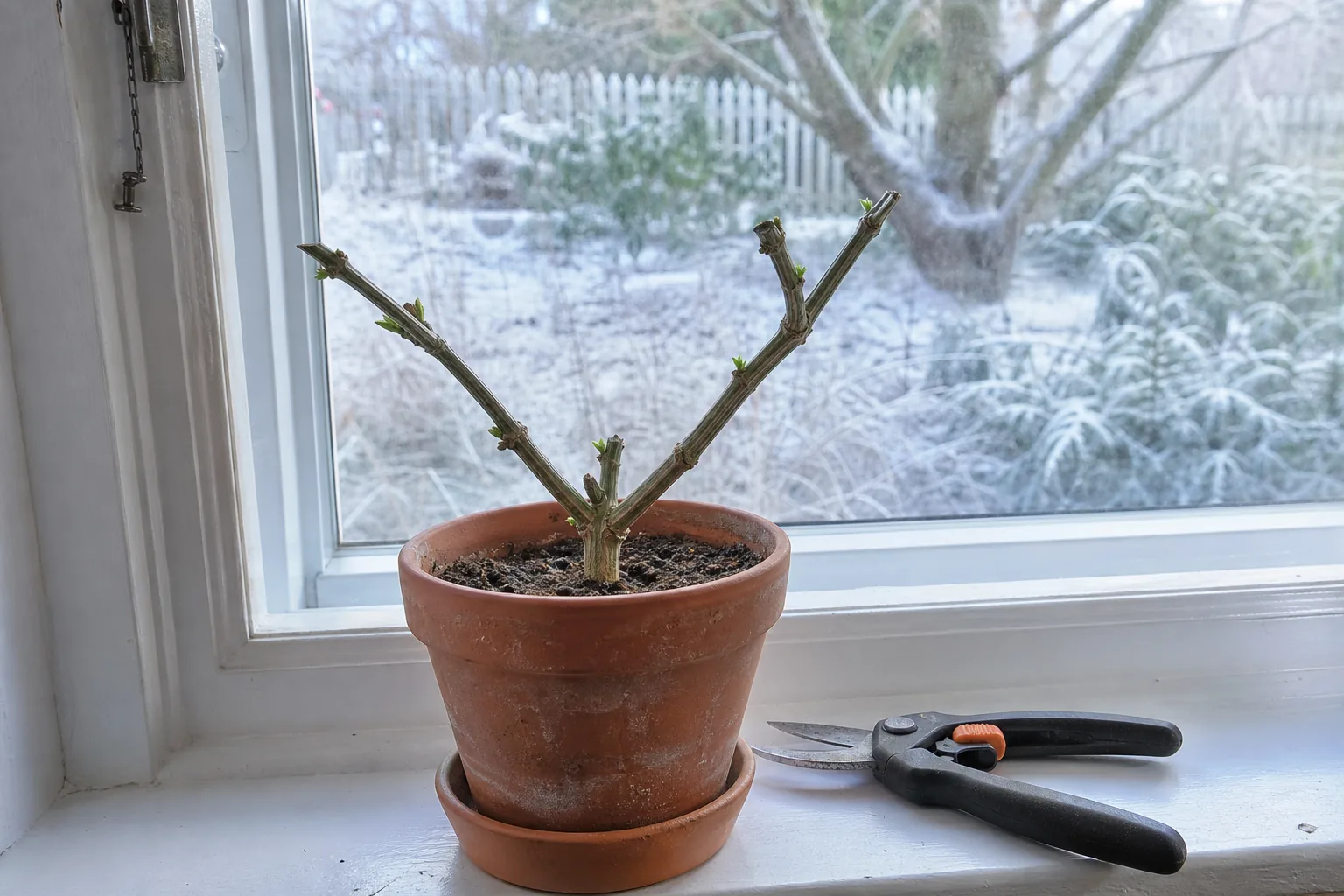
Overwintering peppers is one of the few ways a home gardener can cheat the calendar. A pepper plant is not an annual by nature. In its native range it lives for years as a small shrub, and it only dies in our gardens because frost kills it in fall.
Bring that same plant indoors for the winter and it can go back out in May as a woody, established bush. It flowers weeks earlier than a spring seedling and often carries a much heavier crop. For slow hot peppers that barely ripen before frost, that head start can decide the whole season.
Overwintering Peppers at a Glance
| Best candidates | Hot peppers, chiles and small-fruited types; healthy, pest-free plants |
| When to dig | Before the first frost, when nights drop toward 50 °F |
| Pot size | 1 to 3 gallons, just big enough for the trimmed root ball |
| Pruning | Cut back to a Y-shaped frame 6 to 8 inches tall |
| Winter temperature | 50 to 60 °F for dormancy, warmer for active growth |
| Light | A cool window, or a grow light a few hours a day |
| Water | Only when the top two inches of soil are dry, roughly every 2 to 3 weeks |
| Back outside | After the last frost, once nights stay above 55 °F |
Why Overwintering Peppers Is Worth the Trouble
Peppers are slow, and many hot varieties need 80 to 120 days from transplant to ripe fruit, on top of the 8 to 10 weeks they spend as seedlings indoors. In a short summer, the first red chiles arrive just as the first frost does.
A pepper you keep over winter skips all of that. Its main stems are already thick and woody, and its roots are established. When it goes back outside it puts out leaves and flowers at once, instead of spending a month building a frame. Gardeners who keep a plant for a second year often report fruit by early summer.
There is a second reason, too: a rare or favorite variety that you grew from expensive seed, or one given to you by a friend, can be kept alive for years. The Oregon State University Extension guide covers the warmth and sun peppers need to thrive, which is exactly what you are trying to stretch.
Which Plants to Keep
Not every pepper plant is worth the space, so choose carefully before you dig.
Hot peppers overwinter best. Chiles, habaneros, Thai peppers and other small-fruited types have tougher stems and handle a hard pruning well. The Capsicum chinense peppers such as habanero are the slowest to ripen, so they gain the most. Large bell peppers can be kept too, but they tend to be less vigorous in their second year. The guide to growing peppers explains the species and their different speeds.
Pick healthy plants only. Leave behind any plant with spotted leaves, a virus mosaic, or a heavy load of aphids. Indoors, a sick plant will not recover, and its problems will spread to anything growing nearby.
Container plants are the easiest. A pepper already grown in a pot needs no digging at all, so you simply prune it and carry it inside.
When to Bring Pepper Plants Indoors
The right moment for overwintering peppers is before the first frost, not after it. Peppers suffer chilling damage below about 50 °F, even without frost, and a plant that has sat through several cold nights comes indoors already weakened.
Watch the forecast in October and November. When nights start dropping toward 50 °F, it is time to bring the plants in. If you have not checked your local average, the post on your first frost date shows how to find it. By the second week of November, most gardens in zones 5 to 7 are already past it, so keep a floating cover or old sheet at hand for a surprise cold night.
Harvest every fruit first, ripe or not, before you pick up the spade. Green chiles are still perfectly usable, and a plant carrying fruit will not settle into winter rest.
Digging and Potting Up for Overwintering Peppers
- Water the bed the day before. Moist soil holds together around the roots and makes digging easier.
- Dig a wide circle about 8 to 10 inches from the stem, then lift the plant with as much root as you can manage.
- Shake or wash off most of the garden soil. This removes insect eggs and soil pests that you do not want indoors.
- Trim the roots so the root ball fits a pot of 1 to 3 gallons. Peppers tolerate root pruning well.
- Pot up in fresh, sterile potting mix, never garden soil. The post on the best soil for container vegetables explains why air space in the mix matters more than nutrients.
A pot with drainage holes is essential. A pepper sitting in wet soil through a cool winter will rot at the roots long before spring.
Pruning Before Overwintering Peppers
This is the step that scares first-timers, and it is the step that makes overwintering peppers work. Cut the plant back hard, leaving only the main stem and two or three strong branches in a Y shape. Each branch should be about 6 to 8 inches tall and carry a few leaf nodes.
Remove every leaf, flower and fruit that remains. Leaves are where aphids and spider mites hide, and a bare frame gives pests nowhere to live. The plant will also lose water far more slowly without leaves, which is what you want in a dim room.
Use clean, sharp pruners and make each cut just above a node. New shoots will grow from those nodes in spring.
Pro Tip: Before you bring the pot indoors, spray the stems and the soil surface firmly with water, then check the undersides of any remaining leaves with a hand lens. Five minutes on the porch saves weeks of pest control inside.
Two Ways to Keep Peppers Through Winter
There are two approaches to overwintering peppers, and they need different rooms.
Dormancy. This is the simpler method and the one most gardeners use. Keep the pruned plant in a cool place, 50 to 60 °F, with low light. An unheated spare room, a cool basement near a window or an attached garage that stays above freezing all work. The plant barely grows and simply survives until spring. Illinois Extension describes the same basic rules for any potted plant carried through winter: cool, bright enough, and kept on the dry side.
Active growth. Keep the plant warm, 65 to 75 °F, under a strong grow light for 12 to 14 hours a day, and it will keep growing and may even set fruit. This takes more space, more electricity and more pest vigilance. It is closer to an indoor herb garden than to storage.
For most people, dormancy is the better choice. Winter days are short, and pollinators are absent, so a pepper grown actively indoors rarely produces much.
Care While Overwintering Peppers Indoors
Watering is the only regular job, because a dormant pepper uses very little water. Water only when the top 2 inches of soil are dry, or switch to bottom watering so the surface stays drier. In a cool room that may be once every two or three weeks. Water at the base until a little drains out, and empty the saucer.
Do not fertilize a dormant plant, because feeding pushes soft, pale growth that the low light cannot support.
Check the stems every week or two. Small green shoots may appear during the winter, and that is fine. If they stretch thin and pale, move the pot to brighter light or pinch the shoots back.
Pests That Follow Peppers Inside
Even a clean plant can carry a few passengers indoors, so watch for these:
- Aphids clustering on new shoots. Wipe them off or rinse the plant in the sink, and see the post on aphid control methods for heavier cases.
- Spider mites, which thrive in warm, dry indoor air. Fine webbing and speckled leaves are the signs, and the guide on how to get rid of spider mites covers the fix.
- Fungus gnats in soil that stays wet. Let the surface dry out between waterings, and the adults soon disappear.
If you use an insecticidal soap or any other treatment, follow the product label for rate and frequency. Always test it on one stem first and wait a day before spraying the rest.
Warning: Hot pepper plants contain capsaicin in the fruit and some in the stems. Wear gloves when you prune them and keep your hands away from your eyes. Store the fruit and trimmings out of reach of pets and small children.
Waking the Plant in Spring
About six to eight weeks before your last frost, move the plant into a warmer, brighter spot. Start watering a little more often, and give it a weak dose of balanced fertilizer when new leaves appear. Pot up into a slightly bigger container if roots are circling the bottom.
The plant will fill out quickly once it feels warmth and light again. Once nights stay above 55 °F, harden it off for a week just as you would a seedling. The post on hardening off plants explains how much outdoor exposure to add each day. Then plant it back in the garden or a large container, and expect flowers within weeks.
What Goes Wrong When Overwintering Peppers
| Problem | Cause | Fix |
|---|---|---|
| Plant dies in December | Root rot from overwatering in a cool room | Water only when the top 2 inches are dry, use drainage holes |
| Aphids or mites explode indoors | Pests carried in on leaves | Strip all leaves and rinse the plant before bringing it in |
| Long, pale, weak shoots | Too warm for the light available | Move it somewhere cooler or add a grow light |
| Leaves drop right after moving | Normal shock from digging and a new spot | Wait; a healthy stem will leaf out again in spring |
| Stems wrinkle and turn brown | Too dry for too long, or frost damage | Scratch the stem; green under the bark means it is still alive |
| Plant slow to regrow in spring | Moved outside before nights warmed | Wait until nights stay above 55 °F |
Overwintering Peppers Questions Answered
Can you overwinter bell peppers?
Yes, but bell peppers are usually the least rewarding type to keep. Hot peppers and chiles tend to recover faster and crop more in their second year.
How long can a pepper plant live?
Several years, if you protect it from frost each winter. Many gardeners keep favorite chile plants going for three or four seasons.
Do overwintered peppers produce more?
Usually they fruit earlier, because the frame and roots are already built. Yields in the second year are often higher, although they drop off as the plant ages.
Can I overwinter peppers in a garage?
Yes, if it never freezes and there is some light from a window or a small grow light. Keep the temperature above 45 °F at all times.
A Head Start That Costs Nothing
Overwintering peppers takes one afternoon in November and a watering can every couple of weeks. In exchange you get a plant that is months ahead in May, and a favorite chile that does not have to start from seed every year. Choose your healthiest plant, cut it back without fear, and give it a cool, bright corner until spring.
Check out the author’s book here: The Year-Round Vegetable Garden for Beginners.


Leave a Reply