
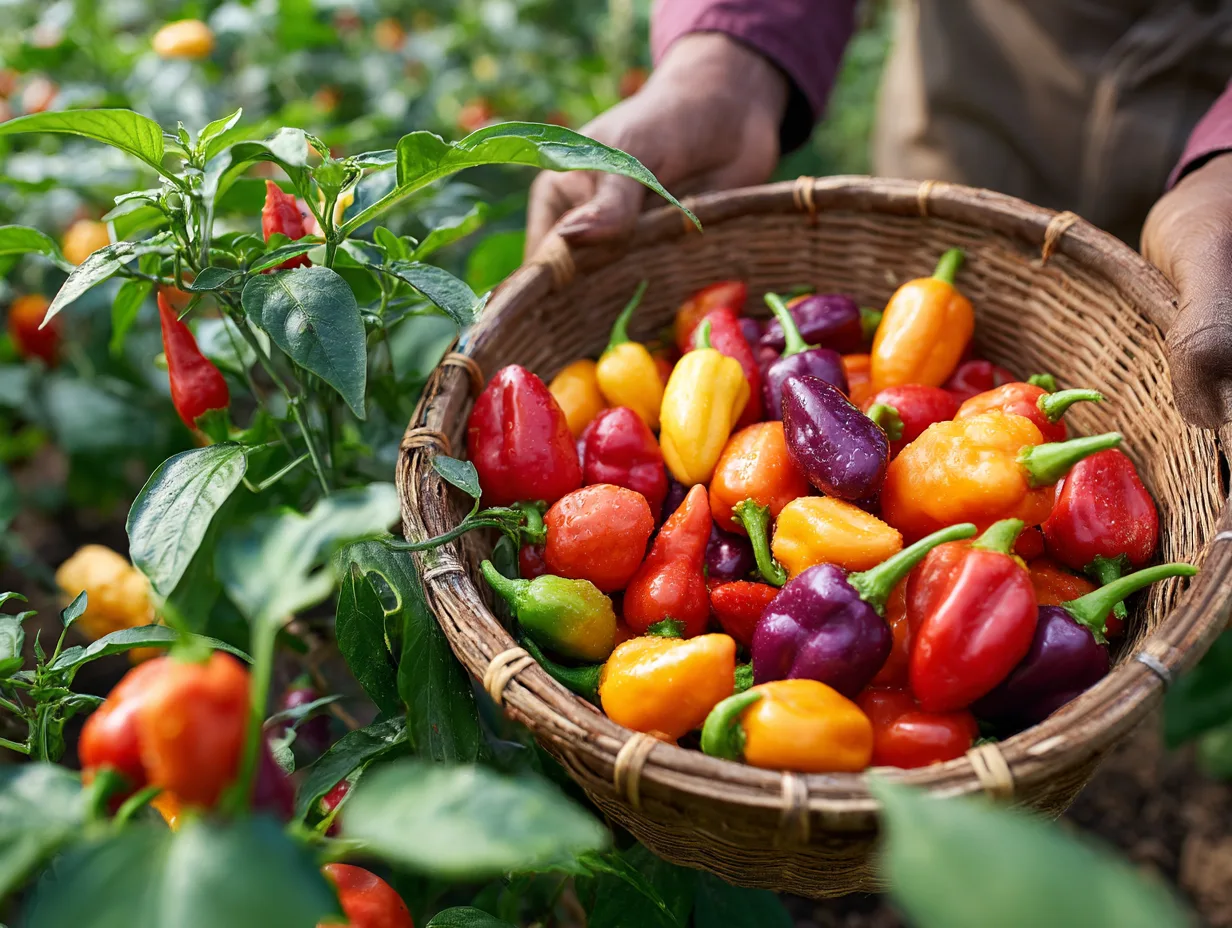
Peppers were the crop that humbled me in my first years of gardening. My first summer in the garden I set out six stocky plants in early May, watered them faithfully, and harvested four small green bells in September. The tomatoes growing beside them, meanwhile, buried me in more fruit than we could eat. It took me a few seasons to understand the problem, and it was not my thumb. Peppers simply want a warmer, slower, more patient season than almost anything else in the vegetable bed.
Once you accept that, growing peppers turns out to be straightforward. The plants ask for heat, steady moisture, and an early start under lights. Then they ask you to leave them alone for a few weeks. Get those four things right, and a dozen plants will carry you from July into October, in every color and heat level you care to grow.
In this guide I cover the families of peppers worth your bed space, the sun and soil they need, and the indoor seed starting that decides the whole season. After that come transplanting, watering, feeding, and the two or three problems that make gardeners give up. Finally, I explain when to pick, because that single decision changes the flavor more than anything else you do.
Growing Peppers at a Glance
| Question | Short answer |
|---|---|
| Start seed indoors | 8 to 10 weeks before the frost-free date; 12 weeks for super-hots |
| Germination soil temperature | 80 to 85 °F on a heat mat |
| Set out when | Nights steadily above 55 °F and soil above 65 °F |
| Sun | 6 hours minimum, 8 to 10 hours far better |
| Soil pH | 6.0 to 6.8, well drained, moderately fertile |
| Spacing | 18 to 24 inches in the row, rows 30 to 36 inches apart |
| Water | 1 to 2 inches a week, delivered evenly |
| Days to harvest | 70 to 85 days from transplant; 90 to 120 for habaneros |
| Yield | 2 to 8 pounds per 10-foot row |
| Storage | 45 to 50 °F at high humidity, one to three weeks |
Growing Peppers: Sweet, Hot, and Exotic
Every pepper in your garden belongs to the genus Capsicum, and most belong to a single species, Capsicum annuum. Illinois Extension lists five domesticated species of pepper in all. Bells, jalapeños, poblanos, and cayennes all belong to that one species. Habaneros and ghost peppers are C. chinense, and they need a longer, hotter run to ripen.
One myth about growing peppers deserves killing before we go any further. Planting a sweet pepper next to a hot one will not make the sweet pepper hot. Crossing shows up only in the seed, and therefore only in next year’s plants if you save it. I cover the whole question in vegetable cross pollination.
Sweet Peppers for the Kitchen
Sweet varieties carry a recessive gene that blocks capsaicin, so they register zero on the Scoville scale.
- Bells. Blocky, thick-walled, and best for stuffing. They reach mature green in 70 to 80 days, then need another two or three weeks to color up.
- Italian frying types. Thin walls, sweet flesh, and far more productive than bells in a short summer.
- Pimentos. Heart-shaped, deep red, and the sweetest thing in my garden by late August.
Hot Peppers and the Scoville Scale
Heat lives in the white membrane, not in the seeds, which surprises most people. A bell sits at 0 Scoville units, a jalapeño between 2,500 and 8,000, and a Carolina Reaper somewhere past two million.
- Gentle heat. Poblanos and Anaheims add warmth without pain.
- Everyday heat. Jalapeños, serranos, and cayennes are the workhorses, and they set fruit reliably in a cool summer.
- Serious heat. Habaneros and Scotch bonnets taste fruity under the burn, but they want 90 to 120 days after transplanting.
Wear gloves when you pick, seed, or chop hot peppers, and keep your hands away from your eyes afterward. Illinois Extension warns that skin, nose, and eyes are easily irritated by handling hot varieties, and roasting super-hots indoors will clear a kitchen fast.
Growing Peppers That No Store Sells
Shishitos from Japan blister beautifully in a hot pan, and roughly one in ten carries a real kick. Padróns behave the same way, which is half the fun of eating them. Aji charapita, a pea-sized Peruvian pepper, is fruity and fierce at once. None of these appear in a supermarket, which is reason enough to grow them.
Growing Peppers: Sun, Soil, and Site
Before a single seed goes into a tray, decide where the plants will live. Growing peppers successfully begins with that one choice more than any other. Peppers are less forgiving about site than any other summer crop I grow.
Sun Is Not Negotiable
Maryland Extension puts the floor at six hours of direct light and the ideal at eight to ten. A bed that gets dappled afternoon light will give you tall, thin plants and almost no fruit. Spend twenty minutes with a garden sun map before you commit the space.
Soil and pH for Growing Peppers
Peppers want a loose, well-drained soil of moderate fertility. They hate wet feet more than almost any other summer crop. Penn State notes that the plants are not especially fussy about acidity, though the best yields come between pH 6.0 and 6.8. A simple check with the method in soil pH testing takes an evening and settles the question for years.
Work two or three inches of finished compost into the bed before planting. Beyond that, restraint pays off far better than generosity does. Rich nitrogen gives you a magnificent green bush and very few peppers.
Beds, Rows, or Containers
All three work, and the choice mostly depends on your soil.
- In-ground rows suit gardeners who already have loose, warm, fast-draining soil.
- Raised beds warm earlier in spring and drain better, which is exactly what this crop wants. The proportions in my raised bed soil mix have never let me down.
- Containers of five gallons or more suit patios and short seasons. Use a real potting mix, not garden soil; the reasons are in best soil for container vegetables. Expect to water those containers every single day in July.
Growing Peppers from Seed Indoors
Growing peppers from seed is where most seasons are won or lost. Peppers grow slowly, and they cannot be direct sown outside USDA zones 9 and warmer. If you are still weighing the two approaches, direct sow vs transplant lays out the trade-offs for every crop.
Eight to Ten Weeks Before the Last Frost
Maryland recommends starting seed 8 to 10 weeks before the frost-free date, and twelve weeks for the slowest cultivars. For most of us that means February or early March. Mark it once on a seed starting calendar and you will never have to recalculate it again.
Heat Beats Everything Else When Growing Peppers
Pepper seed germinates at soil temperatures of 80 to 85 °F, and it sulks below that. On a windowsill at 65 °F you may wait three weeks and lose half the tray. On a seedling heat mat the same seed comes up in seven to ten days. If I could keep one piece of indoor equipment, it would be the mat.
Keep the seed-starting mix evenly moist, and never let it go soggy. A humidity dome helps until the first seedlings break the surface. Then take it off immediately, because trapped damp air invites damping off disease.
Light, Thinning, and Stocky Plants
The moment a seedling appears, move the tray off the mat and under strong light. Hang a shop light one or two inches above the leaves and run it sixteen hours a day. Skimp here and you will be reading leggy seedlings by the middle of March.
Thin to one seedling per cell once the first true leaves open; the technique is in how to thin seedlings. Penn State advises keeping the room below 80 °F but above 50 °F while the plants bulk up, and choosing transplants with three to five sets of true leaves.
Growing Peppers Outdoors: Hardening Off and Transplanting
Ten days before the plants go out, begin the transition outdoors. Set the plants in filtered light for an hour on the first day, out of the wind, and lengthen the stay each afternoon. Bring them in at night and whenever the temperature drops below 60 °F. My full routine for that week and a half is in hardening off plants.
Wait for the Soil, Not the Calendar
Here is the rule that fixed my own pepper patch. Do not plant until nights hold above 55 °F and the soil has passed 65 °F. Maryland is blunt about the consequence of rushing: plants set into cold ground will just sit there. Cold-stunted peppers never fully recover, and a neighbor who waits two weeks longer will pass you by July.
Space plants 18 to 24 inches apart in the row, with 30 to 36 inches between rows. In a wide bed, 14 to 18 inches in all directions works well. Water them in with a dilute starter fertilizer high in phosphorus. Illinois suggests a tablespoon per gallon, one cup per plant.
One more trick, and it feels wrong the first time: pinch off any flowers and pinhead fruit in the first two weeks after transplanting. The plant then spends that energy on roots and leaves, and it repays you tenfold in August.
Growing Peppers Through Summer: Water, Mulch, and Food
Even Moisture, Every Week
Peppers need one to two inches of water a week, and evenness matters more than volume. Dry spells cause blossom drop, small fruit, and blossom-end rot. Soak the root zone deeply instead of sprinkling daily, and water at soil level in the morning. A soaker line or the drip tape installation I use handles this without thought, and the broader principles sit in efficient watering techniques.
Soggy soil is the other common failure with this crop. Yellowing lower leaves and a sour smell are the early signs of overwatering.
Mulch Once the Soil Is Warm
Wait until the ground has genuinely warmed, then lay two or three inches of straw, shredded leaves, or dry grass clippings. The mulch holds moisture, blocks weeds, and evens out soil temperature, which is precisely what prevents blossom-end rot. The rest of my reasoning about timing is in organic garden mulch.
Feed After the First Fruit Sets
Peppers have a medium appetite for fertilizer, and no more than that. Feed once at planting, then side-dress after the first peppers form, using roughly a quarter pound of a balanced fertilizer per ten feet of row. Homemade options work equally well, and compost tea or a homemade organic plant food will carry a small patch through the season.
Stems turn brittle as the fruit load builds through August. A short stake or a tomato cage keeps a heavy plant from splitting in an August thunderstorm.
When the Flowers Fall and No Fruit Sets
This is the complaint I hear most, and it is almost never the gardener’s fault. Peppers set fruit when nights sit between 60 and 75 °F. Above 95 °F by day, or above 75 °F at night, the pollen goes sterile and the blossoms drop. Maryland reports that very hot evenings slow or stop pod production outright.
There is no cure for that pause, only shade and patience. Light afternoon shade cloth helps in the South, and the strategies in protecting plants from extreme heat buy you a week. When the weather moderates in late August, the plants flower again and set a heavy fall crop.
Blossom-end rot is the other scare that arrives in midsummer. The sunken black patch is a calcium uptake failure caused by uneven watering, not a disease and rarely a soil deficiency. Steady moisture and mulch solve it, as I explain in identifying and preventing blossom-end rot.
Pests and Diseases When Growing Peppers
Peppers share most of their troubles with tomatoes, so rotate the whole nightshade family on a three-year cycle. The three-year plan I follow is in vegetable crop rotation.
- Aphids cluster on new growth and leave sticky honeydew below. A hard spray of water usually ends it; the rest of my toolkit is in aphid control methods.
- Spider mites arrive in hot, dry weather and leave fine webbing under the leaves. Catch them early, as in how to get rid of spider mites.
- Hornworms strip a plant overnight, leaving bare stems and a scattering of dark droppings. Hand-picking in the early morning works better than anything in a bottle.
The rest of what I do about that caterpillar is in tomato hornworm control, since the pest is the same one. Most diseases are bacterial or fungal, and both spread on wet leaves in crowded rows. Proper spacing, morning watering, and clean transplants prevent nearly all of it. Inspect nursery plants for leaf spots and stem cankers before you buy them.
Growing Peppers: Harvesting at the Right Moment
You may pick a pepper at almost any size you like. What changes with size is the flavor and the texture.
Green bells are mature but not ripe: firm, three to four inches long, faintly bitter. Leave that same fruit on the plant and it turns red, yellow, orange, or purple, grows markedly sweeter, and gains vitamin A and C. The cost is time, and a plant carrying ripe fruit slows its production of new ones. I therefore pick half my bells green and let the rest color up.
Hot peppers follow the same rule, only more so than the sweet ones. Heat and flavor both intensify as the pod colors, so patience pays twice.
Cut the fruit off, and never pull it from the branch. Pepper branches snap easily, so use pruners and leave a half inch of stem. Before a killing frost arrives, pull whole plants and hang them upside down in a garage to finish ripening; check your first frost date in early September so the date does not surprise you. For the general signals across the garden, see harvesting vegetables.
Fresh peppers keep only one to three weeks at 45 to 50 °F in high humidity, so freeze, dry, or pickle the surplus within days.
Frequently Asked Questions
Why are my pepper plants small and yellow in June?
They almost certainly went out into the garden too early. Cold soil and nights below 55 °F stall the roots, and the leaves yellow. Next spring, wait for 65 °F soil, or warm the bed with black plastic for two weeks first.
How many pepper plants should I grow?
Penn State suggests four to six plants per person for fresh eating, and 6 to 12 if you plan to freeze or pickle. A dozen plants of mixed types feed most families comfortably.
Can I grow peppers in a pot?
Yes, and they often do better there than in the open ground. Use a five-gallon container at minimum, a real potting mix, and expect daily watering in midsummer. Compact varieties bred for container growing work best of all.
Do peppers need a heat mat to germinate?
Not strictly necessary, but the difference in germination is dramatic. Seed at 80 to 85 °F sprouts in about a week; the same seed at room temperature may take three weeks and come up unevenly.
Why do my bell peppers have thin walls?
Heat stress and irregular water are the usual causes, sometimes with too little potassium. Mulch, water deeply once or twice a week, and side-dress after the first fruit sets.
Should I pick peppers green or wait for color?
Pick some of each through the whole of the season. Green fruit keeps the plant producing, while ripe fruit tastes far better. I harvest steadily through July, then let the September crop color up on the plants.
Growing Peppers Is Worth the Patience
Growing peppers rewards a gardener who plans in February and waits in May. Start the seed early, give it real heat, hold the transplants back until the soil is genuinely warm, then water evenly and feed lightly. The plants will do the rest, and they will keep doing it until frost. For a closer look at the most popular member of the family, see my guide to bell pepper cultivation.
Check out the author’s book here: The Year-Round Vegetable Garden for Beginners.
Leave a Reply