

As the gardening season approaches, every vegetable grower faces one basic decision: direct sow vs transplant. Do you plant your seeds directly into the garden soil, letting them sprout and grow in their final location? Or do you start them indoors, nurturing them into small, sturdy seedlings before moving them outside? This choice is more than a matter of preference. In fact, it can shape your garden’s success, timing and overall yield.
The debate over direct sow vs transplant doesn’t have a single right answer. The best method depends on the specific type of vegetable, your climate’s growing season, and your personal gardening style. Once you understand the strengths and weaknesses of each technique, you can make the best choice for every seed you plant. As a result, your garden becomes more efficient and productive from the very first day. Below, this guide breaks down everything you need to know to master both methods.
Direct Sow vs Transplant: The Two Methods
First, before we dive into a detailed comparison, let’s clearly define our terms. This is a foundational concept for anyone new to Starting a Vegetable Garden: A Checklist for Newbies.
- Direct Sowing (or Direct Seeding): This is the practice of planting seeds directly into the garden bed where they will grow for their entire life cycle. It is the most straightforward and natural method, mimicking how plants grow in the wild.
- Transplanting: This method involves starting seeds in a controlled environment, typically indoors in small pots, trays, or soil blocks. The seeds germinate and grow into young plants (seedlings), which are then carefully moved into the garden once they are strong enough and the outdoor conditions are favorable.
The Case for Direct Sowing: Simplicity and Strength
To begin with, direct sowing is often favored for its simplicity. It requires no special equipment, no indoor growing space, and less hands-on time in the early weeks of the season.
Advantages of Direct Sowing
- No Transplant Shock: Plants that are sown directly in their final spot never have to experience the stress of being moved. Instead, they establish a deep root system from the very beginning.
- Less Labor and Equipment: You can skip the entire process of indoor seed-starting, which means no need for grow lights, heat mats, seedling trays, or bags of sterile seed-starting mix. It saves both time and money.
- Ideal for Root Vegetables: This is the non-negotiable rule of direct sowing. Vegetables that are grown for their taproot—like carrots, radishes, parsnips, and beets—do not tolerate having their roots disturbed. Transplanting them almost always results in stunted, forked, or deformed roots, as Growing Carrots: Secrets for Soil Prep and Sweet Harvests explains.
- Promotes Natural Vigor: In addition, seedlings that grow outdoors from day one adapt to changing conditions, which can make them hardier.
Disadvantages of Direct Sowing
- Shorter Growing Season: By waiting for the soil to be warm enough to plant seeds, you effectively shorten your growing season. This is a significant drawback in colder climates where every frost-free day counts.
- Less Control Over Germination: You are at the mercy of Mother Nature. A sudden cold snap, a heavy downpour that washes seeds away, or a prolonged dry spell can all lead to poor or spotty germination.
- Increased Vulnerability: Tiny, newly-sprouted seedlings are highly vulnerable to pests like slugs, snails, and cutworms. Moreover, they face intense competition from fast-growing weeds.
- Inefficient Use of Space: When you direct sow, you often plant more seeds than you need and then thin them out to the proper spacing, as How to Thin Seedlings: When, How, and How Far Apart shows. Meanwhile, the empty space stays unproductive until the seeds come up.
Because of this uncertainty, it pays to sow only seed you trust. Old packets are the usual weak link, so try a Seed Germination Test: How to Check If Your Old Seeds Will Grow before the season starts.
Direct Sow vs Transplant: Crops to Sow Outdoors
- Root Vegetables: Carrots, radishes, beets, parsnips, turnips. (Essential)
- Legumes: Peas, beans. (They have fragile roots and germinate quickly in warm soil.)
- Corn: It grows fast and develops deep roots that dislike disturbance.
- Some Leafy Greens: Spinach, lettuce, and arugula grow so quickly that starting them indoors is often unnecessary.
- Many Squash and Melons: Plants in the cucurbit family, like zucchini, cucumbers, pumpkins, and watermelons, can be direct-sown after the last frost as they germinate and grow very quickly in warm soil.
The Case for Transplanting: Control and a Head Start
By contrast, transplanting is a strategic approach that allows gardeners to manipulate time and conditions to their advantage. Above all, it is the key to growing long-season crops in regions with short summers.
Advantages of Transplanting
- Extends the Growing Season: This is the number one reason to transplant. Indoor starts give you large, healthy plants ready to go out the moment the weather is right. This matters most for tomatoes, peppers and eggplants.
- Total Control Over Germination: An indoor setup allows you to provide the perfect temperature, moisture, and light for optimal germination, leading to a much higher success rate.
- Protection from Pests and Weather: Similarly, young seedlings are safe from outdoor threats during their most vulnerable stage. By the time they are transplanted, they are larger and more resilient.
- Precise Spacing and No Waste: You can plant your sturdy seedlings at the exact spacing required, eliminating the need for thinning and ensuring every inch of your garden is productive from day one.
If you choose to transplant, how long to grow them indoors depends on the crop. According to University of Maryland Extension, leafy greens need 2 to 4 weeks, cabbage and broccoli 4 to 6, tomatoes 5 to 6, and peppers, eggplant and onions 8 to 10. Similarly, UMD notes that tomatoes and peppers started outdoors may not have time to produce a harvest.
Plotting these dates on a Seed Starting Calendar: How to Plan Your Vegetable Gardening Year is essential for success. For crop-by-crop timing, the Seed Starting Calendar: How to Plan Your Vegetable Gardening Year goes further.
Disadvantages of Transplanting
- Risk of Transplant Shock: No matter how carefully you do it, moving a plant is stressful. This can set back its growth for a week or more. The risk can be minimized through proper handling and hardening off.
- Labor-Intensive and Requires Equipment: Transplanting is a significant commitment. It requires indoor space, trays, soil, labels, and often supplemental lighting and heat mats. It also involves the daily tasks of watering and monitoring your seedlings.
- “Hardening Off” is Mandatory: You cannot move seedlings directly from your cozy home to the harsh outdoor environment. They must be gradually acclimated over 7-14 days in a process called Hardening Off Plants: How Much Stress Is Enough. Skipping this crucial step can result in sun-scorched, wind-damaged, or dead plants.
Direct Sow vs Transplant: Crops to Start Indoors
- Long-Season Fruiting Crops: Tomatoes, peppers, eggplants. (Essential in most climates.)
- Brassicas: Broccoli, cauliflower, cabbage, Brussels sprouts. (Starting them indoors allows for precise timing for a spring or fall harvest.)
- Onions and Leeks: These are typically started indoors very early to give them time to form large bulbs.
- Herbs: Many herbs like basil, parsley, and oregano are easily started indoors.
- Vining Crops (Optional but Recommended): While cucurbits can be direct-sown, transplanting cucumbers, melons, and squash can give you a much earlier harvest, which is a major advantage.
Making the Final Decision: Direct Sow vs Transplant
So, how do you choose? In practice, the best gardeners use a combination of both methods. For example, Iowa State University Extension suggests direct seeding for crops that mature quickly, like radishes, or that are hard to transplant, like carrots, beets and turnips.
Iowa State also recommends planting some crops in succession, with new seeds or transplants every 7 to 14 days. That idea is the heart of Succession Planting: A Guide to Continuous Harvests.
Next, here are the key factors to consider:
- The Plant Itself: This is the most important factor. Does it have a sensitive taproot? Then you must direct sow. Does it require a very long, warm season to produce fruit? Then you must transplant (unless you live in a tropical climate).
- Your Climate’s Growing Season: Calculate the number of frost-free days you have, starting from your First Frost Date: How to Find Yours and Protect Your Crops. With a short season (90-120 days), transplanting is a necessity for many crops.
- Your Goals: Do you want the earliest possible tomato? Then you need to transplant. For a low-maintenance garden, however, focus on direct-sown beans, squash and lettuce.
- Your Resources: Be realistic about the time, space, and money you can invest. If you don’t have a sunny windowsill or the budget for a grow light setup, focus on vegetables that excel with direct sowing.
Ultimately, settling direct sow vs transplant crop by crop and mastering the journey Reading Seed Packets: A Guide to Understanding Maturity Timelines involves knowing when to let nature take its course and when to give it a strategic, helping hand. In short, the direct sow vs transplant debate is not about finding a single winner, but about building a flexible skill set. Once you know the strengths of each method, you can tailor your approach for every vegetable. In the end, that sets your garden up for a healthy and bountiful season.
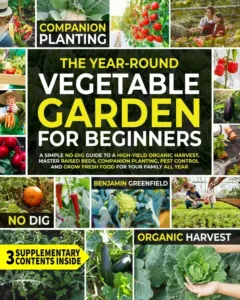
Check out the author’s book here: The Year-Round Vegetable Garden for Beginners.
Leave a Reply