
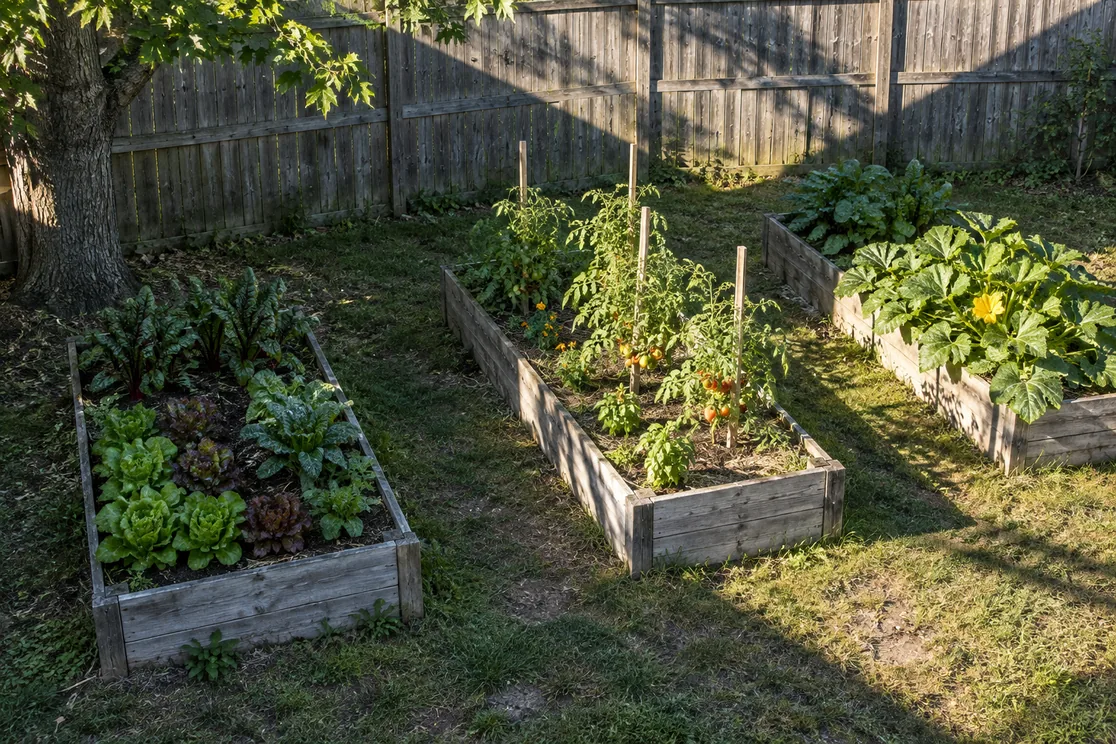
Most gardeners guess how much sun a spot gets, and most of them guess high. A bed that looks bright at lunch may lose the sun at two o’clock behind a fence or a maple. A Garden Sun Map replaces that guess with a count. Instead of shading the yard in colors, you record how many hours each spot spends in direct sun. Those hours are what the plants care about. Once you have that number for every bed, choosing what to grow where becomes a matter of reading a list rather than hoping.
Garden Sun Map at a Glance
| Question | Short answer |
|---|---|
| What does the map measure? | Hours of direct sun for each spot in the garden. |
| How many checks in a day? | One every hour, from morning until the sun drops behind cover. |
| When should I map? | In late spring after the trees leaf out, then again in midsummer. |
| How much sun do tomatoes need? | Rutgers says at least 8 hours for fruiting crops. |
| What grows in 3 to 4 hours? | Leafy greens such as lettuce, spinach, chard and kale. |
| What grows in heavy shade? | Nothing productive, according to Iowa State. |
Why Hours Beat Snapshots
The classic advice is to look at the yard in the morning, at noon and in the afternoon, then color the sunny parts. That method looks sensible, but it has a hidden flaw that costs gardeners whole harvests. Three checks cannot tell a spot with 4 hours of sun from one with 7. Both can look sunny at noon and shady at 9 a.m. Yet those two spots suit completely different crops, and the difference shows up only at harvest.
Plants respond to the total dose of light they receive over a day. A tomato in 5 hours of sun will grow, flower and set a few fruits. It looks healthy, yet it produces far less than it should. Meanwhile, the gardener blames the variety or the fertilizer and changes both the following year. An hourly count exposes the real cause in one afternoon. It also costs nothing beyond a pencil, a sheet of paper and a day at home. Better still, the same count works for a balcony, a patio or a large backyard plot.
How Much Sun Each Crop Needs
The extension guides agree on the broad rule and differ a little on the details. Iowa State University Extension says most vegetables require at least 6 hours of direct sun each day to produce a good crop. Rutgers Cooperative Extension splits the numbers by the part of the plant you eat.
- Fruiting crops need at least 8 hours, according to Rutgers. That group covers tomatoes, peppers, squash, cucumbers and melons.
- Root crops such as carrots, beets and radishes need 5 to 6 hours.
- Leafy crops need the least. Rutgers puts them at 4 to 5 hours, while Iowa State says leafy greens manage with 3 to 4.
The gap between those last two figures is worth understanding. Lettuce in 3 hours of sun grows slowly but still gives a harvest, whereas lettuce in 5 hours grows faster and fills out. In other words, the lower number is where a crop survives, and the higher number is where it performs.
Iowa State also sorts shade into three grades, which helps when you name the darker spots on your map. Its guide to edible plants in shady areas calls 4 to 6 hours light shade, 2 to 4 hours moderate shade, and under 2 hours heavy shade. It adds that no vegetable, fruit or herb will be productive in full shade. That line is worth remembering when a shady bed tempts you in spring. A few leaves of lettuce may appear there, but the effort rarely pays back the seed and the water.
Making a Garden Sun Map, Step by Step
You need a sheet of graph paper, a pencil, a phone and one clear day. A weekend day works best, because the job means stepping outside every hour.
Step 1: Draw the Plot as a Grid
Sketch the garden from above, roughly to scale. Let one square of paper stand for a square yard or a square meter of ground. Mark north with an arrow in one corner of the sheet, using the compass on your phone. Then add everything that can cast a shadow: the house, fences, sheds, trees, hedges and a neighbor’s garage. Tall objects on the south and west sides matter most in the Northern Hemisphere, because the sun travels across the southern sky.
Step 2: Check Every Hour
Start about an hour after sunrise and go out once an hour until the whole plot is in shade. At each visit, put a tally mark in every square that sits in full, direct sun. Filtered light under a tree does not count as a full hour, so give it half a mark or a small dot instead.
Photos help a lot here, especially on a busy day when you miss a visit. Stand in the same spot each time and take a picture of the plot. At the end of the day, the photos let you check a square you forgot to mark.
Step 3: Add Up the Marks
When the plot falls into shade, count the tallies in each square. The total is the number of sun hours that spot gets on that date. Next, write the number inside the square and circle it. Finally, draw a line around the squares with 8 or more, another around 6 to 7, and another around 3 to 5.
You now have a Garden Sun Map that says something precise. That corner is not “sunny”; it gets 9 hours. That strip by the fence is not “part shade”; it gets 4.
When to Draw Your Garden Sun Map
The date you choose changes the answer, for two reasons. Deciduous trees are bare in early spring, so a bed that looks sunny in March can sit in heavy shade by June. For that reason, map after the trees are fully in leaf, in late spring.
The sun also changes height through the year. It rides higher in summer and lower in spring and fall. As a result, shadows from buildings and fences grow longer at both ends of the season. Therefore a spot with 8 hours in July may have only 5 in April and September. A second Garden Sun Map in midsummer, or at least a few checks on the problem beds, shows how much the light shifts.
Those shoulder months are also when cool crops such as lettuce, peas and spinach do their growing. For that reason, the spring and fall numbers matter for greens and peas. The midsummer numbers matter more for tomatoes. The planting schedule covers which crops go in at which point of the year.
Reading Your Garden Sun Map
Start with the squares that score highest, since they are the rarest ground in most gardens. Give the best of them to the crops that need the most, which usually means tomatoes, peppers, squash and melons. Because those plants need 8 hours, even a small patch of 8-hour ground is precious, and intensive gardening shows how to fit more into it.
After that, fill the 5- to 7-hour squares with root crops, bush beans, peas and cabbage-family plants. Then put leafy greens and herbs such as parsley, mint and chives into the 3- to 5-hour squares. The list of shade tolerant vegetables goes further for those darker spots.
Anything under 2 hours is better used for a compost bin, a tool shed or a seating area. Growing food there mostly grows disappointment, however much compost and care you give it.
Morning Sun or Afternoon Sun
Two spots with the same number of hours can still behave differently. Morning sun dries the dew early, which helps against leaf diseases, and it arrives while the air is still cool. Afternoon sun, by contrast, comes with the hottest part of the day.
In a hot summer, lettuce and spinach often do better with morning sun and afternoon shade, since the heat pushes them to bolt. Tomatoes can also suffer sunscald on exposed fruit in a very hot afternoon. For those weeks, protecting plants from extreme heat covers shade cloth and other fixes. Mark on your map which side each spot gets its sun from, not just how much.
Garden Sun Map and the Shade You Create
A map drawn on bare ground misses the shade that the garden itself will make. A row of pole beans or trellised cucumbers stands 6 feet tall by midsummer. Its shadow can then fall across the bed next door. Rutgers advises placing the tallest crops on the north side of the garden so they do not shade lower plants.
The same logic applies to trellises. A vegetable trellis belongs on the north edge of a bed, where it catches full sun without stealing it from anything else. Similarly, sunflowers and corn go at the back rather than the front.
Rutgers also warns against planting near trees and shrubs, which compete with vegetables for water and nutrients as well as light. Roots can run well beyond the edge of the canopy, so a tree’s effect often reaches past its shadow.
Using the Map Year After Year
Keep the finished Garden Sun Map with your garden notes. Trees grow, neighbors build, and a sunny corner can lose an hour or two in a few years. A quick recount every few seasons keeps the map honest.
The map also shapes the whole plan of the plot. Vegetable garden layout builds on it to arrange beds and paths. When spring arrives, it becomes the first item on the spring garden preparation checklist.
A map also tells you where your season is shortest. The shady corners warm up late in spring and cool down early in fall, so they suit quick crops that are out of the ground before the shadows lengthen. If you want to stretch the sunny season at either end, growing under cover explains how row covers and cold frames add weeks.
Frequently Asked Questions
Can I use an app instead of paper?
Sun-path apps show where the sun will be on any date, which is useful for planning. However, they do not see your neighbor’s tree or the height of your fence. Counting the real shadows in your own yard remains the most reliable method.
Does a cloudy day spoil the count?
Yes, because you cannot see clear shadows. Wait for a bright day, or finish the missing hours on the next clear one.
What if my whole yard gets less than 6 hours?
Grow leafy greens, herbs and root crops in the best spots, and put fruiting crops in containers. A pot can follow the sun around a patio in a way that a bed cannot.
Does reflected light count?
A pale south-facing wall reflects both light and heat onto nearby plants, which helps in cool climates. It does not replace direct sun, though, so count only the hours of direct light on your map.
How often should I redraw the map?
Every few years, or after anything changes, such as a new fence, a fallen tree or a neighbor’s extension.
Garden Sun Map: The Short Version
A Garden Sun Map is a count of hours, not a sketch of bright and dark patches. Draw the plot as a grid, mark every square in direct sun once an hour on a clear day, and add up the marks. Do it after the trees leaf out, and check again in midsummer, because the sun sits lower in spring and fall.
Give 8-hour squares to tomatoes and other fruiting crops, 5 to 7 hours to roots and peas, and 3 to 5 to leafy greens. Leave the darkest corners for the compost bin. Then keep the map, because the light in a garden changes as the trees around it grow.
Check out the author’s book here: The Year-Round Vegetable Garden for Beginners.


Leave a Reply