
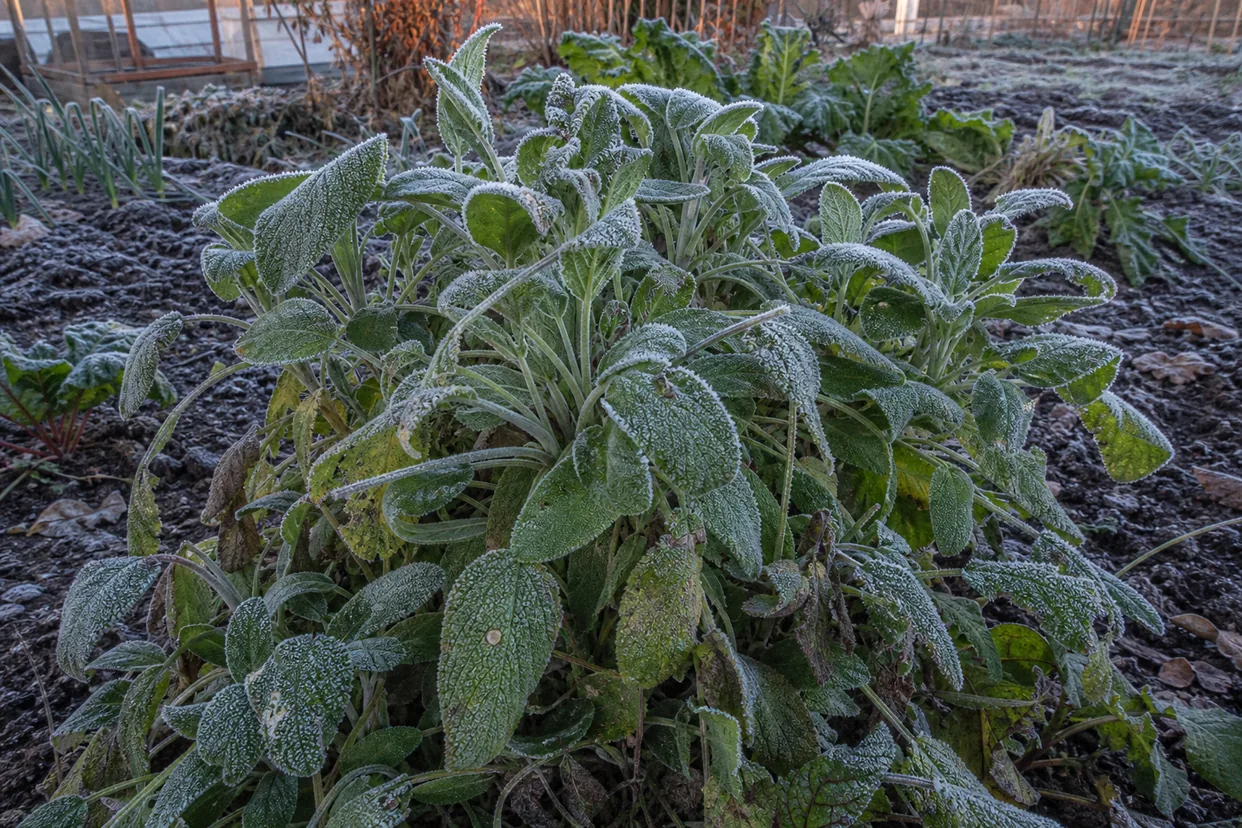
Growing sage is one of the easiest ways to put something from your own garden on the Thanksgiving table. The soft gray leaves flavor the stuffing, the turkey and the brown butter on the squash. Unlike basil or parsley, sage is still green and usable in late November in many gardens.
It is also a forgiving plant. Sage is a small Mediterranean shrub that likes sun, lean soil and dry feet. Most failures come from too much care, not too little. This guide covers how to start it, where to plant it, how to keep it from turning woody, and how to harvest and dry it for the holidays.
Growing Sage at a Glance
| Plant type | Woody perennial subshrub, Salvia officinalis |
| Hardiness | Reliable in zones 5 to 8, survives colder zones with protection |
| Sun | Full sun, at least 6 to 8 hours a day |
| Soil | Light, well drained, moderately fertile, pH 6.0 to 7.0 |
| Spacing | 18 to 24 inches between plants |
| Start from | Cuttings or nursery plants for speed, seed for low cost |
| Harvest | Light picking in the first year, full harvests from the second |
| Lifespan | Replace or renew plants every 3 to 4 years |
Why Sage Belongs in a Vegetable Garden
Sage is a perennial, so you plant it once and pick from it for years. It fits well at the end of a bed or in a border of edible perennials alongside chives, thyme and rhubarb. Once it is settled, it needs very little water and almost no feeding.
It also earns its place beyond the kitchen. When it blooms in early summer, the blue-purple flower spikes pull in bumblebees and other pollinators. The post on a pollinator friendly garden explains why a few flowering herbs near the vegetables help squash and beans set fruit.
In addition, gardeners have long planted sage near cabbage, broccoli and kale. Its strong scent is thought to confuse some cabbage pests. The evidence is mixed, but the pairing does no harm, and the guide to herb companion planting covers which herbs work best together.
Choosing a Variety for Growing Sage
Common garden sage is the hardiest type and the one to grow for cooking. It has gray-green, pebbly leaves and a strong, warm flavor.
Broad-leaf types such as ‘Berggarten’ have large, round leaves and rarely flower. As a result, they keep producing leaves all season and are excellent for drying.
Colored sages such as purple, golden and tricolor are beautiful and edible. However, they are less vigorous and less hardy, so treat them as annuals in cold zones.
Dwarf sage stays under a foot tall and is the best choice for pots and window boxes.
Pineapple sage is a different species. It is a tender plant with red flowers and a fruity scent, and it does not survive frost.
Starting Sage: Seed, Cuttings or Transplants
There are three ways to start growing sage, and each has its place.
From seed. Sage seed is cheap and germinates well, usually in 10 to 21 days at about 70 °F. Sow indoors 6 to 8 weeks before your last frost, just covering the seed with a fine seed starting mix. The catch is time. Illinois Extension notes that plants from seed can take a long time to reach a harvestable size.
From cuttings. This is the fastest route. In late summer, cut 4-inch tips from a healthy plant, strip the lower leaves and push them into moist, gritty mix. They usually root in four to six weeks. Therefore, one good plant can give you several new ones every year.
From transplants. A small nursery plant in spring is the simplest start for beginners. Named varieties are almost always sold this way, because they do not come true from seed.
Whichever route you choose, harden young plants off for a week before they go outside. The post on hardening off plants gives a simple daily schedule.
Where to Plant When Growing Sage
Sun and drainage decide almost everything when growing sage. Pick the sunniest, driest corner of the garden, somewhere water never sits after rain.
Sage prefers light, sandy or gravelly soil with moderate fertility. Rich, heavy soil makes soft, leafy growth with less flavor, and wet clay in winter is the main cause of death. If your soil holds water, plant sage in a raised bed or on a low mound. Work in some coarse sand or fine gravel before planting.
Set plants 18 to 24 inches apart, at the same depth they sat in the pot. Water them in well and keep the soil lightly moist for the first few weeks. After that, water only in long dry spells.
For mulch, gravel or a thin layer of shredded leaves works better than thick bark or straw. By contrast, a deep, damp mulch against the stems invites rot. The guide to organic garden mulch explains which materials stay drier around the crown.
Pro Tip: Plant sage at the edge of a bed, where the soil dries fastest and the plant is easy to reach with scissors on a cold November morning.
Growing Sage in Containers
A pot is a good answer to heavy soil or a small yard. Choose a container at least 10 to 12 inches wide with drainage holes, and use a light potting mix with extra grit. The post on the best soil for container vegetables explains how to keep air in the mix.
Clay pots suit sage well, because they dry out faster than plastic. Water when the top inch is dry, and feed lightly once or twice in summer.
On the other hand, potted sage is less hardy than sage in the ground, because the roots freeze more easily. In cold zones, move the pot against a sheltered wall in winter or into an unheated garage. You can also bring it indoors, where it joins an indoor herb garden on the brightest windowsill.
Pruning Sage So It Stays Leafy
Left alone, sage turns into a sprawling tangle of bare, woody stems with a few leaves at the tips. Pruning is the cure. Wisconsin Horticulture recommends cutting it back in spring and a few times during the season, to push young, flavorful shoots.
The main cut comes in spring, once new buds appear along the stems. Trim each stem back by about a third, always just above a pair of green buds. Do not cut into bare wood with no buds, because old sage stems rarely resprout.
Pinch off flower spikes in summer if you are growing sage mainly for the leaves. In addition, stop heavy cutting about six weeks before your first frost date. Soft new growth in October is easily damaged by the first hard freeze.
After three or four years, most plants get too woody to save with pruning. At that point, root a few cuttings and replace the old plant.
Harvesting Sage for Thanksgiving
In the first year, pick only a few leaves at a time, so the young plant can build its roots. From the second year on, you can harvest two or three times in summer, cutting stems back by up to a third.
For Thanksgiving, the timing is simple. Sage is evergreen in mild zones and semi-evergreen in colder ones. In many gardens you can pick fresh leaves the day before the holiday. Pick in the morning, once any frost has melted, and choose the youngest, softest leaves at the tips.
If your winters are harsh, make a larger harvest in early fall and dry it. That way you have a jar ready whether or not the plant survives a cold snap.
Drying and Storing Sage
Drying concentrates the flavor of sage, which is why dried sage is the classic stuffing herb. Tie small bunches of stems together and hang them upside down in a warm, dark, airy room. They are ready in about one to two weeks, when the leaves crumble easily.
Alternatively, lay single leaves on a screen or use a dehydrator on its lowest setting. Store the dried leaves whole in an airtight jar away from light. Crumble them only when you cook, because whole leaves keep their flavor much longer.
Fresh sage keeps for about a week in the fridge, wrapped in a damp paper towel. You can also freeze whole leaves flat on a tray, then pack them in a bag.
Warning: Sage oil contains thujone, which can be harmful in large amounts. Normal culinary use is safe. However, avoid concentrated sage oils and strong daily sage teas in pregnancy, and check with a doctor if you take seizure medication.
Winter Care When Growing Sage in the Ground
In zones 5 to 8, garden sage usually survives winter with no help, as long as the soil drains well. Cold alone rarely kills it, while cold combined with wet soil often does.
After the ground freezes, you can add a loose layer of evergreen boughs over the plant in colder zones. Avoid heavy wet mulch piled against the stems. Do not prune in late fall either, because the leaves and stems help protect the crown. Wait for spring and new buds before you cut.
What Goes Wrong When Growing Sage
| Problem | Cause | Fix |
|---|---|---|
| Plant dies over winter | Wet, heavy soil around the roots | Plant in a raised bed or add grit for drainage |
| Long, bare, woody stems | No spring pruning for several years | Cut back by a third each spring, replace old plants |
| White powder on leaves | Powdery mildew in crowded, humid spots | Space plants wider and thin dense growth |
| Weak flavor, soft growth | Soil too rich or too much fertilizer | Stop feeding and let the soil stay lean |
| Seedlings grow very slowly | Normal for sage from seed | Start from cuttings or buy a young plant |
| Leaves turn yellow at the base | Overwatering or poor drainage | Water only in dry spells and improve drainage |
Growing Sage Questions Answered
Does sage come back every year?
Yes. Garden sage is a perennial and returns each spring in zones 5 to 8, often longer with good drainage.
Can I grow sage indoors in winter?
Yes, on a very sunny windowsill or under a grow light. Keep it on the dry side and pinch it often.
Should I let sage flower?
The flowers are edible and loved by bees, but they slow leaf growth. If you want leaves, cut the spikes off.
When is sage ready to pick?
Once it has several stems and plenty of leaves. In the first year, take only a few leaves at a time.
A Small Shrub for a Big Meal
Growing sage asks for very little: a sunny spot, soil that drains, and a trim every spring. In return it gives fresh leaves most of the year and a full jar of dried sage for the holidays. Plant one this spring, and next November the stuffing can come straight from the garden.
Check out the author’s book here: The Year-Round Vegetable Garden for Beginners.

Leave a Reply