

A single barrel under a downspout looks like the answer to a dry August, and then the first real storm fills it in four minutes and sends the rest down the drive. Rainwater Harvesting for Vegetable Gardens works, and it works within limits that almost nobody calculates before buying the barrel. Two numbers set those limits: how much water a roof delivers per storm, and how much a vegetable plot drinks per week. A third question decides how you are allowed to use what you collect, and it is the one the cheerful guides skip entirely. This article runs all three, with the extension figures attached.
Rainwater Harvesting for Vegetable Gardens at a Glance
| Question | Short answer |
|---|---|
| How much does a roof give? | Roughly 0.6 gallons per square foot per inch of rain. |
| How far does 110 gallons go? | About 180 square feet of garden, once. |
| Is the water clean? | Total coliforms turned up in every sample tested. |
| Where should it go? | Onto the soil, in the morning, never onto the leaves. |
| Does it need treating? | Eight drops of bleach per gallon, monthly, then wait a day. |
| Is it always legal? | No. Colorado caps a household at two barrels and 110 gallons. |
The Arithmetic Nobody Runs First
Penn State Extension gives the supply side as a single multiplication, which is the inches of rain times the roof area times 0.6 to get gallons. Put a modest 800 square foot roof section and a half inch of rain into that and you get 240 gallons. A standard barrel used for Rainwater Harvesting for Vegetable Gardens holds 55.
So the first storm of the month fills your barrel more than four times over and loses the rest. That is not a failure of the barrel, and it is the normal behavior of every system this size. Understanding it early stops you from expecting a barrel to carry the garden through a drought.
The demand side of Rainwater Harvesting for Vegetable Gardens is the other half of the calculation. Colorado State Extension notes that the 110 gallons a household may legally store there will irrigate approximately 180 square feet each time you collect it. One four-by-eight bed is 32 square feet, so two full barrels cover perhaps five beds for a single watering.
What Rainwater Harvesting for Vegetable Gardens Can Actually Irrigate
Run those two figures together and the picture sharpens considerably. A vegetable plot wants about an inch of water a week, which is roughly two thirds of a gallon per square foot. A 55 gallon barrel therefore covers about 90 square feet once, and then it is empty until the next rain.
That is genuinely useful for a few raised beds, a container collection or a salad plot. It is nowhere near enough for a hundred-foot row garden in July. Sizing the expectation correctly is most of what makes Rainwater Harvesting for Vegetable Gardens satisfying rather than disappointing.
The fix is more storage rather than a bigger garden. Linking three or four barrels in series costs little and quadruples what one storm leaves you holding. Efficient watering techniques covers stretching whatever you have collected further.
Why the Barrel Overflows and the Garden Stays Dry
The frustrating pattern is a barrel that is either full or empty and rarely in between. Storms deliver far more than it holds, and a week of sun empties it in two waterings. Anything that closes that gap is worth more than a larger barrel.
Mulch is the cheapest of them, since a mulched bed loses far less to evaporation between waterings. Organic garden mulch sets out the depths that actually hold moisture. Soil with real organic matter in it behaves the same way, holding water instead of shedding it.
Delivery method matters just as much as storage does, and often a good deal more. A watering can thrown over the bed wets leaves and loses a good share to the air, while drip tape puts every drop at the root. Drip tape installation covers connecting one to a barrel, and an olla irrigation system does the same job with no pressure at all.
What the Water Tests Found
Here is where Rainwater Harvesting for Vegetable Gardens stops being a simple good deed. Rutgers tested harvested water and found total coliforms present in 100% of samples against drinking water standards. E. coli exceeded the New Jersey drinking water standard in 66% of them.
That sounds alarming until you read the irrigation column, which is the relevant one. Against federal irrigation standards, only 9% of samples exceeded the E. coli limit on a single-sample basis. Lead violated no federal irrigation standard at all, and zinc violated nothing whatsoever.
So the water is not sterile and it is not poison either. It is irrigation water, and it needs to be handled as irrigation water rather than as something out of a tap. The handling rules that follow come straight from that testing.
Rainwater Harvesting for Vegetable Gardens: How to Apply the Water Safely
Rutgers is specific about the method, saying water should be applied to the soil, possibly through drip irrigation, and applied in the morning only. Both halves of that instruction matter a great deal in practice. Soil application keeps the water off the parts you eat, and morning application gives sunlight the rest of the day to do its work on anything left on the surface.
That single rule does most of the safety work for you. Lettuce and spinach are the crops to be careful with, since the edible part sits inches from the soil. Fruiting crops held well clear of the ground carry far less risk from the same water.
One more piece of good news came out of that study. There is no need to rush outside and use the barrel immediately, since their samples were taken three to seven days after a rain event and still tested within irrigation limits.
The Bleach Treatment, and When It Matters
For gardeners who want the margin, Rutgers gives a dose that costs almost nothing. Add one eighth of a teaspoon, or eight drops, of bleach per gallon once a month, which works out to roughly an ounce for a 55 gallon barrel. Then wait about twenty-four hours before putting any of that water on the garden.
The wait is not optional, since it lets the chlorine do its job and then dissipate before it reaches roots. Treating on a fixed day each month is easier to remember than treating by eye. Skip it entirely if the barrel only ever waters ornamentals.
Roofs That Change the Answer
Not every roof gives water you should put near food, whatever the barrel maker says. Old tar and gravel, asbestos shingles, treated wood shakes and copper roofing all put things into the runoff that you do not want on a salad. Zinc anti-moss strips along the ridge are the one most people forget they have.
Colorado State also lists cadmium, copper, lead, zinc and chromium among the metals detected in rooftop collections. On any of those roof types, send the barrel water to the lawn and the flower borders instead. Drought tolerant gardening covers keeping a vegetable plot going with less mains water when that is the verdict.
Installing the Barrel So It Lasts
Put the stand up before you put the barrel on it, because a full one is unliftable. Penn State warns that a filled barrel can weigh up to 500 pounds, which is a load no stack of loose blocks should carry. Level ground and a solid platform are the whole job.
Height buys you pressure, and every foot of elevation gives a little more flow at the far end of a hose. Set the spigot six to twelve inches from the bottom so sediment settles below the outlet rather than clogging it. Fit the overflow before the first storm, aimed well away from the house foundation.
A sealed lid and a screen over the inlet are not optional extras. They keep debris out, they keep children and animals out, and they stop the barrel becoming a mosquito nursery. Colorado requires a sealable lid on the barrel for exactly that reason.
Rainwater Harvesting for Vegetable Gardens and the Law
Collection is restricted in some states and unrestricted in most, so check before you plumb anything permanent. Colorado is the strict case, allowing a maximum of two rain barrels with a combined 110 gallons at each household. The allowance covers single-family homes and buildings of four units or fewer.
Permitted uses are narrow there too, covering outdoor lawns, plants and gardens and nothing else. Drinking untreated roof water is off the table everywhere, whatever the filter sellers claim. Local ordinances and homeowner associations add their own rules, and both are easier to check than to undo.
Seasonal Maintenance in Three Jobs
The maintenance list is shorter than most articles make it. Check the components at least twice a year, clean the inside of the barrel once a year, and disconnect or empty it before hard freezes. Water expands as it freezes, and a cracked barrel is a spring expense you can avoid entirely.
Colorado’s guidance adds emptying the container completely every month or less, which handles mosquitoes and stagnation together. Using the water regularly accomplishes the same thing without any extra effort. A barrel that turns over weekly rarely develops problems.
Gutter cleaning is the invisible half of the maintenance job, and it is the one most people skip. Leaves and grit in the gutter end up in the barrel, and a first-flush diverter or a simple inlet screen keeps most of it out. Composting is where all that gutter debris should go afterward.
Frequently Asked Questions
Can I water lettuce and spinach with rain barrel water?
Yes, if you apply it to the soil rather than the leaves, and in the morning. Leafy greens are the highest-risk crop because the edible part is closest to the splash zone. Drip lines or a watering can held low both solve it.
How many barrels do I need?
Divide your garden area by ninety to get the number of 55 gallon barrels one watering takes. Most vegetable plots want three or four barrels linked together rather than one. A short hose between the lower spigots links them into a single system.
Is Rainwater Harvesting for Vegetable Gardens better than tap water?
It is soft and free of the chlorine and salts in some municipal supplies, which plants do prefer. The larger benefit in practice is having water at all during a restriction. Dry farming techniques covers the opposite approach for comparison.
Will a barrel keep my garden alive through a drought?
No, and no reasonable number of barrels will carry a garden through a long dry spell. Storage buys you days rather than weeks once the rain stops. What is a Keyhole Garden: A Beginner’s Guide to This Efficient Method covers a bed design that holds moisture far longer than a flat one.
How do I know if I am watering too much?
Barrel water is easy to overapply because it feels free, and the symptoms look confusingly like drought. Signs of overwatering sets out how to tell the two apart before you make it worse.
Rainwater Harvesting for Vegetable Gardens: The Short Version
Work out the supply before you buy anything, at six tenths of a gallon per square foot of roof per inch of rain. Work out the demand at two thirds of a gallon per square foot of bed per week. One barrel waters about ninety square feet once, so plan on three or four rather than one.
Treat what you collect as irrigation water rather than tap water, which means onto the soil, in the morning, and never over the leaves. A monthly eighth-teaspoon of bleach per gallon buys extra margin for the price of nothing. Check your roof material, check your state’s rules, and empty the barrel before the first hard frost.
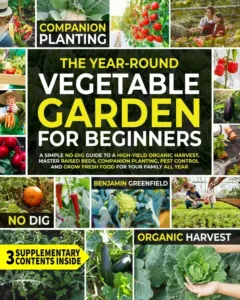
Check out the author’s book here: The Year-Round Vegetable Garden for Beginners.

Leave a Reply