

Most garden journals are abandoned by the last week of June, and the reason is almost never laziness. The template asked for twelve fields per bed, which is a second job in the middle of the growing season. A Garden Journal Template that survives a full year records four things and treats everything else as optional. This article sets out those four columns, the numbers worth comparing them against, and the ten minutes it takes to build the thing.
Garden Journal Template at a Glance
| Question | Short answer |
|---|---|
| How many columns? | Four that matter, the rest optional. |
| What are they? | Planted, harvested, weight, location. |
| Paper or digital? | Whichever one you will actually carry outside. |
| How often? | Once a week, five minutes, same day each week. |
| When does it pay? | The following February, at the seed order. |
| Biggest mistake? | Designing a template you cannot fill in wet boots. |
Why Most Journals Die in June
The typical template online asks for sowing, germination and transplant dates, then weather and pests. After that come fertilizer, bloom date, harvests, notes and a sketch. In April that feels thorough. By late June, when the beans need picking twice a week and something is eating the brassicas, it feels like homework.
What follows is predictable. You skip a week, then another, and the gap makes the record useless for the one thing it was for. Penn State’s own advice on the subject is generous about this, noting that there are no good journals or bad journals and that a journal is for your use.
So the design question is not what would be nice to know. It is what you will still be writing down in August when the garden is at its most demanding.
The Four Columns That Pay for Themselves
A working Garden Journal Template needs one row per planting and four columns. They record the date you put it in, the date you first picked it, the weight you got, and the bed. Four fields take under a minute per row. Everything else belongs in a free-text notes column you use only when something surprises you.
The reason these four win is that each one answers a question you will genuinely ask next spring. The others are interesting, and interesting is not the same as useful.
Column One: The Date You Actually Planted
Write the date the seed or transplant went into the ground, not the date you meant to. The gap between the two is itself information, and it is usually weather.
Pair that date with your local frost dates and you have a planting window you can trust more than any packet. First frost date covers finding yours, and seed starting calendar covers working backward from it for indoor sowings.
Record the variety alongside the date, because a variety without a date tells you nothing useful. Penn State suggests going further and keeping the seed packets themselves in the binder, which costs nothing and saves you transcribing the details.
Column Two: The Date You Actually Harvested
This is the column that changes the most decisions, and almost nobody keeps it. The days to maturity on the packet is a trial figure. It was grown somewhere else, under conditions that are not yours. Your own figure, measured once, beats it permanently.
A tomato listed at 75 days might take 88 in your ground, and that thirteen-day difference decides whether the last planting ripens before the cold arrives. Reading seed packets covers what the printed numbers do and do not promise.
Record the first pick rather than the last, since the first is unambiguous and the last depends on when you gave up. A Beginner’s Guide to Harvesting Vegetables: Knowing When to Pick covers reading ripeness properly, which makes the date you write down mean something.
What a Garden Journal Template Does to Next Year’s Seed Order
Two columns in, the template already earns its keep in February. You open it and see that the early peas went in three weeks too late, so you move them. You see which variety of lettuce bolted first and drop it.
That is the whole return on the exercise, and it arrives once a year. A Garden Journal Template is not a diary of feelings about the garden, and it is a decision tool used in winter.
Succession plantings gain the most from this, because the intervals only work if you know the real maturity dates. Succession planting covers setting those intervals once you have your own numbers.
Column Three: Weight, Not Impressions
Buy a cheap kitchen scale and weigh what comes out of each bed. Impressions are unreliable, and everybody remembers the year the zucchini went mad and forgets the year the carrots quietly did nothing.
Weighing takes seconds and converts a vague sense of a good year into a number you can compare. It also settles arguments about whether a crop is worth its space, which is the most common planning question in a small garden.
Keep the unit consistent and round freely, because precision to the gram is not the point here. A figure within ten percent is enough to compare one season against the next.
The Yield Numbers Worth Comparing Against
Your own figures mean more once you have something to hold them up to. Rutgers publishes expected yields alongside its spacing guidance, and the numbers are more useful than most gardeners expect.
Their planting table gives tomatoes at 50 pounds per 10 feet of row. That assumes plants 24 inches apart in rows 36 inches apart, set out in May or June. Beans come in at 6 to 7 pounds for the same run of row, at 4 inches apart in rows 24 inches apart. Lettuce goes in at 8 inches apart, or 6 for Bibb types, in rows 15 inches apart from April through September.
If your tomato row is delivering 20 pounds where the table says 50, the template has just told you something worth knowing. Intensive gardening covers closing that kind of gap in a small plot.
Column Four: Where It Grew
The location column exists for one reason, which is rotation. Without a written record of what grew where, three years of rotation becomes guesswork by the second spring.
Number your beds and use the numbers rather than descriptions, since bed three is unambiguous and the one near the shed is not. A sketch helps, though the numbers do the actual work.
Vegetable crop rotation covers the families and the intervals, and it is the section of garden practice that fails fastest without records. Rutgers puts the rule simply, advising that you rotate crops so similar vegetables are not planted in the same location consecutively.
Garden Journal Template: The Optional Columns
Everything else goes in the notes field, written only when it matters. Pest arrivals with dates, the week something bolted, a variety that disappointed, the date of the first real frost.
Penn State’s fuller list runs to soil tests, amendments, pruning, expenses, receipts and pollinators. All of it is genuinely useful to somebody. Take the parts that match how you garden and leave the rest.
One optional column does earn its place for seed savers, and that is which plants you selected from. Saving Vegetable Seeds: A Step-by-Step Guide for the Home Garden covers why the parent plant matters more than the harvest it came from.
Paper or Spreadsheet
Paper wins on the one metric that decides this, which is whether the record gets written at all. A notebook in the shed with a pencil tied to it collects entries that a laptop indoors never will.
A spreadsheet wins afterward, because sorting by maturity date or totaling a season takes seconds. The practical answer for most gardeners is both. Write outside on paper, then type it up once in November.
Waterproof pocket notebooks exist and are worth the few dollars if your garden is muddy. A pencil also beats a pen in the rain, which sounds trivial until the ink runs.
Building the Garden Journal Template in Ten Minutes
Rule five columns across a double page: crop and variety, planted, first harvest, weight, bed number. Leave the right-hand third of the page blank for notes. That is the whole template, and it fits a season on four or five spreads.
If you prefer a spreadsheet, use the same five columns with one row per planting rather than per crop. Three sowings of lettuce are three rows, because that is the comparison you want in February. Add a sixth column for days to maturity as a formula if you like, subtracting the planting date from the harvest date.
Print a fresh set of pages each January rather than carrying one book across the years. Vegetable Garden Layout Ideas for Beginners pairs well with this, since the layout sketch and the bed numbers belong on the same sheet.
Keeping the Garden Journal Template Alive Through July
Pick one day a week and do the entries then, rather than promising yourself you will write things down as they happen. Sunday evening works for most people, and five minutes covers a normal week.
Accept that some weeks will be missed, and fill them in approximately rather than leaving blanks. An estimated date is far better than nothing, and the perfect record is the enemy of the record that exists.
Keep the book where the work happens rather than in the house. A journal in the kitchen drawer is a journal you will remember on the second Sunday and forget on the third.
Frequently Asked Questions
Is a Garden Journal Template worth it for a small plot?
It is, and arguably more so, because a small plot punishes bad decisions harder. Four beds means every square foot is a choice, and the record is what makes those choices informed rather than habitual.
Should I record the weather?
Not daily, since your local weather service already does it better. Record the exceptions instead, meaning the late frost, the three-week dry spell, the hail in June.
How many years before it is useful?
One winter gets you a better seed order, and three years is where the patterns appear. Germination rates, rotation intervals and reliable varieties all need several seasons before they say anything firm.
Can I use a gardening app instead?
You can, and many people do it happily. The risk is the same as with any subscription service, since your records live somewhere you do not control. Export to a spreadsheet once a year if you go that route.
What about seeds left over?
Note the purchase year on the packet and test them rather than guessing. Seed germination test covers the paper towel method, which takes a week and saves a wasted sowing.
Garden Journal Template: The Short Version
Four columns beat twelve, and the four are planted, first harvested, weight and bed number. The harvest date is the one almost nobody keeps and the one that pays most. The packet’s days to maturity was measured somewhere else. Weigh the crop rather than trusting your memory of it, and hold the figure against a published table like the Rutgers one.
Keep the bed numbers for rotation and put everything else in a notes column. Write the entries on one fixed day each week. Store the book where the work happens rather than indoors. The return arrives in February, when a Garden Journal Template turns next year’s seed order from a guess into a decision.
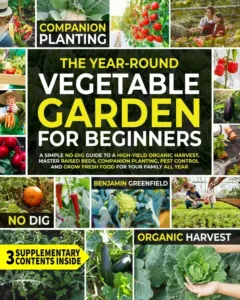
Check out the author’s book here: The Year-Round Vegetable Garden for Beginners.

Leave a Reply