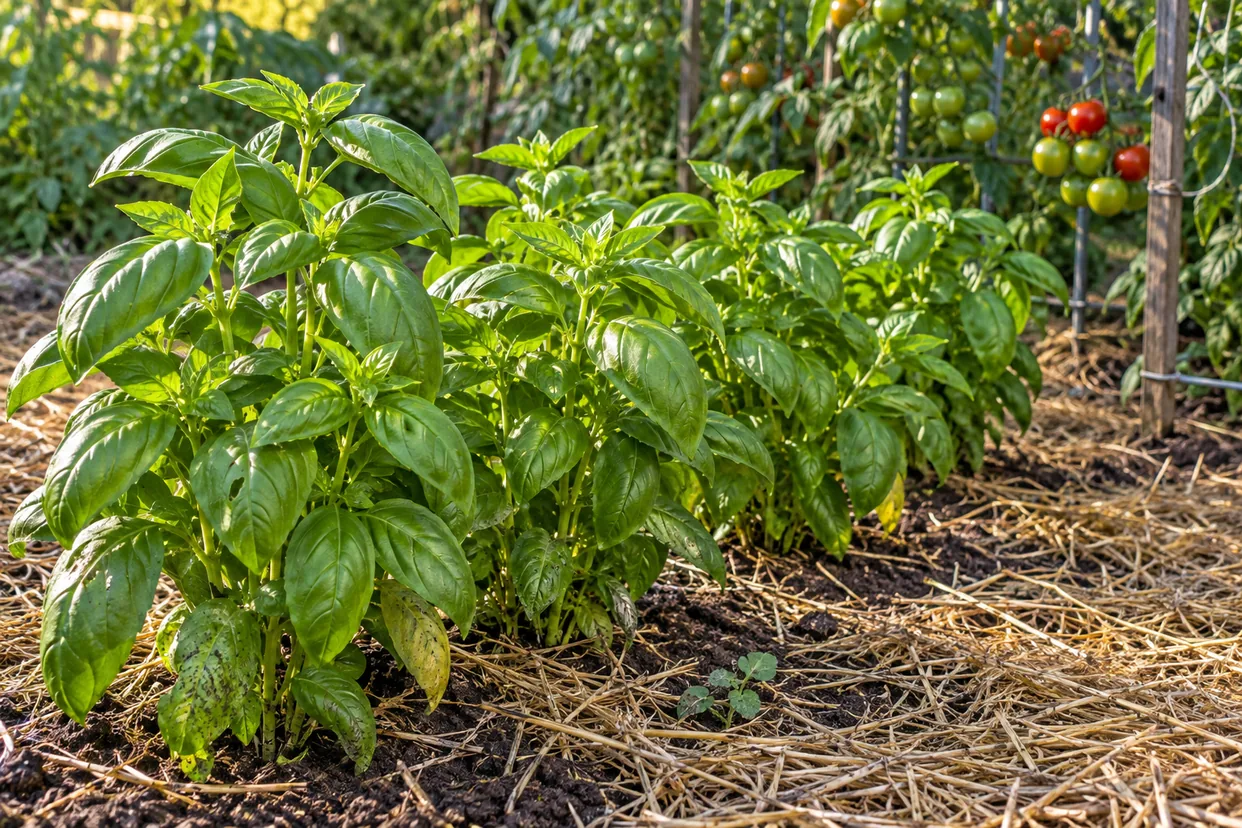
Few plants reward a gardener as quickly as basil. One healthy plant can supply a kitchen for months, and a short row gives you enough for pesto in the freezer. Yet many gardeners lose their basil early. It sulks after a cold night, it bolts into flower, or its leaves turn yellow in August. Growing Basil well comes down to a few simple rules about heat, pinching and airflow.
This guide covers basil in the garden bed, from seed to harvest. It draws on University of Maryland Extension and Clemson Home and Garden Information Center, with disease advice from Cornell. If you want to keep basil on a windowsill in winter instead, see Indoor Herb Garden: Growing Basil and Mint Year-Round.
Why Growing Basil Is Worth It
Basil is a warm-season annual. It grows fast, needs little space and produces leaves from early summer to the first frost. Moreover, the flavour of fresh leaves is far stronger than anything you can buy dried.
Basil also earns its place among the vegetables. It fits into gaps between tomatoes and peppers, and its flowers feed bees late in the season. For pairings that work, read Herb Companion Planting: Maximizing Vegetable Growth and Repelling Pests.
Choosing a Basil Variety
Sweet basil, the classic Genovese type, is the most common choice and the best for pesto. However, there are many others. UMD mentions purple-leaf types and compact bush basils, which suit small beds and pots. Thai basil adds an anise note, and lemon basil has a citrus scent.
If downy mildew has hit your basil before, choose a resistant variety. UMD lists ‘Obsession’, ‘Devotion’, ‘Prospera’ and ‘Amazel’. Similarly, Clemson names ‘Prospera’, ‘Rutgers Devotion’ and ‘Rutgers Obsession’, and Cornell adds the Passion and Thunderstruck varieties. For the soil-borne Fusarium wilt, Clemson lists ‘Nufar’, ‘Aroma 1’, ‘Aroma 2’, ‘Newton’ and ‘Prospera’ as resistant.
When to Start Growing Basil
Basil hates cold. UMD states plainly that it is not tolerant of chilly temperatures, and it advises sowing only after all danger of frost has passed. The Clemson basil factsheet is more precise. It says basil should not go into the garden until daytime temperatures are consistently in the 70s and nights stay above 50°F.
So wait. A basil plant set out in a cold spell does not simply pause; it often stays stunted for weeks. In most gardens, the right time is a week or two after the tomatoes go in.
Growing Basil from Seed
For an early start, sow basil indoors. According to Clemson, seed should go in four to six weeks before the outdoor planting date. It germinates in 5 to 10 days at 70°F. Sow the seed shallowly, keep the mix warm and moist, and give the seedlings strong light.
Basil seedlings are prone to damping off, which kills them at the soil line. To avoid it, use a clean mix, water from below and keep air moving; Damping Off Disease: How to Prevent Seedling Rot and Fungal Death explains the problem in detail.
Before planting out, get the seedlings used to sun and wind for about a week. Hardening Off Plants: How Much Stress Is Enough sets out a schedule.
Growing Basil by Direct Sowing
In warm regions, you can also sow basil directly in the bed once the soil has warmed up. It is slower to reach harvest, but the plants never suffer transplant shock. To weigh the two methods, see Direct Sow vs Transplant: Which Method is Better for Your Vegetable Garden?
Growing Basil in Full Sun: Soil and Spacing
Basil needs full sun. UMD recommends six or more hours of direct sun daily in summer. In less light, plants grow thin and the flavour weakens.
The soil should be moist but well-drained, as UMD puts it. Clemson suggests a rich soil with added organic matter, such as compost, and a pH between 6.0 and 6.5. If you have never tested your soil, Soil pH Level: Testing and Balancing for Maximum Yield shows how.
Spacing matters more than most gardeners think, because it controls airflow and disease. UMD recommends 12 inches between plants and 18 inches between rows. Clemson, working with larger plantings, suggests 2 feet between plants. Either way, resist the urge to crowd them.
Watering, Mulching and Feeding
Basil likes an even supply of moisture. Clemson recommends watering with soaker hoses, drip lines or by hand at the base of each plant, so the leaves stay dry. That habit also helps against disease. For the options, read Efficient Watering Techniques for Sustainable Vegetable Gardening.
A mulch keeps the soil evenly moist. Clemson suggests a layer about 3 inches deep. Wait until the soil is warm before you lay it, though, since mulch keeps cold soil cold; Organic Garden Mulch: How Deep to Lay It and When to Wait covers the timing.
Go easy on fertilizer. UMD warns that heavy feeding can reduce flavour, because fast, soft growth carries fewer aromatic oils. A soil rich in compost is usually enough. If growth stalls after a couple of months, a light side dressing is all you need.
Pinching Basil for Bushy Plants
Pinching is the single most important skill in growing basil. Left alone, a basil plant grows one tall stem and soon flowers. Pinched, it branches again and again.
UMD recommends pinching stems as they lengthen, to promote bushy, compact growth. Here is how:
- Wait for height. Let the young plant grow until it has three or four pairs of leaves.
- Find a leaf pair. Look at the main stem just above a pair of leaves.
- Pinch above it. Cut or pinch the stem there. Two new shoots will grow from the leaf joints below.
- Repeat. Every week or two, pinch the tips of the new shoots in the same way.
Each pinch is also a harvest. Clemson notes that you can pick leaves one by one or pinch off the ends of branches with one or two sets of leaves.
Keep Basil from Flowering
Once basil flowers, it puts its energy into seed, and leaf production slows. So Clemson advises pinching out flower buds as soon as they appear, for maximum flavour.
In hot weather, you may need to check every few days. If a plant gets ahead of you, cut it back by a third, just above a leaf pair. It will regrow. Alternatively, leave one or two plants to flower at the end of the season. Bees love basil flowers, which makes them a simple addition to a Pollinator Friendly Garden: Attracting Bees and Butterflies to Your Vegetables.
Basil Downy Mildew
Downy mildew is the most serious problem for basil in many regions. The Cornell factsheet explains that it is caused by Peronospora belbahrii and that it was first reported in south Florida in October 2007. Since then it has spread widely.
How to Recognize It
The first sign is yellowing on the upper leaf surface. Cornell notes that it can look like a nutrient deficiency. Clemson adds that the yellowing is limited by the leaf veins, so it forms blocky patches. Later, the patches turn brown.
To be sure, turn the leaf over. Cornell describes fuzzy, purplish-gray spores on the underside, and calls them the key to diagnosis.
How to Prevent It
The spores travel on the wind, so you cannot always keep them out. Still, you can make your garden less welcoming. UMD notes that the disease is encouraged by warm, wet, humid weather. Its advice is simple: don’t crowd the plants, because good airflow around the foliage helps reduce the risk.
Cornell recommends full sun, good air movement, wide spacing and drip irrigation instead of overhead watering. Above all, plant a resistant variety. If the disease does appear, harvest the healthy leaves quickly, then remove and destroy the plants. Reassuringly, UMD notes that the disease poses no risk to human health.
Other Basil Pests and Problems
Clemson lists several other pests. Japanese beetles can skeletonize the leaves. Aphids and spider mites respond to insecticidal soap, and slugs can be controlled with iron phosphate baits. For a calm approach to aphids, read Aphid Control Methods: When to Spray and When to Wait.
Fusarium wilt is harder. According to Clemson, this soil-borne fungus makes plants stunt and wilt when they are 6 to 12 inches tall. There is no cure, so pull affected plants, grow basil elsewhere next year and choose a resistant variety.
Harvesting and Preserving Basil
UMD says you can start picking leaves about six weeks after planting. Harvest in the morning, when the leaves are full of moisture, and always cut just above a leaf pair, so that each harvest doubles as a pinch.
For drying, UMD recommends cutting just before the flowers open, when the flavour peaks. Clemson suggests drying the leaves at less than 125°F, or hanging bundles in a warm, well-ventilated room. Store dried leaves in airtight containers for up to 12 months.
Freezing keeps more flavour than drying. Clemson notes that pesto freezes well without loss of flavour or colour. Many cooks freeze it in ice cube trays, then keep the cubes in a bag for winter meals.
The End of the Basil Season
Basil is one of the first plants to die in autumn. A single night near freezing blackens the leaves. So keep an eye on the forecast, and pick everything before the cold arrives; First Frost Date: How to Find Yours and Protect Your Crops explains how to know when that is.
That last harvest is the moment for a big batch of pesto. And next spring, once the nights are warm again, start growing basil from seed once more.
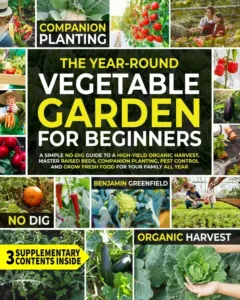
Check out the author’s book here: The Year-Round Vegetable Garden for Beginners.
Leave a Reply