
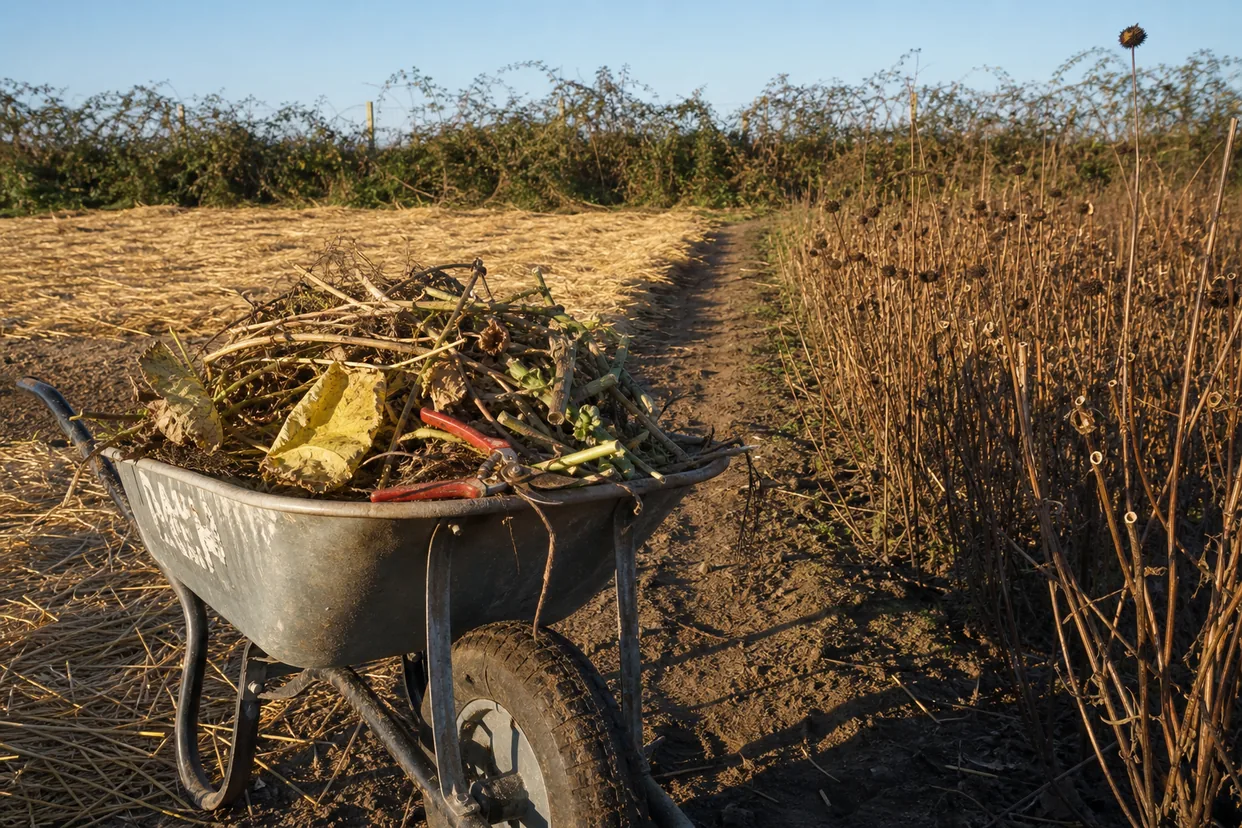
Every October the same argument runs through the gardening world. One side says strip the beds bare, the other says leave everything for the insects, and both are describing something real. Fall garden cleanup done well is neither: it is a series of small decisions, each one made on its own merits.
The good news is that the decision is easy once you know the question to ask. Roughly a third of what is standing in your plot has to go. A third should certainly stay, and the last third genuinely does not matter.
Fall Garden Cleanup at a Glance
| When | After the first hard frost, on a dry day |
| Always remove | Diseased plants, fallen fruit, weeds with seed |
| Always leave | Hollow stems, seed heads, roots in the ground |
| Compost | Healthy plant material only |
| Bin or burn | Anything blighted, mildewed, or rusted |
| Never leave | Bare soil through winter |
| Time needed | An afternoon for a typical plot |
| Best weather | Dry and sunny, late morning onward |
The Question Behind Every Fall Garden Cleanup Decision
Fall garden cleanup asks one thing about each plant: does it carry a problem into next season, or does it shelter something useful?
Disease is the first half. Most fungal pathogens survive winter on dead plant material and splash back up onto next year’s crop in spring. Minnesota Extension’s guide to preparing your vegetable garden for fall is blunt about it. Badly infected tomato, potato, and squash material gets bagged and thrown away.
Habitat is the other half. Hollow stems hold native bees through winter. Leaf litter shelters lacewings and ladybugs, and seed heads feed birds through the hungriest months. Penn State makes the case for delaying cleanup to benefit overwintering insects, and it is a strong one.
Both are true at once. The disease logic applies mostly to the vegetable beds. The habitat logic applies to the flowers and the edges, which is exactly how the work divides.
Fall Garden Cleanup in the Vegetable Beds
Fall garden cleanup earns its keep here, and thoroughness pays. Vegetables are grown close, in the same ground year after year, and their diseases are specific and persistent.
Take out completely:
- Tomato and potato vines, especially anything with blight, and every fallen fruit and tuber.
- Squash, cucumber, and melon vines, which harbor squash bugs, vine borers, and bacterial wilt.
- Brassica stumps, which carry aphids, clubroot, and cabbage root fly through the winter.
- Bean and pea foliage showing rust or mildew, though healthy vines can stay.
- Every rotting fruit on the ground, which is where the next generation of pests is already developing.
Work on a dry day. Handling wet foliage spreads spores from plant to plant, and treading wet soil ruins its structure for months.
Rotation makes the following season safer still, and the three-year discipline is set out in vegetable crop rotation. Where mildew got into the squash this year, the reasons and the treatment are in powdery mildew treatment.
A Fall Garden Cleanup Order of Work
Doing it in the right sequence saves walking back and forth, and stops you spreading disease across ground you have already cleared.
- Pick the last of everything. Anything still edible comes in first, because the rest of the job tramples what you leave.
- Take out the diseased plants, and do it before you touch anything healthy. Carry them straight off the plot in a bag or barrow rather than laying them on a path.
- Cut the healthy spent crops at soil level and pile them for the compost heap.
- Weed while the beds are open, when every weed is visible and the ground is still soft.
- Pull the supports. Stakes, canes, cages, and netting all come out now, get their soil brushed off, and go under cover dry.
- Rake the paths, not the borders. Path leaves are a slip hazard and a slug hotel; border leaves are habitat.
- Cover every bed you cleared, the same day if you can manage it.
The order matters most at step two. Handling blighted foliage and then cutting healthy plants with the same hands and the same knife moves spores exactly where you do not want them.
Two more habits belong here. Label what went where before the markers come out. A rotation plan written in April from memory is guesswork, and a garden journal is the place to avoid it. And note which crops failed and why while the evidence is in front of you. Half of what you learn in a season is learned during fall garden cleanup, not during the harvest.
None of it needs to happen in one afternoon. The beds can be cleared as the crops finish, one at a time from September onward. That spreads the work and leaves less bare ground exposed at any moment.
What Fall Garden Cleanup Should Leave Standing
Now the other pile. These stay, and leaving them is a decision rather than laziness.
- Hollow and pithy stems from sunflowers, dill, fennel, and raspberry canes. Cut them to 12 or 18 inches and leave the stubs upright: native bees nest inside them.
- Seed heads on sunflowers, coneflowers, and any herb that has bolted. Goldfinches work them all winter.
- Leaf litter in the borders and under shrubs, two inches deep, which is where butterflies and beneficial beetles overwinter.
- Ornamental grasses and dead perennial tops, which trap snow and insulate the crown beneath.
- Roots of everything, which is a point in its own right below.
The insects that emerge from all this in April are the ones that eat your aphids in May. That transaction is the whole argument of beneficial insects for the garden, and it is why a pollinator friendly garden has to look slightly untidy in winter.
Cut at Soil Level, Do Not Pull
When a plant does come out, cut the stem at the ground and leave the roots where they are.
Pulling tears the soil open, breaks the fungal networks running through it, and brings weed seed to the surface. The roots left behind rot in place over winter, feeding soil life and leaving channels that hold air and water.
The exceptions are the diseased ones. Clubroot on brassicas and root knot nematodes live in the roots themselves, and those come out whole.
This is the same reasoning as the no-dig method, applied at the end of the season instead of the beginning.
Perennial Vegetables Need a Different Hand
The permanent plants follow their own rules, and cutting at the wrong moment costs you next year’s crop.
Asparagus. Wait until the ferns have gone fully brown, then cut to two inches. Cutting green ferns robs the crown of the food it is still storing, and the case for patience is in planting asparagus crowns.
Rhubarb. Let the leaves collapse and yellow on their own, then clear them away. Never cut a green leaf off in autumn.
Artichokes and cardoons. Cut back to a foot and mound compost over the crown in cold regions.
Herbs. Woody ones like thyme, sage, and rosemary are not pruned in autumn at all. Soft ones can be cut, or left for the seed heads.
The whole cast of permanent crops and their habits are gathered in the perennial vegetables list.
What Goes in the Compost and What Does Not
The line is simple. Healthy material composts, and diseased material does not.
A home compost heap rarely holds 140°F for long enough to kill blight spores, clubroot, or persistent fungal bodies. So blighted tomato haulms, mildewed squash vines, and rusted onion leaves go in the trash or on a bonfire, not on the heap.
Everything healthy is fuel. Spent bean vines, bolted lettuce, carrot tops, and every leaf you rake all belong in the pile. The balance of greens and browns is covered in composting 101.
Weeds are a middle case. Leafy annual weeds are fine before they set seed. Perennial roots — bindweed, couch grass, dock — go in the trash unless you can drown them in a bucket of water for six weeks first.
Weeds Now, or Weeds All Next Year
Autumn weeding is the least popular job in the garden and the highest paid.
Weeds that seed in October germinate in March, and the old saying holds: one year’s seeding, seven years’ weeding. Chickweed, bittercress, and groundsel all set seed in cool weather while you are not looking. Hairy bittercress is the worst of them, since a single plant fires several hundred seeds across the bed the moment you brush against it.
Pull them before the seed heads dry, get the whole root of perennials, and mulch the ground behind you as you go. The methods that do not involve chemicals are in natural weed control.
Fall Garden Cleanup Ends With Covered Ground
Every bed you clear becomes a problem unless you cover it, so no fall garden cleanup is finished at the raking stage. Bare soil over winter loses structure to rain, leaches nitrogen, and grows weeds.
Two answers, and both are better than nothing:
- Mulch. Two to four inches of compost, straw, or shredded leaves, laid on the surface and left for the worms to take down. The choices are compared in organic garden mulch.
- A cover crop, sown early enough to establish. Winter rye, field beans, and vetch all hold the soil and feed it, as described in green manure cover crops.
The choice is mostly about timing. After mid-October in a cold region a cover crop will not establish, and mulch is the answer.
The Half-and-Half Compromise
Here is what I actually do, and it settles the argument in practice.
The vegetable beds get cleaned properly. Disease pressure there is real and the crops are annual. Nothing living in a dead tomato vine is anything I want back.
The borders and edges stay standing until April. Seed heads, hollow stems, leaf litter, all of it. They come down after a week of weather reliably above 50°F, once the insects inside have emerged.
That split gets both benefits and neither cost. It also means the plot looks half tidy and half wild all winter, which takes a season to get used to.
Fall Garden Cleanup Mistakes That Cost You in Spring
| Mistake | What it costs |
|---|---|
| Composting blighted tomato vines | Blight back in the same beds next July |
| Cutting asparagus ferns while green | A weaker crown and a thinner spring crop |
| Leaving bare soil uncovered | Lost structure, lost nitrogen, spring weeds |
| Cleaning up on a wet day | Spores spread by hand, compacted soil |
| Cutting every stem to the ground | No overwintering bees or lacewings in spring |
| Leaving weeds to seed | Seven years of the same weed |
Fall Garden Cleanup Questions Answered
When exactly should I start?
After the first hard frost has finished off the tender crops, and on a dry day. There is no rush: October and November both work, and the beds can be cleared in stages.
Is it true I should not clean up at all?
Not in the vegetable garden. That advice comes from the pollinator world and is sound in a flower border. Vegetable beds carry specific diseases that overwinter in debris.
What about slugs and squash bugs hiding in the leaves?
They do, which is the real cost of leaving material lying. Keep litter in the borders rather than on the vegetable beds, and the trade works in your favor.
Should I dig the beds over while they are empty?
No. Digging in autumn destroys the structure you have spent the year building. Cut, cover, and let the worms work.
What should I do with the compost heap itself?
Turn it once while the autumn material is going in, so the summer layer at the bottom comes up and mixes with the fresh green waste. Then cover the top with a tarp or a thick lid of straw. A heap left open to winter rain goes cold, sodden, and airless, and it will still be a wet mat of leaves in April.
Do I need to clean my stakes and cages?
Yes, and it takes ten minutes. Brush off the soil, and anything that supported a diseased plant gets a wash before it goes into the shed.
Half Tidy, Half Wild
Fall garden cleanup rewards a sharp eye rather than a hard rake. Strip the vegetable beds of anything that carried disease. Cut the rest at soil level and cover every square foot you clear. Then walk past the borders and leave them exactly as they are until spring. The garden that looks slightly messy in January is the one with predators in it in May.
Check out the author’s book here: The Year-Round Vegetable Garden for Beginners.


Leave a Reply