

For many gardeners, the soil beneath their feet is a mystery. We add compost, spread fertilizer and hope for the best. Often, we treat symptoms without ever finding the root cause. Gardening this way is like exploring a new city without a map. You might get there eventually, but only after a few wrong turns. What if you had a personal “report card” that told you exactly what your soil needs? In fact, that’s precisely what a soil test provides. But receiving that report, a page filled with charts, numbers, and chemical symbols, can be intimidating. Learning how to read a soil test report is the next step. It turns confusing jargon into your most powerful gardening tool.
Taking the time to understand the results is the key to unlocking your garden’s true potential. In other words, it moves you from a gardener who guesses to one who knows. Instead of applying a “balanced” fertilizer at random, you can fix specific deficiencies with precision. As a result, you save money and avoid imbalances that harm plants and the environment. This guide shows how to read a soil test report section by section. By the end, you can turn it into a targeted action plan.
How to Read a Soil Test Report: Why Testing Pays
Before diving into the “how,” it’s essential to understand the “why.” You can’t assess soil health by its color or texture alone. A rich, dark soil might look fertile. Yet it could be low in a key nutrient, or its pH could be locking up the nutrients that are present. Therefore, a professional lab analysis is worth it, because its objective data eliminates guesswork.
The benefits are immense:
- Solve Chronic Problems: Are your tomatoes plagued by blossom-end rot? Do your leafy greens look pale and stunted? A soil test can reveal the underlying cause, such as a calcium deficiency or improper pH, which is far more effective than just treating the visible symptoms.
- Fertilize Smarter, Not Harder: Many gardeners inadvertently over-fertilize, particularly with phosphorus. Moreover, an excess of one nutrient can interfere with a plant’s ability to absorb others. A test tells you what you don’t need, saving you money and protecting local waterways from fertilizer runoff.
- Maximize Your Harvest: By providing your plants with the optimal balance of nutrients, you create an environment for vigorous growth, stronger disease resistance, and higher yields. It’s the foundation of everything we explore in Loam Soil Preparation: Understanding and Improving Your Garden’s Composition.
How to Read a Soil Test Report: pH and Organic Matter
When you first learn how to read a soil test report, start where most reports do: soil pH and organic matter. Getting these right is the first and most important step, as they influence everything else.
Soil pH: The Master Controller
Soil pH is often the first number you’ll see. It measures acidity or alkalinity on a scale of 0 to 14. A pH of 7.0 is neutral. Anything below 7.0 is acidic, and anything above is alkaline (or basic).
Why it matters: Soil pH is the gatekeeper of nutrient availability. Even if your soil is packed with nutrients, the wrong pH can “lock them up.” In that case, your plants cannot absorb them. Most vegetables, herbs, and flowers thrive in a slightly acidic to neutral range of 6.0 to 7.0.
This is the “sweet spot” where most essential nutrients are available. For comparison, University of Maryland Extension gives 5.5 to 7.0 for vegetables, while Illinois Extension says most plants like 6.3 to 7.0.
How to interpret it: The report will show your current pH and often provide a recommendation.
- If your soil is too acidic (low pH): The lab will likely recommend applying lime (usually dolomitic or calcitic lime). In most cases, the recommendation will be specific, often in pounds per 100 or 1,000 square feet.
- If your soil is too alkaline (high pH): This is common in arid regions. The recommendation will be to add elemental sulfur to lower the pH.
Adjusting pH isn’t a quick fix; it takes time for these amendments to work. For this reason, fall is an excellent time for Soil pH Testing and amendment, giving the material all winter to integrate.
Organic Matter (OM): The Lifeblood of Your Soil
This number, usually a percentage, tells you how much of your soil is decomposed plant and animal material. In short, organic matter is the single most important indicator of overall soil health.
Why it matters: Organic matter does it all. It improves soil structure and helps sandy soil hold water. It also helps clay drain and releases nutrients slowly as it decomposes. It’s the foundation of a thriving soil food web. According to UMD, healthy soils have 2% or more organic matter. Illinois adds that most dark soils there hold 2% to 4%, and lighter soils even less.
How to interpret it: A low OM percentage, below 2%, is a clear signal that you need to add more. The recommendation for low organic matter is universal and simple: add compost. Above all, regular applications of well-rotted compost build organic matter over time. This is a core principle we cover in Composting 101: A Beginner’s Guide to Black Gold.
How to Read a Soil Test Report for N-P-K
These are the primary nutrients your plants need in the largest quantities. Your report will show the levels of each, often on a graph. Typically, each one falls in a “Low,” “Optimal” or “Excessive” range. If plants already show symptoms, compare them with Nutrient Deficiency in Plants: A Visual Guide to What Your Vegetables Are Telling You.
Nitrogen (N)
- Its Role: Nitrogen is all about vigorous, leafy green growth. Think of it as the “gas pedal” for your plants. Also, it’s a key component of chlorophyll and essential for photosynthesis.
- Reading the Report: Measuring nitrogen is tricky because it’s highly mobile in the soil and its levels can change quickly. In fact, many labs skip it. Penn State Extension, for example, bases nitrogen advice on crop needs instead of a soil measurement. Because it leaches easily, it often needs to be replenished annually.
- Recommendations: If your nitrogen is low, the report will suggest nitrogen-rich amendments like blood meal, fish emulsion or well-rotted manure. For homemade options, see Organic Plant Food: Feeding Your Veggies for Maximum Growth.
Phosphorus (P)
- Its Role: Phosphorus is crucial for strong root development, flower and seed formation, and fruit production. Think of it as the energy-transfer nutrient.
- Reading the Report: Phosphorus levels are usually listed in parts per million (ppm). According to Illinois Extension, 10 to 20 ppm is good for gardens. Moreover, UMD warns against adding any if levels are medium to high, because excess phosphorus can reach waterways and feed algae.
- Recommendations: If deficient, amendments like bone meal or rock phosphate are excellent sources.
Potassium (K)
- Its Role: Potassium, sometimes called potash, is the great regulator. For example, it helps plants manage water, resist disease and develop strong stems. It’s essential for overall plant health and vigor.
- Reading the Report: Like phosphorus, potassium is reported in ppm. Illinois notes that 125 ppm or more means no extra potassium is needed.
- Recommendations: If your soil is low in potassium, good organic sources include greensand, kelp meal, or wood ash (use wood ash sparingly, as it will also raise the pH).
Beyond the Basics: Secondary and Micronutrients
These nutrients are needed in smaller quantities but are no less vital for plant health.
- Secondary Macronutrients (Calcium, Magnesium, Sulfur): Your report will also show levels for these. Calcium is vital for cell wall development, and a deficiency, often linked to pH, is a primary cause of Identifying and Preventing Blossom-End Rot in Your Vegetable Crop. Magnesium is the central atom in the chlorophyll molecule.
- Micronutrients (Iron, Manganese, Boron, etc.): These are needed in tiny amounts. Deficiencies are less common, and it’s very important not to over-apply them, as they can become toxic in high concentrations. Therefore, only add micronutrients if your report specifically indicates a deficiency.
Advanced Metrics: Cation Exchange Capacity (CEC)
Some comprehensive reports include a Cation Exchange Capacity (CEC) value. While it sounds complex, it’s a very useful number that indicates your soil’s inherent fertility potential.
What it means: CEC measures the soil’s ability to hold positively charged nutrients (cations). These include calcium, magnesium and potassium. Think of it as the number of “parking spaces” your soil has for nutrients. Clay and soils rich in organic matter have a high CEC and hold a lot of nutrients. By contrast, sandy soils have fewer holding sites, so nutrients leach out more easily.
How to interpret it: A higher CEC is generally better. Illinois considers 15 to 20 good, while soils at 6 or lower need close management. Similarly, UMD advises adding organic matter when CEC is below 10. In practice, the easiest way to increase your soil’s CEC is by increasing its organic matter. Compost acts like a sponge, adding countless new parking spaces for nutrients.
How to Read a Soil Test Report and Act on It
Knowing how to read a soil test report is only half the job. Now it’s time to act. Still, don’t be overwhelmed. Follow a logical order and check the recommendations from your lab. Usually, they are tailored to your results.
- Adjust pH First: This is priority number one. If your pH is off, your plants can’t access other nutrients, so any other amendments will be less effective. Apply the recommended amount of lime or sulfur.
- Add Organic Matter: Make a plan to incorporate a 1-2 inch layer of compost into your beds. This helps nutrient levels, structure and CEC. Alternatively, a cover crop can do part of the job, as Green Manure Cover Crops: How Much Nitrogen You Actually Get Back explains.
- Address Deficiencies Methodically: Based on the report, apply the specific amendments for any primary or secondary nutrients that are low. Then follow the application rates recommended by the lab precisely.
- Re-test in a Few Years: Monitor your progress. A follow-up test in 2-3 years will show you how your efforts have improved your soil’s health and allow you to make further adjustments.
A soil test report is more than a piece of paper; it’s a conversation with your garden. Once you know how to read a soil test report, it tells you exactly what your garden needs to thrive. As a result, you speak its language. In the end, that makes you a more effective gardener, ready to unlock your soil’s true potential.
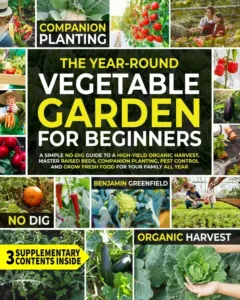
Check out the author’s book here: The Year-Round Vegetable Garden for Beginners.

Leave a Reply