
Eggshells for plants are one of the most shared garden tips on the internet. After a holiday weekend of baking, the kitchen caddy fills with shells, and it feels wasteful to throw them away. The good news is that they do have a place in the garden, but not the one most people expect.
Some of the popular claims hold up, while others simply do not work. This guide sorts out what the shells really do for calcium, soil pH, slugs and seedlings. It also shows how to prepare them properly. That way, the bowl of shells on the counter turns into something your beds can use.
Eggshells for Plants at a Glance
| Main mineral | Calcium carbonate, about 95 percent of the dry shell |
| Calcium release | Slow, and useful to plants only when the shell is finely ground |
| Breakdown time | One year or more for coarse pieces, much faster as powder |
| Effect on pH | Very small, slowly raises the pH of acid soil |
| Against slugs | Unreliable, slugs cross crushed shells with ease |
| Blossom end rot | No quick fix, the cause is uneven water |
| Best use | Ground into compost, worm bins and planting holes |
Why Eggshells for Plants Get So Much Attention
The idea sounds logical at first. A shell is almost pure calcium carbonate, which is the same compound found in garden lime. Plants need calcium to build strong cell walls, so adding shells should feed them. On top of that, reusing kitchen waste feels good, and it costs nothing.
The problem is speed. Calcium carbonate does not dissolve easily in water, so a plant cannot take it up from a large piece of shell. Instead, soil microbes and weak acids in the soil have to wear the shell down over time. As a result, a whole or roughly crushed shell can sit in a bed for years and still look almost new.
What the Research Says About Calcium
Illinois Extension describes a simple trial that answers the calcium question well. Plants given finely ground eggshell did about as well as plants given pure calcium. However, plants given coarse pieces did little better than plants that got nothing at all.
In other words, the size of the pieces matters far more than the amount. A handful of big shards adds almost no calcium in the first season. By contrast, a spoonful of fine powder starts to break down within weeks, because it offers far more surface to the soil.
Most garden soils also hold plenty of calcium already. Before you add anything, check the calcium and pH lines on a lab test. The post on how to read a soil test report explains what a real shortage looks like on paper.
Eggshells for Plants and Blossom End Rot
This is the most common reason people bury shells under tomatoes. Blossom end rot is the dark, sunken patch on the bottom of tomatoes, peppers and squash. It is linked to calcium, so shells look like the obvious cure.
In practice, the fruit rarely lacks calcium because the soil lacks it. Instead, the plant cannot move calcium to the fruit fast enough when watering swings between soaked and dry. Calcium travels only with water, so a short drought during fruit growth starves the tip of the fruit, even in rich soil.
That is why steady moisture and mulch fix the problem, while shells in the planting hole do not. The post on preventing blossom end rot covers the watering routine in detail. Ground shells can still go into the hole, and they do no harm there. Just think of them as a long-term soil addition, not a rescue for this summer’s crop.
Do Eggshells Change Soil pH?
Because they are made of calcium carbonate, shells work like a very slow and very weak lime. Over several years, a lot of powdered shell can nudge an acid soil slightly toward neutral. However, the amount from one household is tiny compared with what a bed would need to shift its pH.
This matters for acid-loving crops. Blueberries, potatoes and other plants that prefer a low pH do not need extra lime of any kind. For that reason, keep shells out of those beds. Use them instead where the soil is already acid and needs a gentle lift. The post on soil pH level lists which crops like which range.
Do Crushed Eggshells Stop Slugs?
Many gardeners ring their lettuce with crushed shells and hope for the best. Sadly, trials and plenty of garden experience show that slugs cross the ring with little trouble. The edges are not sharp enough to hurt them, and once the shells get wet or soft, they barely slow them down.
So if slugs are eating your seedlings, rely on methods that work, such as evening hand picking, traps and barriers. The guide to organic pest management covers those options. A ring of shells does no harm, but it should never be your only line of defense.
Starting Seeds in Eggshells for Plants
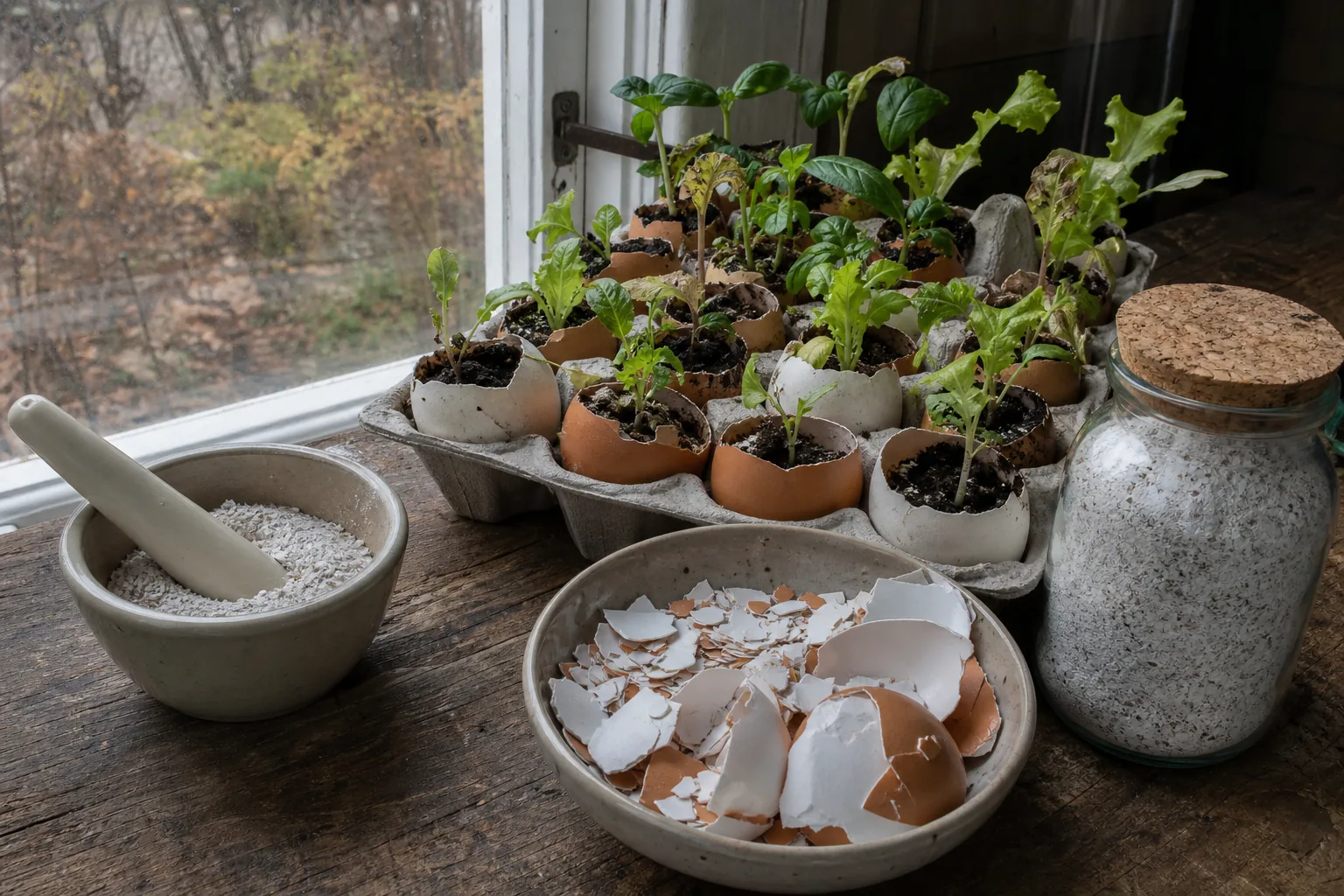
Half an eggshell makes a cute and free seed cup, and children love it. First, poke a small drainage hole in the bottom of each shell with a pin. Then fill each half with moist seed mix, set them in the egg carton, and sow one or two seeds per shell.
The limit is size. A shell holds only a spoonful of mix, so the roots fill it within two or three weeks. After that, the seedling dries out quickly. Therefore, the method suits quick crops and short stays, such as lettuce, herbs or brassicas that you move on soon.
When you transplant, crack the shell all around before it goes into the ground. An intact shell does not rot in time, and the roots can stay trapped inside it for a whole season. For a better start, use a light mix; the post on seed starting mix explains what the young roots need.
Pro Tip: Dry the shells in a warm oven for ten minutes after baking something else. Heat makes them brittle, so they grind into powder in seconds with an old coffee grinder or a mortar and pestle.
How to Prepare Eggshells for Plants
Preparation turns a slow, useless shard into something the soil can work with. The steps are simple, and a jar of powder lasts a whole season.
- Rinse the shells under the tap to remove the egg white, which smells and attracts pests.
- Let them dry on a tray for a day or two, or in the oven as described above.
- Grind them fine, ideally to a powder like flour, in a grinder or blender.
- Store the powder in a closed jar in a dry cupboard until you need it.
- Use a little at a time, a tablespoon or two per plant or per bucket of compost.
Where Eggshells Really Help
The best home for shells is the compost heap. Ask Extension notes that the shells are not an effective calcium source on their own, and that their real value is in compost. There they add a little mineral matter and help the finished compost improve the structure of the soil. The guide to composting explains how to balance greens and browns.
Worms also like them. Finely ground shell gives worms grit for their gizzards, and it helps balance the acidity of food scraps in the bin. If you keep an indoor worm bin, a pinch of shell powder each week keeps the bedding sweeter.
Finally, a spoonful of powder in the planting hole of tomatoes, peppers or brassicas is a reasonable habit. It will not change this year’s crop much, but over time it adds calcium to the soil for later seasons.
Warning: Raw egg can carry salmonella. Rinse and dry the shells before use, and wash your hands after handling them. Also keep unrinsed shells out of seed trays and indoor worm bins.
What Goes Wrong When Using Eggshells for Plants
| Problem | Cause | Fix |
|---|---|---|
| Shells still visible after a year | Pieces too large | Grind to a fine powder before use |
| Blossom end rot continues | Uneven watering, not low calcium | Water deeply and steadily, mulch the bed |
| Slugs still eat seedlings | Shells do not stop them | Hand pick at night, use traps and barriers |
| Bad smell or flies in the caddy | Egg white left on the shells | Rinse and dry shells before storing |
| Seedling roots stuck in shell | Shell planted whole | Crack it all around before planting out |
| Yellow leaves on blueberries | pH pushed up by lime or shells | Keep shells out of acid beds |
Eggshells for Plants Questions Answered
Are eggshells good for tomato plants?
Finely ground shells add a little calcium over time, but they will not prevent blossom end rot, which comes from uneven watering.
How long do eggshells take to break down?
Coarse pieces can last a year or longer in the soil, while fine powder breaks down in weeks or months.
Can you put eggshells directly in the garden?
Yes, as long as they are rinsed and ground, since whole shells sit on the surface for a very long time.
Which plants do not like eggshells?
Acid-loving crops such as blueberries and potatoes do not benefit, because the calcium carbonate slowly raises the pH.
Can plants show calcium deficiency even with shells in the soil?
Yes, because the symptoms usually come from water stress, so the guide to nutrient deficiency in plants helps you tell the signs apart.
Put the Shells Where They Work
Eggshells for plants are a small, useful habit rather than a miracle. Rinse them, dry them, and grind them fine, then feed them to the compost, the worms and the soil a little at a time. For slugs and blossom end rot, reach for steady watering and proven controls instead. Used this way, your shells will still earn their place in the garden.
Check out the author’s book here: The Year-Round Vegetable Garden for Beginners.

Leave a Reply