
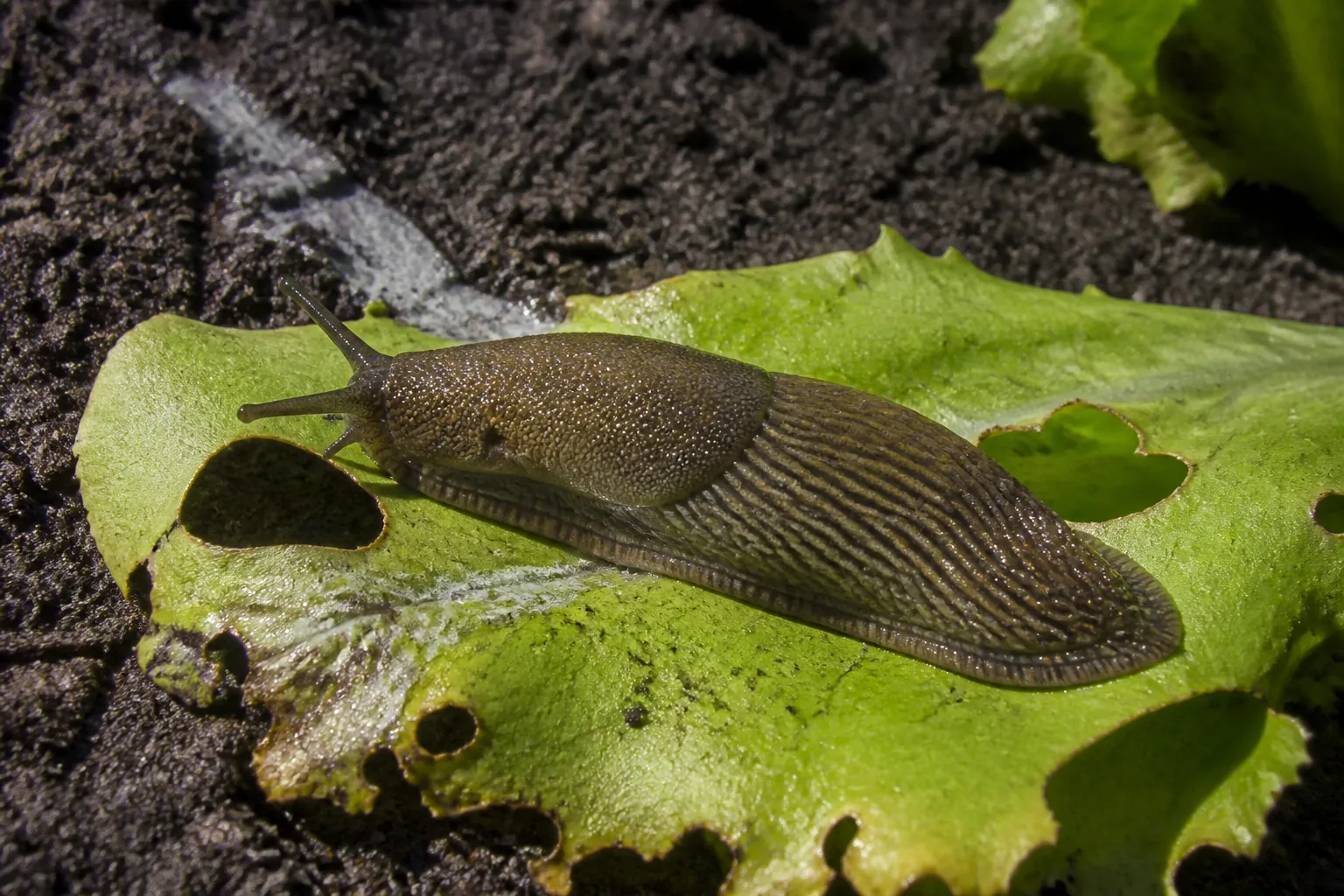
Autumn is when the slugs win. The beds are wet, the nights are mild, the seedlings for winter are small, and every damp evening brings them out in numbers that would embarrass a spring garden. Slug and snail control at this time of year is worth more than at any other, and for a reason most gardeners never hear: October is when they lay their eggs.
Kill a slug in April and you have removed one slug. Remove the conditions it needs in October and you have removed a hundred of next year’s. That difference is what this article is about.
Slug and Snail Control at a Glance
| Peak season | Autumn and spring, whenever it is wet and 40-70°F |
| Active | After dark, and all day in wet weather |
| Damage | Irregular holes with smooth edges, silvery trails |
| Most effective method | Hand picking after dark, repeatedly |
| Best bait | Iron phosphate, used to the label |
| Never use around pets | Metaldehyde |
| The long game | Remove daytime shelter, water in the morning |
| Autumn bonus | Every adult removed now is a clutch of eggs prevented |
Know Which One You Have
Two animals, one problem, and slightly different habits.
Slugs — the gray field slug (Deroceras reticulatum) is the common culprit — live mostly in the top few inches of soil. They shelter underground and in litter by day, which is why you can clear a bed of every visible slug and still lose seedlings that night.
Snails, usually the brown garden snail (Cornu aspersum), need calcium for their shells and climb. They shelter above ground in walls, under pots, and in dense ivy, and they travel farther than slugs do.
The distinction matters when you decide where to look. Slug and snail control means searching the soil for one and the vertical surfaces for the other.
Why Autumn Is the Season That Matters
Through late September and October the adults mate and lay. A single slug lays clusters of pearly, pea-sized eggs, several dozen at a time, tucked into soil crevices and under anything flat.
Those eggs sit through winter and hatch in spring, straight into a garden full of seedlings. So the autumn population is not just this season’s problem — it is next season’s, laid out in advance.
Warm wet autumns produce spring plagues; cold dry ones, however, do not. You cannot control the weather, but you can control how much shelter and moisture your plot offers in the weeks when they lay their eggs.
Reading the Damage
Before you treat anything, be sure of the culprit. Half of what gets blamed on slugs turns out to be another pest entirely, and the treatments for the two share nothing at all.
- Irregular holes with smooth edges, often in the middle of a leaf rather than the margin.
- Silvery dried slime trails on leaves, soil, and pots in the morning.
- Seedlings gone entirely, cut off at soil level overnight, with nothing left.
- Rasped patches on the skin of squash, strawberries, and tomatoes lying on the ground.
Ragged holes with chewed edges and visible droppings are caterpillars instead, and the difference matters because the treatments share nothing. The wider identification guide is in organic pest management.
Slug and Snail Control That Actually Works
Three methods do all the heavy lifting. Everything else is support.
1. Hand picking after dark. Go out an hour after sunset with a torch on a damp evening, and work the beds systematically. Then drop what you find into a bucket of soapy water. Two or three consecutive nights makes a visible difference, and it costs nothing but twenty minutes.
2. Trap boards. Lay a plank, a roof tile, or half a scooped grapefruit skin on the soil near the crop. Slugs and snails gather underneath by morning, and you collect them at breakfast instead of at midnight.
3. Iron phosphate bait, scattered thinly. Organic standards allow it, it does not harm earthworms at label rates, and slugs stop feeding within a day of eating it. Use it as the label directs and no heavier, because more is not better, and a thick line of pellets does nothing extra.
UC IPM’s snails and slugs guidance rates hand collection and habitat removal above any product, and my own beds agree.
Baits: What Is Safe and What Is Not
This is, however, the one place in slug and snail control where a mistake does real harm.
Metaldehyde is highly toxic to dogs, and the blue pellets are attractive to them. Poisoning is fast and often fatal. Iron phosphate baits do the same job with far less risk to pets and wildlife, and they are the ones to keep in the shed.
Whatever the product, the label is the instruction. It sets the rate, the placement, the interval before harvest, and the precautions, and it is a legal document rather than a suggestion. Never scatter bait on the leaves of a crop you are about to eat.
Even so, place the safer bait in small scattered amounts near the crop rather than in heaps, and lift any that remains uneaten after wet weather.
Slug and Snail Control Without Any Product
The durable answer is a garden that is a bad place to be a slug. It takes a season to build, and afterward it never stops working.
- Water in the morning, not the evening. A bed that is damp at dusk is an invitation. A bed that has dried through the afternoon is not.
- Keep mulch away from young stems. Mulch is good for the soil and excellent for slugs, so pull it back a few inches around seedlings, as noted in organic garden mulch.
- Clear the daytime hotels. Boards, pots, bricks, dense weeds, and long grass along the edges all shelter them, and clearing weeds does double duty here — see natural weed control.
- Feed the predators. Ground beetles, birds, frogs, toads, and slow worms all eat slugs, and a garden with a log pile and some standing habitat keeps them.
That last point, above all, is the one that compounds. A plot that holds its predators needs less of everything else, and beneficial insects for the garden lists the residents worth keeping.
There is a tension here worth naming. Leaf litter shelters both the predators and the slugs, so the honest rule is to keep the shelter in the borders and off the vegetable beds themselves.
A Slug and Snail Control Calendar
The work is seasonal, and doing the right thing at the wrong time is most of why gardeners feel they are losing.
September and October. The important months. Adults are laying, the ground is wet, and every one removed now is a clutch of eggs that never happens. Hunt at night, lift every board, clear the egg clusters.
November to February. Nothing to do but deny them shelter. Keep flat objects off the soil and let frost reach the top inch of the beds, which kills a share of the eggs outright.
March and April. The hatch. Small, pale, almost invisible slugs appear in numbers just as the first sowings go in. This is when covers and collars earn their place, because the damage happens faster than you can patrol.
May and June. Peak damage on seedlings. Nightly patrols, trap boards, and bait where a crop is genuinely at risk. Transplants beat direct sowing in a bad year.
July and August. They go quiet in dry heat and retreat deep into the soil. Do not mistake the lull for a victory, and do not start watering in the evening because it feels cooler.
The pattern behind it is simple enough to hold in your head. Two wet seasons, two busy periods, and one month in autumn that decides the size of the following spring.
The Crops That Stay in the Ground
There is one more autumn job that belongs here, and it is easy to forget once you have cleared the beds. Any crop still standing through winter — kale, leeks, chard, winter lettuce under a cover — is a food source in a garden that has almost none. Keep checking those beds on the mild damp evenings, right through until the frost hardens the ground. A row cover left over winter lettuce is warm and damp underneath, which is comfortable for the crop and even more comfortable for what eats it.
Slug and Snail Control Myths That Waste Your Time
Not everything that gets repeated works, and gardening is full of confident advice.
| Method | Verdict |
|---|---|
| Copper tape | Some effect on pot rims, little on open ground |
| Crushed eggshells | Popular and largely ineffective in trials |
| Coffee grounds | No reliable evidence, and heavy layers can harm soil |
| Diatomaceous earth | Works only while completely dry, so useless in autumn |
| Beer traps | Genuinely attract slugs, but only within a yard or two |
Beer traps deserve a word, because they are half right. They do catch slugs, and they also drown ground beetles, which are your allies. Sink the rim about an inch above the soil surface so beetles can walk past and slugs still climb in.
Minnesota Extension’s slug page reaches the same conclusion on barriers: keep the ground unfriendly rather than relying on rings of anything.
Protecting Seedlings Specifically
Young plants are the whole battleground. An established lettuce shrugs off some damage, whereas a two-leaf seedling disappears.
- Start indoors and transplant larger. A stocky transplant survives what a germinating seed cannot, which is one of the arguments in direct sow vs transplant.
- Use a physical cover. Row cover pinned down at the edges keeps them out entirely, as long as none are already inside — see floating row covers.
- Cut collars from plastic bottles and press them an inch into the soil around each transplant.
- Thin promptly. Crowded seedlings hold moisture at soil level and never dry out between waterings.
Thinning has half a dozen other reasons behind it, all gathered in how to thin seedlings. Overwatered seedlings are also the ones that get eaten, because the surface never dries. The symptoms overlap with several other problems, and signs of overwatering gathers them.
The Autumn Egg Hunt
This is the twenty minutes that pays for itself next April.
On a mild damp day, lift every board, pot, tile, and paving slab lying on soil in the plot. Underneath you will find clusters of small round eggs, translucent or milky white, sometimes in a neat pile of thirty.
Scrape them onto the surface, then leave them. Exposed to sun and air they desiccate within a day, and the birds take a share.
Finally, take the shelter away for good. Every flat object left on soil over winter is an incubator, and the fewer of them the plot holds in October, the smaller the spring hatch.
Slug and Snail Control Mistakes
| Mistake | Why it fails |
|---|---|
| Hunting in daylight | They are underground; you find one in twenty |
| Watering at dusk | You create the exact conditions they need |
| Relying on eggshell barriers | Trials do not support it, and it wastes your time |
| Heaping bait in piles | Wasteful, and no more effective than scattering |
| Treating once and stopping | Neighbors’ slugs refill the plot within days |
| Clearing every scrap of habitat | You lose the beetles and frogs that hunt for you |
Slug and Snail Control Questions Answered
Do slugs really come back after I clear the bed?
Yes, and quickly. They also travel several yards a night, and the soil holds far more than you see. That is why the aim is to keep the numbers down rather than to reach zero.
Are nematodes worth trying?
They work well on slugs, less so on snails, and they need soil above about 41°F to be effective. In a mild autumn they are a good option; in a cold one they waste your money.
Will ducks or chickens solve it?
Ducks are certainly effective and eat slugs enthusiastically. They also eat seedlings and compact wet soil, so they belong in the plot between crops rather than during them.
Is there a plant they will not touch?
Nothing is immune, although they largely leave alone strongly scented and tough-leaved plants: rosemary, sage, fennel, and most alliums. Lettuce, hostas, and young brassicas are at the other end.
Should I bother in a dry autumn?
Less so, because dry weather does most of the work for you and the population crashes on its own. Save the effort for the wet years.
Twenty Minutes on a Wet Night
Slug and snail control comes down to timing more than products. Go out after dark two or three nights running while the ground is damp, lift every board and clear every egg cluster, water in the morning from now on, and leave the log pile alone so the beetles stay. October, not April, decides next spring’s seedlings.
Check out the author’s book here: The Year-Round Vegetable Garden for Beginners.


Leave a Reply