
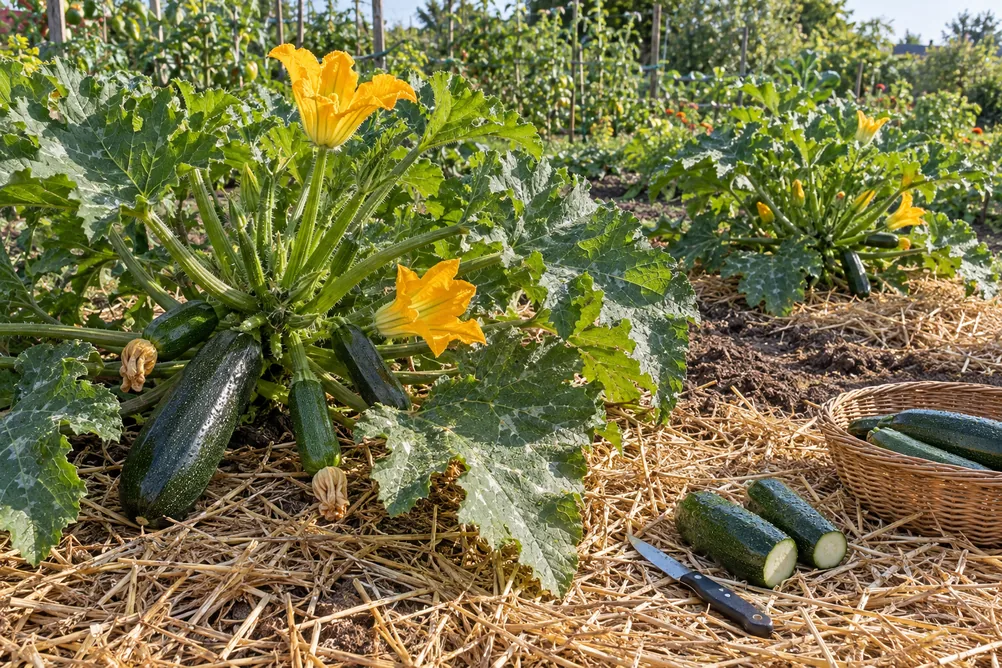
Every August, somebody leaves a zucchini on my porch. It is always the size of a rolling pin, and it is always a confession. Whoever grew it went away for a weekend, came back, and found that the fruit had doubled. I have done the same thing myself. Growing zucchini is the easiest job in the vegetable garden. At the same time, it is the one that most often ends in a pile of woody clubs nobody wants. The plant is not the problem, because the gardener’s schedule is.
In short, this guide covers what a zucchini plant actually asks for, which is less than most people give it. It also covers the three things that go wrong every year. Fruit rots at the tip, a vine wilts overnight in July, and the harvest gets away from you. Growing zucchini well is mostly a matter of two plants, a lot of space, and a walk down the row every other day with a knife.
Growing Zucchini at a Glance
| The short answer | |
|---|---|
| Plants needed | Two for a family, three if you like to give it away |
| Sowing | Direct, one inch deep, after the soil reaches 65°F |
| Spacing | 3 feet between plants, 4 feet for the large varieties |
| Sun | Eight hours, full |
| Water | One inch a week at the base, never on the leaves |
| Days to first fruit | 45 to 55 from sowing |
| Pick at | 6 to 8 inches long, 2 inches across |
| Check the plants | Every day or two in hot weather |
Zucchini Is a Summer Squash
Zucchini is a summer squash, and that single fact explains most of how to grow it. Summer squash is a warm-season vegetable that you eat immature, before the rind hardens and the seeds fill. Winter squash is the same genus left on the vine until it is done. Illinois Extension’s summer squash page puts the two side by side. The winter kinds run across the garden on long vines. In contrast, the summer kinds, zucchini among them, grow as a bush, and one bush can be four feet across by July.
Variety names cover more ground than people expect, since zucchini proper is only the dark green cylinder. The same plant family gives you the pale green Italian types, yellow straightnecks and crooknecks, and the flat scalloped pattypans. As a result, everything in this guide applies to all of them, and growing zucchini and growing a yellow crookneck are the same job. In addition, a few varieties grow as short vines rather than bushes, such as Tromboncino, and those need a trellis or a lot of ground.
Growing Zucchini: Where and When to Plant
Growing zucchini starts with full sun and warm soil, in that order. Eight hours is the figure to aim for, and a plant in six hours of light grows leaves and few fruit. The soil should be rich, drained, and warm, because the plant does nothing in cold ground. A seed sown in 55°F soil rots before it sprouts. Therefore, wait for 65°F at two inches deep, and the method in soil temperature for planting settles the date better than any calendar. In most of the country that is two weeks after the last frost.
Growing zucchini in a raised bed shortens the wait, since the bed warms a week or two before the ground around it. The mix in raised bed soil mix suits the crop as it stands, with a shovel of compost worked in where each plant will go. In the open ground, I dig a bucket of compost into a mound a foot across for each plant. Then I sow three seeds into the top of it. The mound drains and warms, and the roots find the compost as they spread.
Do not plant it all at once, though, because growing zucchini in one big batch backfires. A zucchini plant peaks for four to six weeks and then slows, tires, and picks up mildew. For that reason, a second sowing a month after the first keeps young plants coming into bearing as the old ones fade. The schedule in succession planting covers the timing. In a mild climate a third sowing in July gives fruit to the first frost.
Sowing and Spacing
Sow the seed directly in the garden, an inch deep, three seeds to a station. When the seedlings have their second true leaf, cut the weakest two at the soil line and keep the strongest. Zucchini seedlings grow fast and resent root disturbance, so there is little to gain from starting them indoors. The trade-offs are in direct sow vs transplant. One case for a transplant is a short season in the far north. Even then, sow into a four-inch pot no more than three weeks before the plant goes out.
The spacing is where most gardeners go wrong when growing zucchini. A seed packet says two to three feet, and the packet is right, but a plant in a good bed grows wider than that. Give each one a full three feet, and four feet for the vining kinds. A plant with air around it dries after rain, escapes the worst of the mildew, and is easy to search for fruit. Two plants jammed together become one large dark tangle, and the fruit hides in it until it is the size of a bat.
Two plants are enough, and I say this every year and every year somebody grows six. A healthy zucchini plant gives a family more fruit than it wants to eat from July to September. Consequently, the space you save by growing two instead of six goes to something you will actually run short of, such as beans or lettuce.
Growing Zucchini: Water, Mulch, and Feeding
Zucchini has big leaves and shallow roots, and it wilts on a hot afternoon even in wet soil. That midday wilt is not a signal to water. Check the plant in the morning, and if it has recovered, the soil is fine. When it does need water, give it an inch a week, at the base, in one or two deep soakings rather than a daily sprinkle. A soaker hose or a line of drip tape under the mulch does this without wetting the leaves, which is the point. Wet leaves in a still evening are where powdery mildew starts. Overwatered plants yellow from the bottom, and signs of overwatering explains the difference between that and a nitrogen shortage.
Mulch once the soil is properly warm, and not before. An inch or two of straw or shredded leaves holds moisture and keeps the fruit off the dirt. It also stops soil splashing onto the leaves in a storm. The Illinois page notes that mulch also brings the crop on earlier, because the roots are shallow and a covered soil stays evenly moist. The options are in organic garden mulch. Black plastic under the plants does the same job in a cold spring, so I use it in years when May is slow.
Feeding is simple, because the compost in the mound carries the plant to its first fruit. Then, once it is bearing, a side-dressing of a balanced fertilizer or a monthly drench of fish emulsion keeps it going. However, do not overdo the nitrogen. Too much grows enormous leaves and a plant that drops its flowers. A plant with dark green leaves and no fruit is nearly always a plant that has been fed too well.
Flowers, Bees, and Fruit That Rots at the Tip
A zucchini plant carries two kinds of flower. The male flowers open first, on long thin stems, and there are a lot of them. The female flowers come a week or two later, each one sitting on a small swelling that is the future fruit. A bee moves the pollen from one to the other, and the fruit grows. Without the bee, the little fruit yellows, shrivels from the blossom end, and drops. New gardeners see the first week of male flowers, see no fruit, and assume something is wrong. Nothing is. Wait.
However, poor pollination is real, and it is the most common reason for zucchini that rot at the tip when the plant is otherwise healthy. Maryland Extension’s page on pollination problems in vegetables explains the pattern. Each flower opens for a single morning, and cool, wet weather keeps the bees away. The fix takes a minute with a male flower picked before nine in the morning. Strip its petals and touch the pollen to the center of an open female flower. The steps are in hand pollinating squash. Do it for a week and the fruit set catches up.
The other cause of rotting tips is blossom end rot, the same trouble tomatoes get. It looks similar, but the cause is a calcium shortage brought on by uneven watering, not a missing bee. The fruit develops a sunken, leathery brown patch at the flower end while the rest keeps growing. Blossom end rot is the guide to telling the two apart. Steady water and mulch prevent it, and a bag of lime does not.
One more thing about the flowers is worth saying. A gardener with more than one kind of squash in the bed sometimes worries about the plants crossing. They do cross, but the cross only shows up in the seed, not in this year’s fruit. Vegetable cross pollination explains why it matters only if you save seed. Meanwhile, the surplus male flowers are worth picking in themselves. Stuffed with soft cheese and fried in batter, they are the best thing the plant produces.
The Pests That End the Season Early
Three pests matter when growing zucchini, and two of them can kill a plant. The worst is the squash vine borer, a moth larva that tunnels into the base of the stem in early summer. The plant looks fine one day and lies flat the next, wilted from the ground up. A pile of wet sawdust at the base marks the entrance hole. Maryland Extension’s squash vine borer page lays out the life cycle. The adult moth lays its eggs on the lower stems from late May into June. Its larva then feeds inside the stem for four to six weeks.
The prevention is timing and a barrier, in that order. Cover the young plants with a floating row cover from sowing until the first female flowers open. Then take it off so the bees can get in. A collar of aluminum foil around the bottom few inches of stem stops the moth laying there. If a plant does wilt, slit the stem lengthwise with a razor blade and find the white grub. Remove it, and heap moist soil over the cut. The stem often roots from the wound and the plant recovers. Finally, sow the second crop in mid-June, after the moths have finished flying.
Squash bugs are the second pest, gray, flat, and shield-shaped, and they hide under the leaves and in the mulch. Look for clusters of bronze eggs on the undersides of leaves and tear off that piece of leaf. The young nymphs die under a spray of insecticidal soap. The adults do not, so the eggs are the target. Cucumber beetles are the third, small and yellow with black stripes or spots. They chew the seedlings and spread bacterial wilt as they go. The row cover handles them too. A few vegetable companion planting chart help around the edges, and nasturtiums draw the beetles away, but a cover works every time.
Powdery mildew is the disease that ends most seasons. By August every zucchini leaf carries some of the white dusting, and the plant slows down. Air around the plant, water at the base, and a fresh sowing in June do more than any spray. When you do want to treat it, powdery mildew treatment gives the options, and a weekly milk spray on a young plant is the cheapest. Pull an old plant once the mildew takes over rather than nursing it, because the June sowing has taken its place.
Growing Zucchini for the Harvest, Not the Trophy
The first fruit comes 45 to 55 days after sowing, and from then on the plant sets a new one every couple of days. Pick a zucchini when it is six to eight inches long and about two inches across. At that size the skin is glossy, the seeds are unformed, and the flesh is firm and sweet. Two days later it is a foot long. Two days after that it is a club with a hollow seedy center and a skin that dents a knife. The Illinois guide is blunt about it: most gardeners harvest too late.
The rule for growing zucchini is therefore a walk down the row every day or two, and every day in a hot week. Look under the leaves, because the fruit grows in the shade at the center of the plant and hides there. Cut the stem with a knife or pruners half an inch above the fruit. Do not twist it off, since a torn stem lets rot into the plant. Wear a long sleeve, because the leaf stems carry small spines that leave a rash on a bare forearm. The timing signals for the rest of the garden are in harvesting vegetables.
The reason to pick small goes beyond flavor. A fruit that ripens its seed tells the plant that the job is done, and the plant stops setting new ones. Picking small keeps it in production. In contrast, one forgotten club at the back of the plant can shut down flowering for a week. When you do find one, cut it, put it on the compost, and go on. A giant zucchini is not a trophy but a plant that has stopped working.
Storing, Freezing, and Giving It Away
Zucchini keeps a week in the refrigerator crisper in a paper bag, no longer. It does not store the way winter squash does, since the skin you eat is the skin that keeps the water in. Storing winter squash is a different crop with different rules. The way to keep a summer’s surplus is the freezer. Grate it, squeeze out the water in a clean tea towel, and pack it in one-cup bags for bread and fritters in winter. Slices blanched for a minute and frozen on a tray hold up in soup.
Beyond the freezer, the honest answer is simple and always the same. A good year of growing zucchini produces more than one household eats. Grow two plants and pick every other day. Then hand the rest to a neighbor while it is still small enough that they will be glad of it.
Frequently Asked Questions
Why does my zucchini plant have flowers but no fruit?
The first flowers on any zucchini are male, and they never bear fruit. The females come a week or two later, with a small fruit already behind the flower. If those small fruit yellow and drop, the bees are not reaching them. Hand pollinate for a week, and stop spraying anything in the garden while the plant is in flower.
How many zucchini plants do I need?
Two, for most families. One healthy plant gives six to ten pounds of fruit over the summer. Three or four are enough if you plan to freeze a lot or feed a crowd. Six is a mistake that everyone in the neighborhood makes once.
Why did my zucchini plant wilt overnight?
Check the base of the stem for a hole and a pile of wet crumbs, which means the squash vine borer. Slit the stem, remove the grub, and mound soil over the wound. A row cover from sowing until flowering prevents it next year.
Can I grow zucchini in a container?
Yes, growing zucchini in a container works, and it needs at least 10 gallons of a light mix and a compact variety such as Bush Baby or Patio Star. Water every day in hot weather, since the pot dries fast. The plant gives less than one in the ground, but a patio gets plenty from a single pot.
Check out the author’s book here: The Year-Round Vegetable Garden for Beginners.


Leave a Reply