
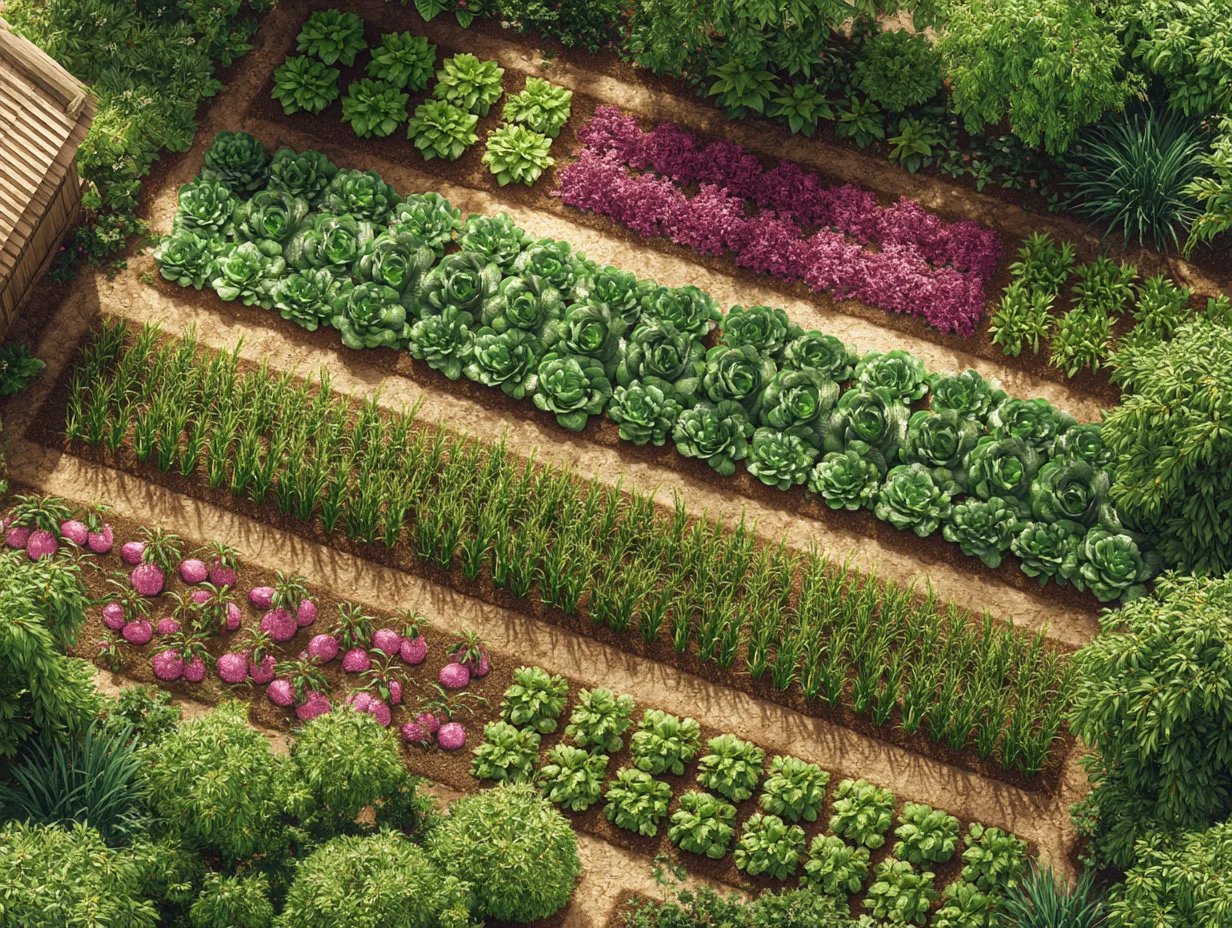
Gardeners have long observed that certain vegetables thrive—or struggle—when planted side by side. Modern science confirms some of these time‑tested relationships and questions others. A well‑planned Vegetable Companion Planting Chart turns these alliances into a blueprint that makes the most of space and helps with pests. In this guide, we’ll explore the principles behind companion planting and present an easy chart of familiar crops. Along the way, we’ll add practical tips drawn from The Year-Round Vegetable Garden for Beginners. Throughout, we’ll also point out which pairings university research supports and which rest on folk wisdom alone.
1 The Science Behind a Vegetable Companion Planting Chart
1.1 Allelopathy and Root Exudates
Some plants release chemicals that suppress neighboring species, a process called allelopathy. For example, marigold roots release alpha‑terthienyl, which helps reduce root‑knot nematodes. However, the University of Florida IFAS Extension adds a catch: marigolds must grow as a dense cover crop for at least two months before the vegetable, in the very same spot. Interplanted marigolds probably do not protect their neighbors. Similarly, black walnut roots release juglone, which can stunt tomatoes.
1.2 Pest Confusion and Biocontrol
Many gardeners believe fragrant herbs like basil and dill mask the scent of vulnerable crops. However, Washington State University Extension notes that field research has not borne this out for mint or any other aromatic species. Flowers are another story. Umbellifers feed predatory wasps, while composite flowers lure hoverflies whose larvae eat aphids. For more, see Pollinator Friendly Garden: Attracting Bees and Butterflies to Your Vegetables.
To meet the predators themselves, read Beneficial Insects for Garden: Creating a Haven for Natural Predators.
1.3 Nutrient and Space Optimization
Meanwhile, deep‑rooted plants (parsnips) mine minerals inaccessible to shallow feeders (lettuce). Likewise, climbing beans use the vertical space above carrots, packing more food into each square foot. For a bed shape that suits this, see Mounded Row Gardening: A No-Lumber Approach to Raised Planting.
2 Vegetable Companion Planting Chart (Quick Reference)
Below, each primary crop lists its best companions and those to avoid. Detailed explanations follow for major pairings.
| Primary Crop | Good Companions | Bad Neighbors |
|---|---|---|
| Tomatoes | Basil, Borage, Carrots, Marigold | Corn (earworm crossover), Fennel, Potatoes (blight risk) |
| Cucumbers | Nasturtium, Dill, Sunflowers | Sage, Potatoes |
| Carrots | Onions, Chives, Lettuce, Peas | Dill (shares carrot pests) |
| Beans (Pole) | Corn, Radish, Marigold | Onions, Garlic |
| Broccoli | Celery, Chamomile, Beets | Strawberries, Tomatoes |
| Lettuce | Carrots, Radish, Strawberries | Parsley (can overwhelm in summer) |
| Peppers | Basil, Onions, Spinach | Fennel (allelopathic) |
| Squash | Corn, Beans (Three Sisters) | Potatoes (compete for moisture) |
3 Key Pairings in the Vegetable Companion Planting Chart
3.1 Tomatoes + Basil: Flavor and Pest Shield
According to Clemson University Extension, basil repels tomato pests. Many gardeners also believe the pair improves tomato flavor, although Clemson notes that this has not been proven. Trim basil regularly so it doesn’t shade out, and toss the cuttings with fresh leaves from Mesclun Mix Growing: Cultivating Salad Greens for Every Palate.
3.2 Carrots + Onions: Double‑Edged Aroma
Traditionally, onion scents are said to deter carrot rust fly, while carrot foliage confuses onion fly. Sow onions as sets at 4‑inch intervals, then seed carrots between rows. Then harvest onions early, allowing carrots to size up.
3.3 Corn + Beans + Squash: The Three Sisters
• Corn supplies a living trellis for climbing beans.
• Beans fix atmospheric nitrogen and enrich the soil, although they don’t feed the corn directly.
• Squash leaves shade soil, suppressing weeds and conserving moisture.
To plant, sow a hill of five corn kernels. Once the corn is 6 inches tall, poke four bean seeds around each stalk, then add a final ring of squash transplants. For more spacing details, see Intensive Gardening: Planning for High Yields in Small Plots.
Still, keep your expectations realistic. WSU Extension found no compelling, published evidence that the Three Sisters improves yields or soil quality. So grow it for its history and its clever use of space.
3.4 Cucumbers + Nasturtiums
Gardeners often grow nasturtiums as a trap crop for aphids, which can then be hosed off or composted. However, keep them close to the cucumbers. WSU notes that trap crops don’t attract insects from more than about five meters away.
3.5 Brassicas + Chamomile
Folklore says chamomile boosts brassica flavor, but no research confirms it. Instead, its small flowers feed beneficial insects. Remove spent chamomile after flowering to prevent self‑seeding.
3.6 Potatoes + Horseradish
Old garden books suggest a single horseradish root at row ends to deter potato beetles, though no study backs the claim. If you try it, don’t overplant, because horseradish spreads aggressively.
4 Turning a Vegetable Companion Planting Chart into a Bed Layout
4.1 Layering Canopy Heights
- Upper Tier: Indeterminate tomatoes on trellis north side.
- Middle Tier: Peppers and bush beans in center.
- Groundcover: Lettuce, basil, and parsley in front.
As a result, this stacking allows full sun to reach lower crops while maximizing photosynthetic real estate.
4.2 Succession Waves
| Month | Primary Crop | Intercrop | Follow‑Up |
| March | Peas | Spinach | Pole Beans (after peas) |
| May | Tomatoes | Lettuce | Garlic (fall) |
| July | Bush Beans | Radish | Fall Broccoli |
To time each wave for your region, see Planting Schedule: A Year-Round Guide for Every Season.
5 Pest Partners in a Vegetable Companion Planting Chart
| Pest | Repelling Companion | Mechanism |
| Colorado Potato Beetle | Catnip | Nepetalactone confuses beetle olfaction |
| Squash Vine Borer | Dill, Marigold | Masking volatiles, beneficial wasp attraction |
| Aphids (general) | Cilantro, Dill | Umbels offer nectar to hoverflies |
| Cabbage Worm | Thyme | Essential oils deter egg‑laying |
Treat this table as a starting point, since most of these pairings come from garden tradition rather than field trials. For full protocols, see Organic Pest Management: Eco-Friendly Solutions for the Vegetable Garden.
If you want to lure pests away instead, read Trap Crops: Decoying Pests Away from Vegetables.
6 When a Vegetable Companion Planting Chart Goes Wrong
6.1 Allelopathic Antagonists
• Fennel stunts beans, tomatoes, and brassicas; keep in a separate herb bed.
• Sunflower Residues slow germination of lettuce; follow with corn or beans instead.
6.2 Resource Competition
Thirsty squash can overwhelm shallow‑rooted carrots. To avoid this, use drip irrigation and 2 inches of straw mulch, as Drought Tolerant Gardening: Water-Saving Techniques for Home explains.
6.3 Disease Transmission
Tomatoes and potatoes share late blight, so planting them together helps the disease spread. Therefore, rotate these Solanaceae at least three years apart, following Vegetable Crop Rotation: An Essential Guide for Soil Health Families.
7 Soil Preparation for Mixed Plantings
• Compost First: Incorporate 2 inches to buffer varied nutrient needs.
• Side‑Dress Targeted Nutrients: Calcium for tomatoes, phosphorus for root crops; see Organic Plant Food: Feeding Your Veggies for Maximum Growth.
• Mulch Blends: Use shredded leaves around nitrogen lovers; wood chips under perennials.
8 Raised Bed Companion Matrix (Example 4 × 8 Foot)
| Section | Plants | Notes |
| North Trellis | Tomatoes + Basil at base | Basil fills the shady base |
| Center Block | Peppers + Carrots | Carrots shade soil, retain moisture |
| South Edge | Lettuce interplanted with Onion sets | Onions tuck between heads |
| Corners | Marigold & Nasturtium | Encircle bed for pest barrier |
Finally, rotate such beds yearly, for example by moving the Solanaceae from the north edge to the east edge.
9 Flowers for Your Vegetable Companion Planting Chart
| Flower | Veg Partner | Benefit |
| Calendula | Kale, Lettuce | Attracts pollinators and predators |
| Borage | Cucumbers, Strawberries | Increases pollination; edible blooms |
| Zinnia | Squash | Draws pollinators in midsummer heat |
Clemson Extension recommends pollen-rich flowers like calendula, zinnia, borage and cosmos to draw pollinators into the vegetable garden. In addition, those flowers bring in ladybugs, lacewings and parasitic wasps.
10 Myth-Busting the Vegetable Companion Planting Chart
- Tomato + Carrot Flavor Booster—no peer‑reviewed studies show taste change, but carrots do use under‑utilized root zones.
- Beans Add Nitrogen to Neighbors Immediately—nodules release most N after plant death, so chop and drop for soil boost. As WSU puts it, nitrogen fixers enrich the soil but don’t deliberately feed other plants.
- A Border of Marigolds Protects Every Crop—according to UF IFAS, interplanted marigolds probably don’t reduce nematodes. Moreover, some varieties host other nematodes, such as stubby‑root and sting nematodes.
- Strong Scents Keep Pests Away—field research hasn’t confirmed this for aromatic herbs, so rely on flowers for predators and on row covers for protection.
11 Vegetable Companion Planting Chart FAQs
Q: Can I interplant garlic with strawberries?
A: Yes, it’s a traditional pairing, and the two crops share space well. However, no solid study shows that garlic protects strawberries, so watch for spider mites anyway.
Q: How close is too close for companion crops?
A: Follow mature canopy spacing; competition increases disease risk if airflow is blocked.
12 Bringing It All Together
A thoughtful Vegetable Companion Planting Chart blends folk wisdom and modern ecology to create diversified, resilient gardens. By arranging plants that complement each other’s canopy shapes and needs, you can harvest more food from every square foot. At the same time, flowers and diversity help you use fewer chemicals. As you plan, remember that local climate, soil and pests change every pairing, so observe, record and adjust. For deeper dives into succession timing, intensive layouts and organic soil management, turn to the book below.
Start with a few pairings this season and let companion planting take your vegetable plot to the next level. Check out the author’s book here: The Year-Round Vegetable Garden for Beginners

Leave a Reply