
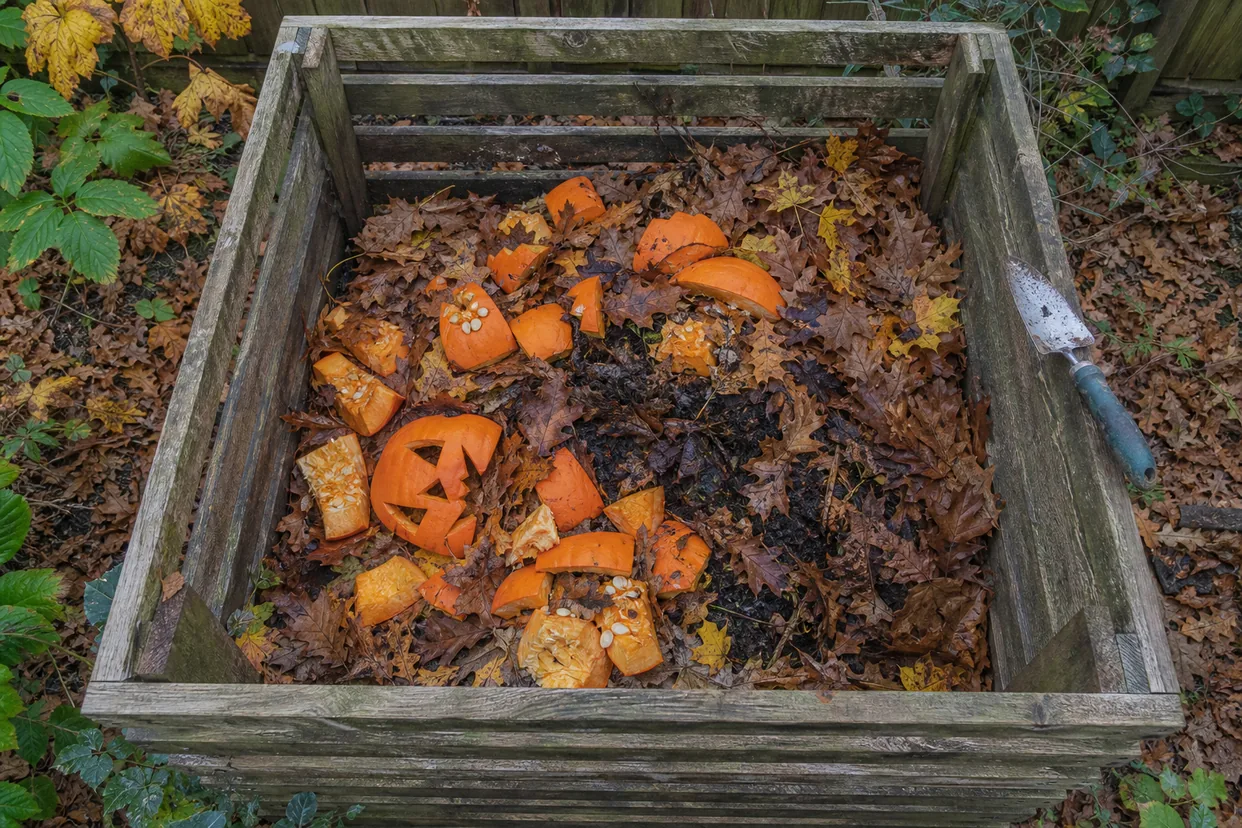
Composting pumpkins is the best thing you can do with a jack-o’-lantern once the candle burns out. A carved pumpkin starts to soften within days, and by the first week of November most of them are headed for the trash. In a compost pile, the same pumpkin turns into dark, crumbly soil by spring.
It is also one of the easiest wins in the fall garden. A pumpkin is mostly water, it has no woody parts, and it breaks down faster than almost anything else you can add in fall. The only work is a little preparation, a few minutes with a spade, and a plan for the seeds.
Composting Pumpkins at a Glance
| What goes in | Carved or whole pumpkins, gourds, winter squash past its prime |
| What stays out | Candles, wax, paint, glitter, marker, stickers, oiled or bleached pumpkins |
| Prep | Remove all decorations, then chop into pieces the size of a fist |
| Balance | Two to three parts dry leaves or straw for every part of pumpkin |
| Breakdown time | A few weeks in an active pile, three to six months in a cold one |
| Seeds | Roast them, save them, or expect volunteer seedlings in spring |
| Best timing | Within a week of Halloween, before mold spreads |
| Alternatives | Trench burying, feeding chickens, community pumpkin drop-offs |
Why Composting Pumpkins Beats the Trash Can
A pumpkin sent to a landfill ends up buried with no air. There it breaks down slowly and releases methane, a greenhouse gas far stronger than carbon dioxide. Illinois Extension points out that pumpkins are about 90 percent water, which makes them heavy to haul and quick to rot.
In a compost pile the same pumpkin breaks down with oxygen, so it releases far less methane and returns its nutrients to your beds. The flesh is rich in potassium and moisture, and the rind adds a little structure. If you are new to the basics, the beginner’s guide to composting explains how a pile works before you add anything.
There is a practical reason too. Late fall is when most compost piles run short of green, wet material, because the lawn has stopped growing and the kitchen scraps slow down. A few pumpkins arrive right when the pile needs them.
Getting Jack-o’-Lanterns Ready for the Pile
Preparation is the one step you cannot skip when composting pumpkins. Anything added to the pumpkin for Halloween has to come off first.
- Pull out candles and wax. Paraffin wax does not break down in a compost pile. Scrape any drips off the inside with a spoon.
- Check for paint and glitter. A painted, glittered or marker-decorated pumpkin should go in the trash, since you cannot remove the coating from the rind.
- Remove stickers, pins and wires. Small plastic and metal pieces turn up in finished compost for years.
- Skip treated pumpkins. Some people coat carved pumpkins with bleach, vinegar sprays or petroleum jelly to slow rot. Leave those out of a food garden.
- Scrape off heavy mold. A light fuzz is fine, but a pumpkin that has collapsed into slime is better buried in a trench, as described below.
Once it is clean, the pumpkin is ready for the spade.
Chop First, Then Layer
A whole pumpkin can sit in a cold pile for months, because the hard rind keeps air and microbes out. Breaking it open is the single biggest thing that speeds composting pumpkins.
Cut it into pieces roughly the size of your fist with a spade or an old knife. Some families prefer to smash it on the ground first, which children tend to enjoy far more than the carving. Either way, smaller pieces give the microbes more surface to work on.
Then layer. Pumpkin is a green, nitrogen-rich material, and it is very wet. Spread the pieces in a thin layer and cover them with two to three times as much dry, brown material. Fall leaves are perfect, and so are straw or shredded cardboard. Finish with a thin layer of finished compost or garden soil to bring in microbes.
That cover layer does three jobs at once. It soaks up the juice, it keeps fruit flies off the surface, and it stops the smell that a pile of bare pumpkin flesh develops in a warm week.
Pro Tip: Save a few bags of fall leaves beside the bin. You will need them again when the next load of pumpkins or kitchen scraps arrives in November.
What to Do With the Seeds
Pumpkin seeds are the one part of composting pumpkins that surprises people. Most home compost piles never get hot enough in the middle of November to kill seeds, so many will survive. In May they sprout wherever you spread the compost.
You have three choices:
- Remove the seeds and roast them, which is the simplest option.
- Save the seeds for planting, if the pumpkin came from an open-pollinated variety. Seed from a supermarket or a hybrid pumpkin will not come true, and the post on vegetable cross pollination explains why.
- Leave them in and pull the volunteers in spring, or let one grow and see what you get.
Volunteer pumpkins can be fun, but they rarely match the parent. If you want a real crop next year, start with named seed and follow the guide to growing pumpkins.
Other Ways to Return Pumpkins to the Soil
Not every garden has a compost bin, and not every pumpkin is in good enough shape for one. Composting pumpkins can take several forms.
Trench burying. Dig a trench about 12 inches deep in an empty vegetable bed, drop in the chopped pumpkin and cover it with soil. By planting time the pumpkin has vanished into the bed. This is the best choice for a moldy or collapsed pumpkin.
Sheet composting. Lay chopped pumpkin directly on a bed you are resting for winter and cover it with leaves and cardboard. It is the same idea as the lasagna gardening method, and the pumpkin simply becomes one of the green layers.
Worm bins. Small pieces of pumpkin flesh are a treat for composting worms, but add them slowly. A whole pumpkin at once makes an indoor worm bin too wet and sour.
Bokashi. Pumpkin can go into a bokashi bucket too, as long as you cut it into small pieces first. The post on bokashi composting covers how much wet material a bucket can take.
Hügelkultur mounds. If you are building a mound this fall, the pumpkins fit in the upper green layers, above the logs. The post on hügelkultur gardening shows the full order.
Pumpkins and Wildlife
Many people leave old pumpkins in the woods for deer and squirrels, and it feels like a kind thing to do. It is usually a bad idea, for the animals and for the woods. Illinois Extension warns that leaving pumpkins in forest preserves or ditches counts as littering. Wild animals also do not need a sudden pile of sugary food in late fall.
In your own yard, an open pile of pumpkin also draws rats and raccoons. Keep the pieces inside a closed bin or buried under a thick cover layer.
Warning: Do not feed carved pumpkins to pets or livestock if they have been painted, treated with sprays or left out long enough to grow mold. Moldy squash can make chickens and other animals sick, so only give them fresh, clean pieces.
Composting Pumpkins in Winter
If your pile freezes in December, the pumpkins will stop breaking down and sit in the bin until the thaw. That is not a problem. Frost bursts the cells in the flesh, and the pumpkin breaks down in a rush once spring warms the pile.
To keep composting pumpkins moving a little longer, make the pile bigger rather than adding more pumpkin. A pile about 3 feet on every side holds heat far better than a small heap. Cover it with a tarp or a thick blanket of leaves to keep rain from cooling it further.
How to Use the Finished Compost
By April or May, most of the pumpkin will be gone. You may find a few leathery pieces of rind and the stems, which take longer, so toss those back for another round.
Spread the finished compost an inch or two deep on your beds before planting, or use it to top up raised beds. It adds organic matter and potassium, but it is not a complete fertilizer. For a full picture of what compost can and cannot fix, see the post on soil amendments. You can also spread it thinly around perennials and cover it with organic garden mulch such as shredded leaves.
The EPA’s home composting guide has a helpful list of what belongs in a backyard pile and what does not.
What Goes Wrong When Composting Pumpkins
| Problem | Cause | Fix |
|---|---|---|
| Pile smells sour or rotten | Too much wet pumpkin, not enough dry material | Add two to three times as much dry leaves or straw and turn the pile |
| Fruit flies swarm the bin | Pumpkin flesh left exposed on top | Bury each load under leaves or finished compost |
| Pumpkin still whole in spring | Pumpkin added uncut, rind kept air out | Chop it into small pieces before adding |
| Pumpkin seedlings everywhere | Seeds survived a cool pile | Remove seeds first, or pull volunteers in spring |
| Wax or plastic in finished compost | Decorations not removed | Clean every pumpkin before it goes in |
| Rats or raccoons dig in the pile | Open heap with food on top | Use a closed bin and cover each layer |
Composting Pumpkins Questions Answered
Can you compost a carved pumpkin with candle wax on it?
Only after you scrape the wax off. Paraffin does not break down in a home compost pile, so remove every drip first.
Can you compost painted pumpkins?
No. Paint, glitter and marker coatings stay in the soil, and you cannot peel them off the rind. Put decorated pumpkins in the trash.
How long does it take for a pumpkin to compost?
Chopped pieces in an active pile break down in a few weeks. In a cold winter pile, expect three to six months, with the stem and some rind lasting longest.
Can you compost moldy pumpkins?
Yes, mold is part of the breakdown process. For a pumpkin that has collapsed completely, burying it in a trench is cleaner than adding it to the bin.
From Porch to Garden Bed
A jack-o’-lantern does its job for one night and then becomes a problem on the porch. Composting pumpkins gives it a second job for the rest of the year. Take off the wax, chop it up, bury it under leaves, and it will be feeding your tomatoes next summer.
Check out the author’s book here: The Year-Round Vegetable Garden for Beginners.

Leave a Reply