
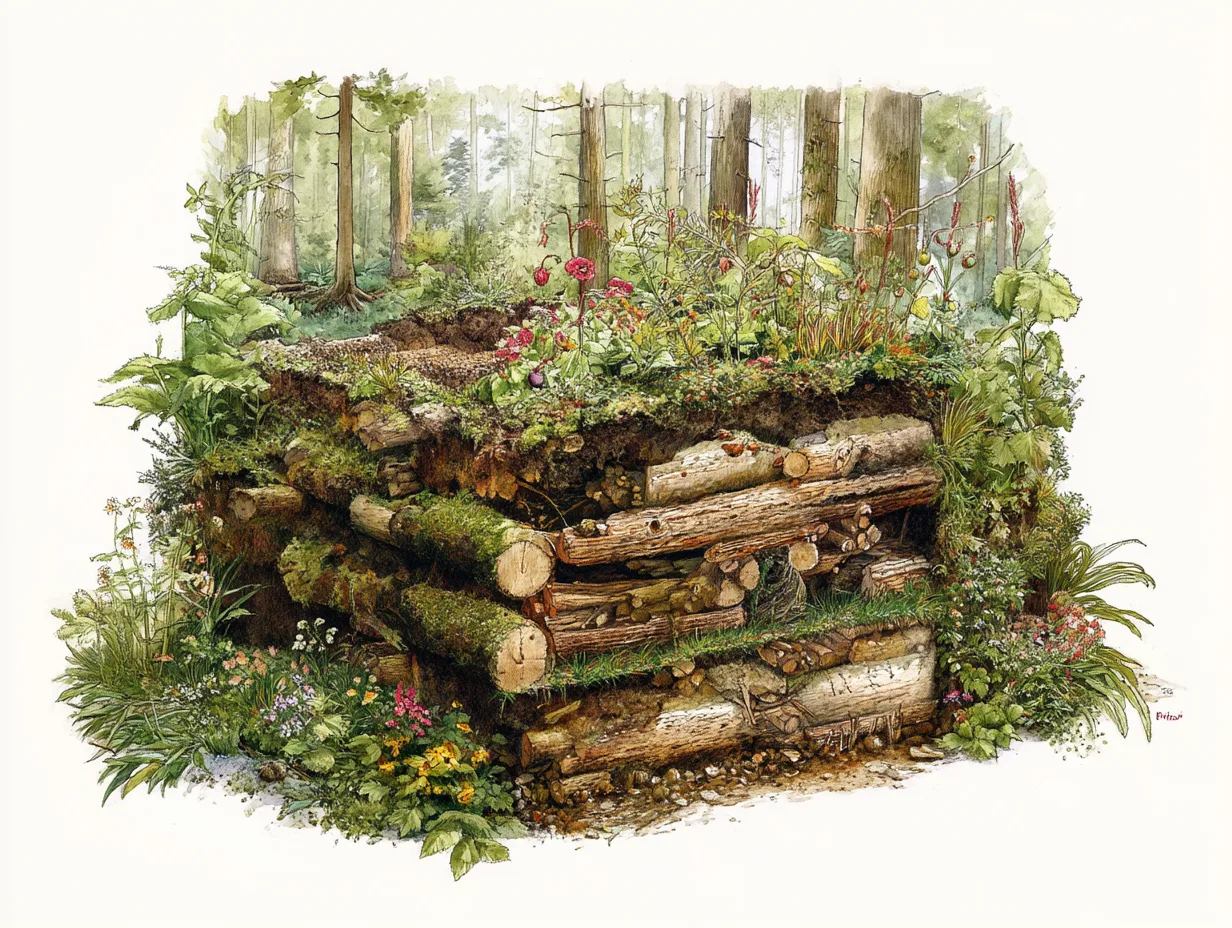
Hügelkultur Gardening is a time-tested technique originating in Eastern Europe and Germany. In short, the method builds raised beds on top of decomposing wood and organic matter. As a result, the mound provides steady nutrients, better drainage and richer soil. Because they harness natural decomposition, Hügelkultur (pronounced “HOO-gul-culture”) beds offer a low-maintenance way to grow vegetables, fruits and herbs.
This guide covers the history of Hügelkultur Gardening, its benefits, and the practical steps to build your own beds. Along the way, we’ll also draw on The Year-Round Vegetable Garden for Beginners.
The Origins and Principles of Hügelkultur Gardening
The term “Hügelkultur” translates directly to “mound culture” or “hill culture.” According to Clemson University Extension, the practice has German and Eastern European roots dating to the Middle Ages. However, the term first appeared in print only in 1962, in a German gardening book. Early practitioners found that buried logs and branches fed plants slowly as the wood decomposed. This process also traps moisture and promotes beneficial microbial activity, leading to a healthier, more productive garden bed.
Key Principles
- Layered Construction: Place rotting wood at the base, followed by layers of compostable materials like straw, leaves, and manure. Finally, top it off with a layer of fertile topsoil.
- Decomposition Over Time: As the wood breaks down, it creates air pockets that improve root growth and nutrient uptake.
- Moisture Retention: The porous structure of decomposing wood helps retain water, reducing irrigation needs.
- Natural Heating: The composting process generates warmth, extending the growing season in cooler climates.
Also, see Composting 101: A Beginner’s Guide to Black Gold for more on managing organic matter.
Advantages of Hügelkultur Gardening
Hügelkultur Gardening offers several benefits.
- Enhanced Soil Fertility: Decomposing wood releases a steady stream of nutrients, feeding plants over several growing seasons.
- Reduced Watering Needs: Clemson notes that the woody material acts like a sponge, holding moisture and releasing it into the soil during dry seasons.
- Natural Waste Recycling: Hügelkultur is an excellent way to repurpose fallen branches, kitchen scraps, and yard clippings.
- Less Soil Compaction: Building a mound lifts the growing surface off the ground, improving drainage and aeration.
- Season Extension: Moreover, microbial activity creates mild warmth, which UC Master Gardeners credit with earlier planting and a longer season.
Therefore, whether you manage a small urban plot or a larger homestead, Hügelkultur Gardening can adapt to different climates and soils. It also pairs well with the No-Dig Gardening Method: Building Soil Health Without Tilling.
How to Build a Bed for Hügelkultur Gardening
Step 1: Gather Materials
- Logs and Branches: Preferably partially rotted wood. However, avoid treated or painted lumber. UC Master Gardeners also warn against black walnut and black cherry, which are allelopathic. In addition, they suggest using cedar and redwood sparingly, since they break down slowly.
- Green Material: Grass clippings, kitchen scraps, manure.
- Brown Material: Dried leaves, straw, sawdust.
- Topsoil or Compost: Final layer for planting.
- Optional: Cardboard or newspaper to suppress weeds at the base.
Step 2: Choose the Location
First, select a site that receives ample sunlight. Also, make sure your mound won’t block pathways or create drainage issues for neighboring areas. In general, plan for 6–8 hours of sun per day if you’re growing sun-loving vegetables.
Step 3: Layer the Base
- Weed Suppression: Lay down cardboard or newspaper to stop grass or weeds from creeping in.
- Logs and Branches: Arrange the wood in a mound shape, roughly 2–3 feet high. Then fill any gaps with smaller sticks or twigs.
- Green Material: Add a layer of grass clippings, fresh leaves, or kitchen scraps to introduce nitrogen and moisture.
Step 4: Add Brown Material
Spread dried leaves, straw, or wood chips to balance the green material. Overall, aim for a carbon-to-nitrogen ratio that supports decomposition.
Step 5: Top It Off
Add a thick layer of fertile topsoil or compost—enough to completely cover the mound. After all, this is where your seeds or transplants will take root. Gently compact it to reduce air pockets, but don’t overdo it.
Step 6: Water Thoroughly
Saturate the mound. Thus, water jump-starts decomposition and ensures that the wood soaks up moisture.
Step 7: Plant and Mulch
Next, plant seeds or transplants according to their spacing requirements. Once they’re in place, add a thin layer of mulch (like straw or leaves) to conserve moisture. For detailed planting tips, see Starting a Vegetable Garden: A Checklist for Newbies.
Hügelkultur Gardening Maintenance and Long-Term Care
Watering
While Hügelkultur beds generally need less water, check soil moisture regularly, especially during the first year. Over time, the rotting wood holds more water, reducing irrigation frequency.
Mulching
Next, maintain a layer of organic mulch. This helps regulate temperature, prevent weed growth, and keep the decomposing wood moist.
Fertilizing
Initially, the wood may draw some nitrogen from the soil as it decomposes. Therefore, offset this with well-rotted manure or compost in the early stages. Alternatively, UC Master Gardeners suggest a cover crop of nitrogen-fixing legumes to enrich the mound.
Weed Control
Even so, weed seeds may find their way onto the mound. Hand-pull or lightly cultivate the top layer to disrupt emerging weeds. Likewise, if bugs show up, see Organic Pest Management: Eco-Friendly Solutions for the Vegetable Garden.
What to Plant in Hügelkultur Gardening
Hügelkultur Gardening supports a wide range of plants, from leafy greens to deep-rooted vegetables.
- Tomatoes, Peppers, Eggplants: The extra warmth and rich soil boost growth.
- Root Vegetables: Carrots and beets thrive in loose, aerated soil.
- Leafy Greens: Lettuce, spinach, and kale appreciate the consistent moisture.
- Companion Plants: Consider herbs or flowers that deter pests and attract pollinators.
For more on pairing crops, see Vegetable Companion Planting Chart: Boost Growth and Repel Pests.
Seasonal Tips
- Spring: Start seeds or transplants in the top layer. The decomposing wood generates mild heat, aiding germination.
- Summer: Check moisture levels during hot spells. Also, mulch generously.
- Fall: Add extra organic material if the mound settles. Then plant cool-season crops or overwintering vegetables.
- Winter: Your Hügelkultur bed continues decomposing beneath the snow or mulch, setting the stage for improved fertility next year.
Adapting Hügelkultur Gardening to Various Climates
Hügelkultur Gardening can work in both cold and warm regions.
- Cold Climates: The internal warmth can extend the growing season. Still, add row covers if frost is a concern.
- Arid Regions: Wood at the core helps retain water, reducing the frequency of irrigation.
- Wet Climates: Elevated mounds provide improved drainage, preventing root rot.
In addition, for more strategies to handle different conditions, consult Efficient Watering Techniques for Sustainable Vegetable Gardening.
Potential Challenges of Hügelkultur Gardening
- Nitrogen Drawdown: In the early stages, decomposing wood may temporarily consume nitrogen. Consequently, counter this with extra compost or manure.
- Pests: Wood piles can attract insects or small mammals. Accordingly, use wire mesh if necessary, and monitor regularly.
- Settlement: The mound may slump over time. As Clemson advises, add more compost to keep the bed filled to the top. According to UC Master Gardeners, a well-made mound lasts anywhere from 5 to 10 years.
Combining Hügelkultur with Other Methods
Hügelkultur Gardening doesn’t have to be a standalone technique. You can integrate it with:
- Mounded Row Gardening: Elevate your wood-filled beds further to enhance drainage and minimize labor. For details, see Mounded Row Gardening: A No-Lumber Approach to Raised Planting.
- No-Dig Gardening: If you prefer minimal soil disturbance, top each season’s Hügelkultur mound with compost.
- Permaculture Principles: Hügelkultur aligns with the resource recycling and natural soil building described in Permaculture Design: Principles for a Sustainable Ecosystem.
Why Try Hügelkultur Gardening?
Hügelkultur Gardening aligns with a sustainable mindset. Specifically, it recycles organic waste, improves soil over time, and reduces the need for chemical fertilizers. The slow breakdown of wood and other organic matter helps create a thriving, biodiverse soil ecosystem. While the setup takes work, the payoff in less watering, less fertilizer and robust growth can be substantial.
By embracing Hügelkultur, you tap into a method with roots in medieval Europe. Nevertheless, keep your expectations realistic. Washington State University Extension points out that there are no peer-reviewed scientific studies on hügelkultur. Instead, it recommends raised bed principles backed by research, like those in Raised Bed Soil Mix: The Perfect Ratio for Growth. It also warns that decomposing material can release excess nutrients into soil and water. In practice, treat your first mound as an experiment and watch how your plants respond. This practice offers a greener way to cultivate food, turning potential yard waste into fertile ground.
Ultimately, by combining Hügelkultur Gardening with other sustainable methods, you can turn your plot into a productive haven for vegetables, fruits and herbs.
Check out the author’s book here: The Year-Round Vegetable Garden for Beginners.
Leave a Reply