
Biodynamic gardens are often visibly excellent, and that fact deserves a straight explanation rather than either mockery or mysticism. Biodynamic Farming Principles combine two very different things: a set of soil practices with decades of field evidence behind them, and a set of rituals with almost none. Separating the two costs nothing and saves a great deal of time, because the practices are what actually build the beds. This guide sorts the system into what the trials back, what they cannot settle, and what the physics rules out. You can then borrow the useful half without buying a cow horn.
Biodynamic Farming Principles at a Glance
| Question | Short answer |
|---|---|
| What is biodynamics? | Organic farming plus nine preparations and a planting calendar, set out by Rudolf Steiner in 1924. |
| Does it build better soil? | Yes, and a 42-year Swiss trial found organic carbon rising under composted manure. |
| Is that down to the preparations? | The evidence says no, since comparisons with and without them come out inconsistent. |
| Does the lunar calendar work? | Moonlight is roughly 128,000 times weaker than sunlight, and no consistent effect has been found. |
| So what should I copy? | Composted manure, closed nutrient loops, rotation, livestock or their output, and real diversity. |
| How long until results show? | The Swiss differences took about 20 years of continuous management to appear. |
Where Biodynamic Farming Principles Came From
Rudolf Steiner gave eight lectures to farmers in 1924, at a point when yields were falling and synthetic fertilizer was new. His answer treated each farm as one living organism rather than a collection of fields. That framing predates organic certification by two decades, and it still shapes the movement today.
The lectures were not based on field trials, since Steiner was a philosopher rather than an agronomist. The prescriptions came from his own spiritual system, which is why they read so strangely to a modern gardener. Understanding that origin explains a great deal about which parts later held up.
What survived best out of all of it was the systems thinking behind the lectures. A farm that recycles its own fertility, keeps animals, and grows many crops is a sound design by any measure. Permaculture design arrived at much the same conclusion from a completely different direction.
The Part That Works: A Closed Farm System
At the center of Biodynamic Farming Principles sits a rule about imports. The farm should generate its own fertility, mostly through composted animal manure, rather than buying it in. That single rule drives most of the benefits that Biodynamic Farming Principles can actually demonstrate.
Composted manure is the workhorse here, and its effects are neither subtle nor controversial. It raises organic matter, feeds the life in the soil, and builds structure over years rather than weeks. Composting covers how to build a heap that reaches the temperatures worth having.
The rest of the system exists mainly to support that loop and keep it turning. Rotation keeps disease down, stock turn surplus forage into manure, and hedges and flowers hold the predators. None of this requires a special philosophy to justify, since every part of it stands on ordinary agronomy.
What Forty-Two Years of Side-by-Side Trials Show
The DOK trial in Switzerland has run since 1978, comparing biodynamic, bio-organic and conventional plots on the same ground. After 42 years the results are clear enough to quote. Soil organic carbon rose in the biodynamic plots at the higher manure rate, while plots at half that rate lost carbon.
The researchers attribute the gain to composted farmyard manure, which biodynamic farms apply as a matter of course. The unfertilized control lost the most of all, as you would expect. Read in full, the trial is a strong endorsement of composted manure rather than of ritual.
The timeline is the other lesson worth taking from the Swiss plots, and it is a sobering one. The soil quality differences only became detectable after roughly twenty years of consistent management. Anyone expecting a transformation in three seasons is reading the evidence too hopefully, whatever system they follow.
The Nine Preparations and the Evidence for Them
Nine numbered preparations define biodynamic certification, and they are what separates it from ordinary organic practice. Preparation 500 is cow manure packed into a horn and buried over winter, while 501 is ground quartz treated the same way. The rest are herb ferments added to the compost heap in tiny amounts.
A Washington State University review of the published literature found the case for them weak. Studies that set biodynamic farms against normal ones do show real gaps, yet those farms differ in manure, rotation and tillage too. When trials isolate the preparations alone, the results come out mixed, and many of them show no gain at all.
That is the crux of the argument, and it is worth stating plainly. The preparations are applied at homeopathic dilution to whole fields, so any effect would have to be huge to show up. Nothing in the field record so far suggests an effect of anything like that size.
Biodynamic Farming Principles and the Lunar Calendar
The sowing calendar is the other distinctive element, dividing crops between root, leaf, flower and fruit days. Illinois Extension has looked at the physics, and the numbers are not encouraging for the theory. Lunar gravity on a plant is around 300,000 times weaker than the earth’s own pull.
Moonlight is similarly faint, measuring roughly 128,000 times less than sunlight at full moon. Those who have gone through the research report no steady link between the phase of the moon and plant growth. The honest summary is that nothing has been shown, rather than that something has been ruled out.
There is one practical defense of the calendar, and it is not a scientific one. A schedule gets people into the garden on a regular rhythm, and regular attention beats sporadic attention every time. If the calendar keeps you sowing, that benefit is real even though the mechanism is not.
Why the Practice Still Produces Good Gardens
Biodynamic growers genuinely do produce excellent soil, and the explanation is not mysterious. They compost hard, dig less, rotate by the book, keep stock and mixed planting, and they stick with it for decades. Any gardener who does those five things patiently ends up with much the same soil.
Attention is the hidden variable in every comparison anyone has tried to make here. A system with rituals and a calendar produces gardeners who visit their beds constantly and notice problems early. Regenerative gardening captures the same practices without the metaphysics attached.
None of this makes biodynamic growers foolish, and it is not meant to. It means the credit belongs with the husbandry rather than the horn, which is a distinction most of them would happily accept.
What to Borrow from Biodynamic Farming Principles
Take the composted manure first, because it carries most of the effect. Soil Amendments: Natural Methods for Rejuvenating Earth sets out sensible rates before the nutrients start to accumulate. Heavy annual dressings cause their own problems, however good the material.
Take the rotation and the planting diversity next, because they cost nothing but planning. Vegetable crop rotation keeps families apart across seasons, and vegetable companion planting chart covers the mixtures that earn their place. Both are standard good practice that biodynamics happens to insist on.
Take the closed loop as far as your plot allows. Green manure cover crops grow fertility in place, and no-dig gardening method preserves what you build.
Saving Vegetable Seeds: A Step-by-Step Guide for the Home Garden closes the last loop that most gardens leave wide open. Saving your own seed is the step where Biodynamic Farming Principles stop being a purchase and start being a habit.
What to Leave, and Why
Leave the horn preparations unless you enjoy making them, because the evidence does not justify the effort. The same goes for the herbal preparations added to compost, since a well-built heap works without them. Nobody has yet shown a reliable gain from either one under controlled conditions.
Leave the astrological calendar too, or keep it purely as a reminder system. Sow when soil temperature and your own schedule allow, which is the variable that actually decides germination. A soil thermometer will tell you more than any almanac.
Leave the claim that biodynamic produce is measurably more nutritious. That test is muddied by variety, soil and harvest timing in almost every study that tries it.
Certification, Cost and the Small Garden
Demeter certification requires the preparations, so a farm cannot be certified biodynamic without them. For a market grower that label carries a real price premium, which is a sound business reason to follow the whole system. The market pays for the label, whatever the agronomy says.
For a home gardener there is no label and no premium. What remains is the husbandry, and you can adopt all of it for free. Soil organic matter is the number that tells you whether it is working.
Frequently Asked Questions
Are Biodynamic Farming Principles just organic farming with extra steps?
Broadly yes, since the farming under it is organic practice applied strictly. The extra steps are the nine preparations and the calendar, and those are what the evidence struggles with. The organic core of Biodynamic Farming Principles, by contrast, is very well supported.
Does preparation 500 do anything at all?
It is composted manure at an extreme dilution, so any effect would be tiny by construction. Trials that isolate the preparation on its own keep reporting inconsistent results. Ordinary compost applied at ordinary rates does far more for a bed than any horn ever will.
Is compost tea part of the system?
Not formally, though the two often travel together in practice. Compost tea recipe covers what it can and cannot do. The evidence for compost tea is mixed in much the same way.
Do biodynamic gardens have fewer pests?
They often do, because diversity, hedgerows and flowers support predator populations. Beneficial insects for garden explains how that balance builds. Organic pest management covers what to do when it fails.
Should I plant root crops on root days?
There is no evidence that it helps, so plant when the soil is warm enough and workable. If the calendar keeps you organized, use it as a diary rather than a rule. Soil temperature is the one factor that genuinely decides whether the seed comes up.
Biodynamic Farming Principles: The Short Version
The soil results are real, and the Swiss trial puts numbers on them after 42 years of continuous management. They come from composted manure, closed nutrient loops, rotation and diversity, which any gardener can copy tomorrow. The preparations and the lunar calendar carry no comparable support in any of it.
Judge the system by that split rather than by the label on it. Compost heavily and consistently, rotate properly, keep the ground covered and planted, and give it two decades if you want the full effect. That is where the good biodynamic soil actually comes from.
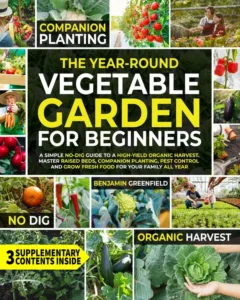
Check out the author’s book here: The Year-Round Vegetable Garden for Beginners.
Leave a Reply