
Parsley is the herb that almost every kitchen uses and almost every gardener underrates. It is slow to start, and the seed can test your patience for weeks. Once it is up, however, a single row gives leaves from late spring until well into winter, with very little work. Growing Parsley is mostly about getting through that slow start; after that, the plant looks after itself.
This guide follows the crop from a soaked seed to the winter harvest. The advice comes from University of Wisconsin-Madison Extension, University of Illinois Extension and Oregon State University Extension.
Flat, Curly or Root: Choosing a Parsley
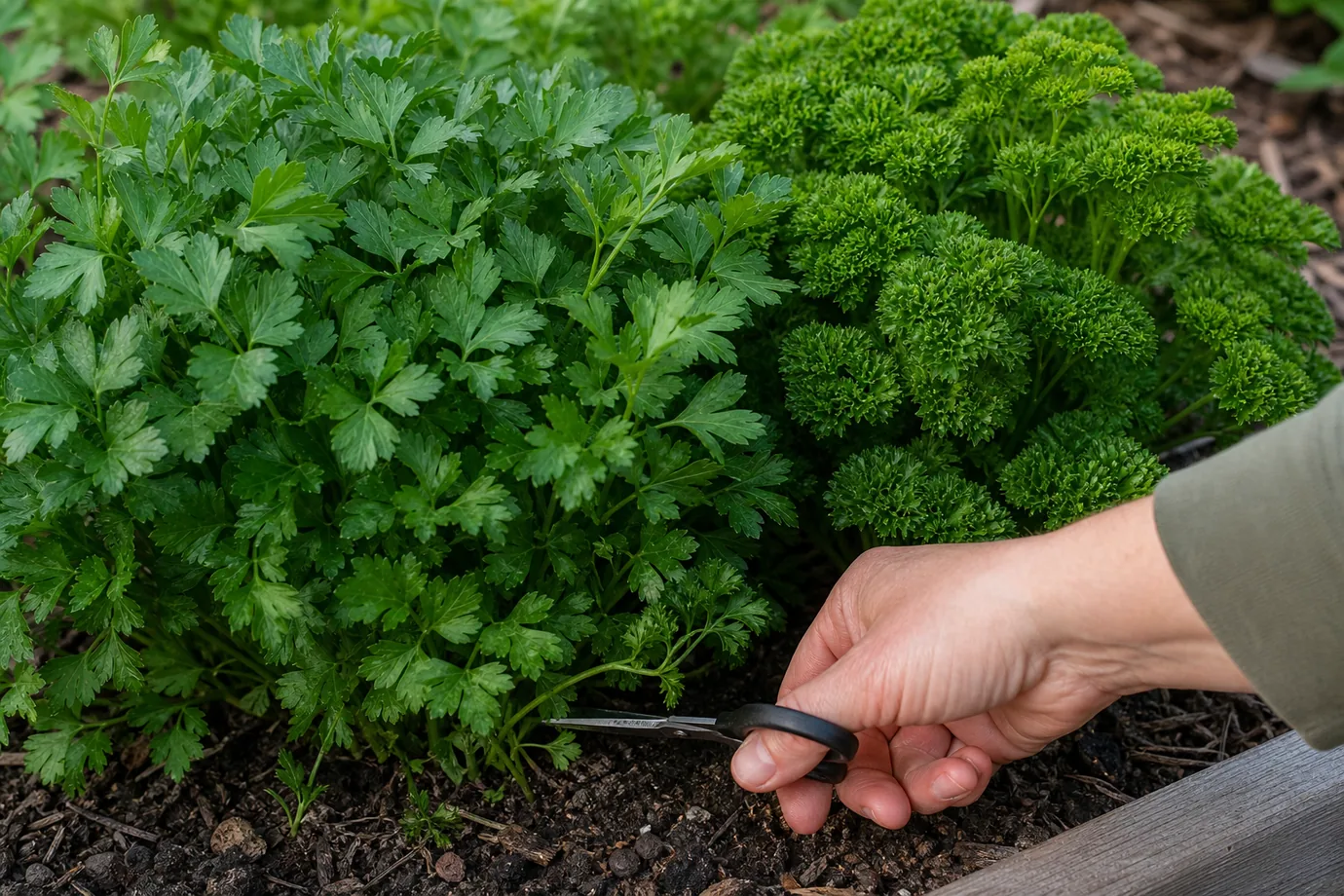
Parsley, Petroselinum crispum, comes in three main types. Wisconsin lists them as follows:
- Flat-leaf parsley. Also called plain or Italian parsley, it has the strongest flavour and is the cook’s favourite.
- Curly parsley. The common garnish type, with tightly curled leaves. It is milder and holds up well in the garden.
- Hamburg parsley. A turnip-rooted type, grown for its thick white root, which tastes like a cross between parsnip and celery.
For most kitchens, flat-leaf is the one to grow. Still, curly parsley is decorative enough for a flower border or a window box, so many gardeners grow both. Wisconsin notes that the plants reach 12 to 18 inches tall in the first year.
A Plant With a Two-Year Life
Parsley is a biennial. In the first year it makes leaves; in the second it flowers, sets seed and dies. Illinois explains that it is normally grown as an annual, because a plant that survives the winter bolts the following season, and its leaves turn tough and bitter.
Oregon State describes the upside. In a protected spot, it says, parsley can provide fresh leaves for close to two years, from the first summer until the flower stalk rises the next spring. So plan on sowing fresh each year, but do not pull last year’s plants too early.
Starting Parsley From Seed
Parsley seed is famously slow. Wisconsin warns that it may take several weeks to germinate, especially in cool, wet soil. The answer is to help it along:
- Soak the seed. Both Wisconsin and Illinois recommend soaking it in water overnight before sowing, which helps germination.
- Start early. Wisconsin starts seed indoors 8 to 10 weeks before the last spring frost; Seed Starting Calendar: How to Plan Your Vegetable Gardening Year helps you find that date.
- Use a fine mix. Seed Starting Mix: What to Buy, How to Make It and Why Garden Soil Fails explains what to fill the pots with.
- Keep it damp. The surface must not dry out during those long weeks. Watering from below is the gentlest way; Bottom Watering Seedlings: The Best Way to Prevent Overwatering and Fungus Gnats walks through it.
Direct Sowing or Transplants?
Oregon State points out that parsley is a taprooted plant that does not always transplant well. Therefore, sow two or three seeds in each small pot, keep the strongest seedling, and plant it out without disturbing the root ball. Alternatively, sow directly in the garden once the soil has warmed a little, and simply accept a slower start. Direct Sow vs Transplant: Which Method is Better for Your Vegetable Garden? sets out the trade-offs.
Before planting out indoor-grown seedlings, harden them off for a week or so; Hardening Off Plants: How Much Stress Is Enough shows how far to push them.
Where to Plant Parsley
Parsley grows best in full sun, although it tolerates some shade better than most herbs. In hot summers, in fact, a little afternoon shade keeps the leaves tender. It wants moist, fertile soil with plenty of organic matter, and a near-neutral pH. If you have not checked yours recently, Soil pH Testing: How to Take a Sample That Means Something explains how.
Wisconsin places plants 6 to 12 inches apart. Closer spacing gives more, smaller plants; wider spacing gives big, bushy ones that are easy to pick from.
Watering and Feeding
Water regularly, especially while the plants are young, and aim to keep the soil evenly moist. A layer of mulch holds moisture and keeps the leaves clean of splashing soil; Organic Garden Mulch: How Deep to Lay It and When to Wait explains how deep to go.
Parsley needs little feeding. A dressing of compost at planting time is usually enough. If growth turns pale in midsummer, a light feed of a balanced fertilizer brings it back.
Harvesting Parsley
Illinois says parsley can be cut any time after it has become large enough to use. The trick is to cut from the outside:
- Take the outer stems. Cut them close to the base, where they join the crown.
- Leave the centre. New leaves grow from the middle, so the plant keeps producing.
- Pick often. Regular picking keeps the plant compact and the leaves young.
For a continuous supply, Wisconsin suggests making a few sequential plantings through midsummer. In that way, a young row is always coming on as the older plants slow down. Succession Planting: A Guide to Continuous Harvests shows how to plan the rhythm.
Storing Parsley
Illinois suggests keeping fresh parsley in a plastic bag in the refrigerator, and notes that it can also be frozen. The extensions differ on drying, however. Wisconsin says the leaves and roots keep their flavour when dried, while Oregon State finds that parsley loses most of its flavour that way.
Freezing is the safer choice. Oregon State suggests freezing the chopped leaves in ice cube trays with water, then storing the cubes in a bag and dropping them into soups or stews near the end of cooking.
Parsley Through the Winter
Parsley is one of the hardiest herbs in the garden, so the harvest does not have to stop with the first frost. In mild areas, plants often keep producing through much of the winter. In colder ones, a cover makes the difference. A cold frame keeps parsley going for weeks longer; Cold Frame Gardening: Build a Box That Feeds You Through Winter shows how to build one.
Alternatively, bring it indoors. Illinois notes that parsley can be grown inside over the winter, and grows best with high light and a cool location. A sunny, cool windowsill suits it better than a warm kitchen. Indoor Herb Garden: Growing Basil and Mint Year-Round covers light and watering indoors.
Growing Parsley in Containers
Parsley suits pots well, provided they are deep enough for the taproot. Choose a container at least 8 inches deep with drainage holes, and fill it with a light, free-draining mix; Best Soil for Container Vegetables: Air Space Before Nutrients explains what to use. A pot by the kitchen door also means you actually pick it.
Pests and Diseases When Growing Parsley
Parsley has few serious problems. Wisconsin names aphids as the most common pest; Aphid Control Methods: When to Spray and When to Wait helps you decide whether to act.
You may also find large green caterpillars with black bands and yellow spots. These are the larvae of the black swallowtail butterfly. Wisconsin notes that they are seldom numerous enough to cause significant damage, so many gardeners simply move them to a spare plant and enjoy the butterflies later.
Among diseases, Wisconsin names septoria leaf spot, caused by the fungus Septoria apiicola, as the most common. It shows as brown spots on the leaves. Good spacing, watering at the base and removing affected leaves help keep it in check.
Let a Few Plants Flower
When last year’s plants bolt in their second spring, consider leaving one or two. Oregon State notes that the flowers benefit pollinators. The small umbels draw hoverflies and parasitic wasps, which in turn help control aphids; Beneficial Insects for Garden: Creating a Haven for Natural Predators explains why these visitors matter.
Start Growing Parsley This Spring
Soak the seed, sow early, and be patient through the first few weeks. After that, pick from the outside, sow a second row in early summer, and protect a few plants for winter. With that routine, growing parsley gives you fresh leaves for most of the year, and it asks very little in return.
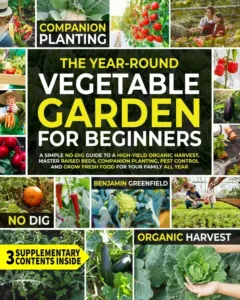
Check out the author’s book here: The Year-Round Vegetable Garden for Beginners.
Leave a Reply