
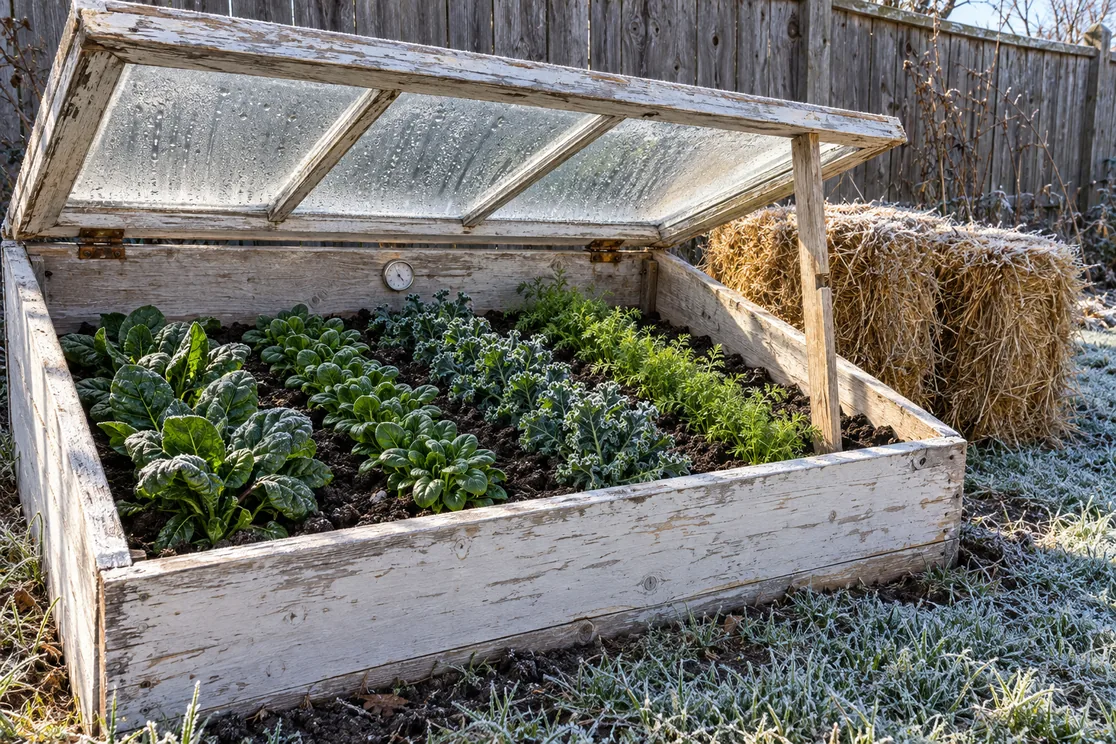
The first hard frost is supposed to end the season. In my garden it ends the tomatoes and the beans, and then it stops. A box with a window on top keeps the spinach going into December. That box is a cold frame, and it costs an afternoon and an old storm window. Even so, it does more for a small garden than any other single piece of equipment. Cold frame gardening is the cheapest way I know to add two months of harvest at each end of the year.
This guide explains how the box works, where to put it, how to build one, and what to grow in it. It also covers the part that beginners get wrong, which is not the cold. The real danger in cold frame gardening is heat, not frost. A closed frame on a sunny day in February can cook a bed of lettuce by noon. The cure is a stick that props the lid open.
Cold Frame Gardening at a Glance
| The short answer | |
|---|---|
| What it is | A bottomless box with a clear lid, set over a garden bed |
| Warmth gained | 5 to 10°F at night, far more on a sunny day |
| Season gained | Two to four weeks at each end, more with straw insulation |
| Size | Up to 3 feet front to back, any length; 12 inches high at the front, 18 at the back |
| Facing | South, with the back against a wall, fence, or hedge |
| Lid | An old storm window, or twin-wall polycarbonate on hinges |
| Vent when | The inside reaches 85°F; close it before sunset |
| Best crops | Spinach, lettuce, mache, kale, arugula, carrots, scallions |
What a Cold Frame Is and What It Does
A cold frame is a bottomless box placed over the soil, with a clear top that lets in the sun and opens for ventilation. That is the definition in the University of Maine bulletin on extending the gardening season. It is hard to improve on, so I will not try. The sun warms the soil through the lid, the soil warms the air, and the box holds the air in place. At night the soil gives that heat back slowly over many hours. As a result, the plants inside sit in a pocket of air several degrees warmer than the garden around them.
Iowa State’s page on all about cold frames puts the night-time gain at 5 to 10°F. That sounds small until you remember what it means on a frosty night. A night of 28°F becomes a night of 35°F inside the frame, and 35°F kills nothing. Cold frame gardening does not fight winter head-on, and it does not need to. It moves the garden one climate zone south and shortens the winter by a few weeks at each end.
Why Cold Frame Gardening Beats a Row Cover
There are cheaper ways to hold a little heat, and I use them. A floating row cover over a bed gives two to four degrees. I use them all through the shoulder seasons, as I describe in floating row covers. However, a row cover lies on the plants, tears in the wind, and cannot keep out a real freeze. The cold frame has walls, a rigid lid, and a body of warm soil beneath it, and it stands up to snow.
The step above a cold frame is a low tunnel or a hoop house, which I cover in growing under cover. Those give more room, but they cost more and need more attention to wind and temperature. For a garden of a few beds, cold frame gardening is the sweet spot. It protects more than fabric and costs less than a tunnel. A single frame is enough to feed two people salad greens all winter.
Where to Put the Frame
Placement decides most of what follows, so it deserves some thought. The winter sun stays low, so a frame that sits in full sun in July may spend December in the shadow of the garage. Watch the garden for a few days in late autumn before you decide. Better still, map the shade the way I describe in garden sun map. The frame needs the open southern sky from mid-morning to mid-afternoon.
Face the lid south, or south by southeast, so the glass catches the low sun at its best angle. Put the tall back of the box against the house, a fence, or a hedge. The barrier blocks the wind and reflects a little heat. Penn State’s page on season extenders adds two things I agree with. A slight slope helps drainage, and a spot near the kitchen door gets visited on a snowy morning when the far end of the garden does not.
Drainage matters more in winter than in summer. A frame set in a low, wet spot fills with cold water, and cold, wet soil rots roots and grows mold. If the ground is heavy, raise the bed a few inches inside the frame with the mix I use in raised bed soil mix. Otherwise, dig in a few inches of compost before the frame goes down.
Building a Cold Frame Gardening Box
The classic frame is a wooden box with no bottom, 12 inches high at the front and 18 inches at the back. The slope tilts the lid toward the sun and sheds rain. Keep it no more than 3 feet from front to back, because you have to reach the far side without stepping in. The length is up to whatever lid you have found. An old storm window sets the size, and a frame built around a salvaged window is the cheapest version there is.
Use untreated lumber, cedar if you can get it, or the newer pressure-treated boards, and never railroad ties or anything soaked in creosote. Iowa State notes that white paint on the outside and black on the inside make a difference. White reflects light onto the plants, and black absorbs heat into the walls. Screw the corners rather than nailing them, since the wood moves with the seasons. If you garden north of zone 6, add a second layer of wood or straw bales around the outside.
The lid is the one place to spend money if you spend it anywhere. Glass gives the most light and lasts for decades, but it breaks, and a storm window is heavy. Twin-wall polycarbonate is light, holds heat better than a single pane, and does not shatter when a branch comes down on it. Either way, hang the lid on hinges at the back. Keep a notched stick or a piece of dowel to prop it open. An automatic vent opener is a wax-filled cylinder that pushes the lid up as the air warms. It costs about the price of a bag of seed, and it is the best money in cold frame gardening.
The whole project fits the approach I lay out in vegetable gardening on a budget. Scrap lumber, a window from a renovation, two hinges, and a can of paint make a frame that outlasts most bought kits.
What to Grow in a Cold Frame
Cold frame gardening is for cool-season crops, and mostly for the hardy leaves. Spinach is the champion of the winter frame. It shrugs off frost, sweetens with cold, and a September sowing under a frame gives picking through December and again from February. The details are in overwintering spinach. Mache, also sold as corn salad, is hardier still and sits under snow without complaint. Kale, arugula, mustard, and the Asian greens such as tatsoi and mizuna all do well. Lettuce works too, as long as you pick the cold-tolerant kinds I describe in growing lettuce.
Roots are the second group, and they ask even less. Carrots, beets, and turnips sown in late summer reach full size before the cold. The frame then works as a living root cellar for all of them. Illinois Extension’s note on cold frames to extend the season makes this point well. The frame holds the roots in the ground, unfrozen, so you pull a few at a time all winter. Scallions and parsley take the same treatment and taste better for it.
Timing is the trick with every one of these crops. The plants must be nearly grown before the days shorten past ten hours. In most of the northern states, that means sowing in the first half of September. After that the crops barely grow, and the frame keeps them alive rather than growing them. The dates in fall vegetable gardening set the calendar, and first frost date shows how to count back from it.
Managing Heat in Cold Frame Gardening
Here is the part that catches everyone once, because a closed frame in full sun climbs fast. On a clear day in late winter the inside can pass 100°F while the air outside is still below freezing. Lettuce wilts and dies at that temperature. Iowa State’s rule is simple enough to write on the lid. Prop the lid open once the inside reads 85°F, and close it again before sunset so the frame holds its heat through the night.
A cheap thermometer inside the frame, read from the kitchen window if you can manage it, takes the guessing out of this. Check it on cloudy days too, since a bright overcast still warms the box. If you work away from home, the wax-cylinder opener I mentioned above does the job for you. Cold frame gardening then becomes a matter of glancing at the box on the way to the car.
Cold nights need the opposite kind of attention. A blanket, an old rug, or a sheet of bubble wrap laid over the lid at dusk adds several degrees. Straw bales pushed against the outside walls steady the swings. When snow falls, leave a light cover in place, since snow insulates. However, brush off anything heavy enough to block the light for more than a day.
Water little in winter, and only when the soil is dry an inch down. The plants are barely growing, the lid keeps the rain off, and the soil stays moist for weeks. Water on a mild morning so the leaves dry before dark, and never at night. Wet leaves in a closed box grow gray mold. A frame opened for an hour on a still day cures more disease than any spray.
Cold Frame Gardening in Spring
Cold frame gardening earns its keep a second time in March. Sow spinach, lettuce, radishes, and peas inside it a month before the open garden is ready. The seedlings come up in warm soil while the beds outside are still mud. This is the head start that vegetables to plant in spring is built around.
The other spring job is hardening off, since seedlings raised indoors are soft. A week in the frame, with the lid opened a little more each day, toughens them before they face wind and full sun. Tomatoes and peppers spend their last week before transplanting in my frame every year, and the method is in hardening off plants. Close the lid at night for the first few days and leave it open at the end.
Once the frame is empty in May, lift the lid off entirely and plant the box with a summer crop. Cucumbers, a bush melon, or basil like the sheltered, warm bed. Then in September the lid goes back on, and the cycle starts again. The whole plan is in planting schedule.
Feeding the Soil in a Closed Box
The soil under a cold frame gets no rain and no winter cover crop, so it needs a hand. Fork an inch of finished compost into the bed each September before sowing, and again when the summer crop comes out. Slow-release organic feed does the rest, since fast fertilizer in cold soil goes nowhere. Every second or third year, dig out the top six inches and replace it with fresh bed mix. That resets the salts and the disease load. The reasons are in loam soil preparation.
Slugs and mice find the cold frame gardening bed too. A board laid on the soil traps slugs overnight, and a snap trap in a corner deals with the mice. Aphids sometimes appear in a warm spell and are washed off with a hose on a mild day. Beyond that, a winter frame has almost no pests, and it is the cleanest bed in the garden.
Frequently Asked Questions
How much warmer is a cold frame than the open garden?
About 5 to 10°F at night, according to Iowa State Extension. On a sunny afternoon with the lid shut, it can be 30 or 40 degrees warmer. The night-time gain is the useful one for the gardener. It turns a killing frost into a harmless chill and keeps the soil from freezing solid.
What can I grow in a cold frame in winter?
Hardy greens: spinach, mache, kale, arugula, mustard, and the cold-tolerant lettuces. Carrots, beets, and scallions sown in late summer hold in the ground all winter. Sow everything by mid-September so it is grown before the short days.
Do I need to open the lid in winter?
Yes, on any sunny day. Prop it open when the inside passes 85°F and close it before sunset. A wax-cylinder automatic opener does this for you when you are not at home.
Can I build a cold frame without a window?
Yes. Twin-wall polycarbonate cut to size on a wooden lid frame works better than glass in most ways. It is lighter, it insulates better, and it does not break. Even a sheet of clear plastic stretched on a frame works for a season.
Where should I place a cold frame?
Facing south, with the tall back against a wall or fence, on ground that drains. Put it as close to the kitchen as the garden allows. Check that the low winter sun reaches the spot in December, not just in June.
Check out the author’s book here: The Year-Round Vegetable Garden for Beginners.

Leave a Reply