
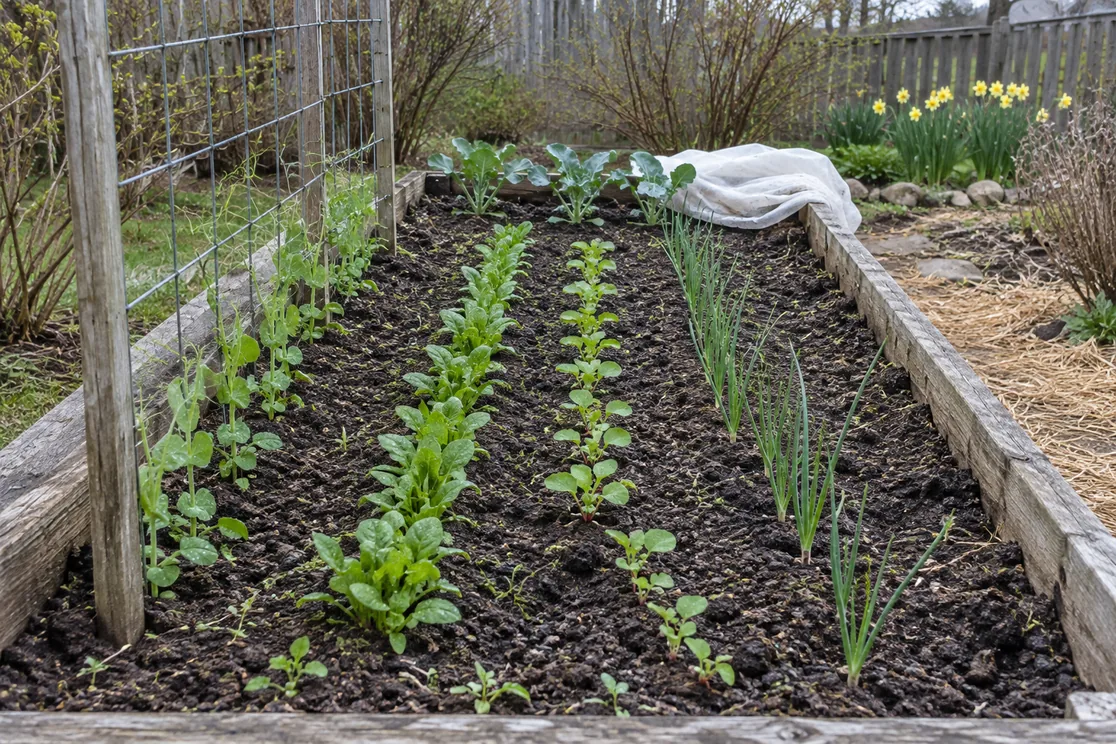
The first sunny day after winter makes every gardener want to plant everything at once. However, a warm afternoon in March does not mean the season has turned, and frost can return for weeks. The good news is that a whole group of crops actually prefers this cool, unsettled weather. This guide explains which vegetables to plant in spring, how to tell when your soil is ready, and which crops should wait a little longer.
Cool-Season Crops: The Vegetables to Plant in Spring
The crops that go in first are called cool-season vegetables. According to Colorado State University Extension, whose vegetable planting guide is the main source for this article, these crops prefer growing temperatures between 60 and 80°F. They also lose quality in hot weather, which is why gardeners plant them early and again in late summer.
CSU divides the cool-season group into two classes. Hardy vegetables grow with daytime temperatures as low as 40°F and may survive a light frost. Semi-hardy vegetables need a few more degrees and are less tolerant of frosty nights. As a result, the hardy crops go in first, and the semi-hardy ones follow about two weeks later.
When to Plant: Frost Date, Soil Temperature and Workable Soil
Your calendar starts with the average date of the last spring frost in your area. CSU times its planting windows from that date, so look it up before you buy seeds. Our planting schedule explains how frost dates and hardiness zones work together.
Soil temperature is an even better guide than the calendar, according to CSU. Its guide suggests measuring at 8 a.m., four inches deep, and planting once the soil reaches each crop’s minimum. For most cool-season vegetables that minimum is 40°F, while lettuce and onions germinate from 35°F. Our guide to soil temperature for planting shows how to take a reading with a simple probe.
Finally, the soil must be dry enough to work, as CSU notes for every crop group. Squeeze a handful of soil in your fist and poke the ball with a finger. If it crumbles, you can dig; if it stays in a sticky lump, wait a few more days. Working wet soil destroys its structure, as our spring garden preparation checklist explains.
Hardy Vegetables to Plant in Spring, Weeks Before the Last Frost
CSU lists broccoli, cabbage, kohlrabi, onions, lettuce, peas, radishes, spinach and turnips as hardy. These crops can go in as early as two to four weeks before the average last frost. For a concrete example, the University of Maryland Extension vegetable planting calendar for central Maryland starts peas, spinach and radishes in mid-March.
Peas
Peas are the classic first crop of the year, and they genuinely dislike summer heat. CSU recommends sowing them one inch deep, with germination taking six to fifteen days and harvest about 65 days later. Give climbing varieties a trellis at planting time, before the tendrils need something to hold. Our guide to growing beans and peas covers varieties and support.
Spinach
Spinach is one of the fastest crops in the table, ready in about 40 days from sowing. Sow the seed half an inch deep, and plan to harvest before hot, long days arrive. Otherwise, the plants send up a flower stalk and the leaves turn bitter. Our article on what is bolting explains why this happens and how to delay it.
Radishes and Turnips
Radishes are the quickest reward in the spring garden, often ready in about 30 days according to CSU. Sow a short row every week or two instead of one long row, so they do not all mature at once. Turnips need a little longer, around 50 days, and they grow best in the same cool conditions.
Lettuce
Lettuce seed germinates in soil as cool as 35°F, which makes it one of the earliest crops you can sow. Plant it only a quarter inch deep, because the seed needs a little light. Leaf types are ready in about 60 days, and you can pick the outer leaves long before that. Our guide to growing lettuce covers head and leaf types.
Onions
Onions tolerate cold soil and are easiest to grow from sets, the small dormant bulbs sold in spring. CSU plants sets one to two inches deep and four to six inches apart. Dry bulb onions take about 110 days, while green onions from seed are ready in about 60. Our guide to planting onion sets goes through the details.
Broccoli and Cabbage as Transplants
Broccoli, cabbage and cauliflower are cool-season crops, but they germinate better in warm soil. For that reason, CSU recommends planting them as transplants in spring, grown indoors for five to seven weeks. Before planting them out, harden the seedlings off over a week or so, as our guide to hardening off plants describes. Our article on growing brassicas covers the rest of the family.
Kale and Kohlrabi, Two Hardy Vegetables to Plant in Spring
Kale is one of the toughest leafy crops, and the Maryland calendar sows it directly in the first three weeks of April. Kohlrabi is less familiar, but it is just as easy and ready in about 50 days, according to CSU. Harvest the swollen stems when they are the size of a tennis ball, because larger ones often turn woody. Both crops are quick enough to clear the bed before summer planting begins.
Semi-Hardy Vegetables to Plant in Spring Around the Last Frost
The second wave includes beets, carrots, cauliflower, parsley, parsnips, potatoes and Swiss chard. CSU plants these from about two weeks before the last frost up to the frost date itself. They are a little less tolerant of hard frost, but still far tougher than summer crops.
Carrots and Beets
Carrots and beets are both sown directly, since their roots do not transplant well. CSU sows carrots a quarter inch deep, and they can take ten to seventeen days to come up. Therefore, keep the surface moist until the seedlings appear, as our guide to growing carrots explains. Beets go in slightly deeper, at three quarters of an inch to one inch, and are ready in about 60 days. Each beet “seed” is actually a cluster of several seeds, so thin the seedlings to three or four inches apart.
Potatoes and Swiss Chard
Potatoes need soil of at least 45°F, according to CSU, and are planted four to six inches deep. In the Maryland calendar, they go in from mid-March through mid-May. Sprouting the seed potatoes indoors first gives them a head start, as our guide to chitting potatoes shows. Swiss chard is another easy semi-hardy crop, sown one inch deep and picked leaf by leaf for months.
Parsnips and Parsley, the Slow Semi-Hardy Vegetables to Plant in Spring
Parsnips and parsley both germinate in cool soil, but they are slow, often taking two to three weeks to appear. Sow them early so they have a long, cool season, and mark the rows because the seedlings are easy to lose among weeds. Parsnips need a long time to mature, so the roots you sow in spring are usually dug in fall.
Garlic and Asparagus
Garlic is normally planted in fall, but the Maryland calendar also allows planting from mid-March to mid-April. Spring-planted cloves usually give smaller bulbs, so our guide to planting garlic bulbs covers the fall timing as well. Asparagus is a perennial, and UMD plants its crowns in the same window. A new bed takes a few years to reach full harvest, so choose its spot carefully.
A Sample Calendar of Vegetables to Plant in Spring
Putting the pieces together, here is how the season runs in central Maryland, according to the UMD calendar. Your own dates will shift earlier or later with your frost date, but the order stays the same.
- Mid-March: peas, spinach, radishes, turnips, arugula and potatoes, all sown or planted directly.
- Mid-March to mid-April: cabbage transplants, garlic and asparagus crowns.
- April: kale sown directly, plus lettuce, broccoli and onion transplants started indoors in February or March.
- Mid-April: carrots, once the soil has warmed a little further.
- May: tomato transplants and the other warm-season crops.
UMD also notes that gardeners who do not want to start seeds indoors can simply buy transplants. Our guide to direct sowing versus transplanting explains which crops suit each method. For a full year of dates, go back to the planting schedule linked above.
Wait on Warm-Season Crops
Tomatoes, peppers, squash, cucumbers and beans are not early spring crops, however tempting the garden centers make them look. CSU explains that tender crops such as beans, corn and cucumbers need daytime temperatures above 55°F and cannot tolerate frost. Very tender crops, including tomatoes, peppers, eggplants and melons, typically go in two or more weeks after the last frost.
The risk is not only frost. According to CSU, a week of daytime temperatures below 55°F may stunt these crops, so planting early rarely gains any time. Instead, use the early weeks to start them indoors, as our seed starting calendar explains.
Protecting Early Plantings From a Late Frost
Even hardy crops can suffer when a hard freeze follows a warm spell. Keep an eye on the forecast during the first weeks and have some protection ready. A lightweight fabric cover laid over the plants traps the warmth of the soil overnight. Our guide to floating row covers explains how to use them, and they also keep early pests away.
For more protection, a cold frame lets you sow a few weeks earlier than the open garden. Our guide to cold frame gardening shows how to build and vent one.
Sow Again for a Longer Harvest
Many spring crops finish quickly, so one sowing gives a short burst followed by empty soil. Instead, sow small batches of lettuce, radishes and spinach every two to three weeks until the weather warms. When the first peas and spinach come out, the space can go to beans or squash. Our guide to succession planting shows how to plan the sequence.
Frequently Asked Questions About Vegetables to Plant in Spring
What are the easiest vegetables to plant in spring for beginners?
Radishes, lettuce, peas and spinach are the most forgiving. They are sown directly, grow fast and tolerate cool weather better than most crops.
Can I plant vegetables before the last frost?
Yes, if they are hardy. CSU times hardy crops two to four weeks before the last frost, and semi-hardy crops up to two weeks before.
Can vegetables to plant in spring grow in partial shade?
Leafy crops such as lettuce, spinach and kale cope with a few hours of shade better than fruiting crops. Root crops and peas still do best with at least six hours of direct sun.
What happens if my seedlings get frosted?
Hardy crops usually recover from a light frost. Tender crops often die, which is why tomatoes and peppers should wait until the weather warms.
Your First Vegetables to Plant in Spring
The best vegetables to plant in spring are the ones that enjoy cool weather: peas, spinach, radishes, lettuce and onions first, then beets, carrots and potatoes. Check your frost date and soil temperature, wait for workable soil, and keep a cover handy for cold nights. Leave the tomatoes and peppers indoors until summer weather arrives, and your garden will be producing while theirs are still being planted.
Check out the author’s book here: The Year-Round Vegetable Garden for Beginners.
Leave a Reply