

Walking through the grocery store aisles these days often feels like a test of financial endurance. The price of organic kale or heirloom tomatoes can be staggering. Consequently, many people grow their own food to take back control of their diet and their budget. However, a myth persists: that a vegetable patch needs a big investment in tools and soil. In reality, vegetable gardening on a budget is not only possible but often leads to a more creative and sustainable practice. If you focus on the two key inputs, seeds and soil, you can grow a big harvest for a fraction of the store price.
Success in frugal gardening stems from resourcefulness and planning. Instead of buying everything new, smart gardeners learn to see waste as a resource. This guide shows how to build fertility and find good seeds without breaking the bank. Whether you have a large backyard or a few pots on a balcony, these strategies help you grow more for less.
Vegetable Gardening on a Budget: Sourcing Affordable Seeds
The genetics of your plants represent the potential of your harvest. Seed catalogs offer tempting photos. Yet five dollars per packet, plus shipping, quickly adds up. Finding ways to lower these costs is the first step in successful vegetable gardening on a budget.
Tapping Into Community Resources
Your local community is often a goldmine for free or low-cost seeds. Many gardeners buy packets containing hundreds of seeds but only need a few dozen for their own space. This surplus creates a perfect opportunity for sharing.
- Seed Libraries: Check with your local public library. Many now host seed libraries, where you “check out” seeds for free in spring. Ideally, you return saved seeds from your harvest in the fall.
- Local Seed Swaps: These events usually happen in late winter or early spring. They provide a space for gardeners to trade leftovers. Furthermore, experienced locals there can tell you what grows well in your climate. For timing, see Planting Schedule: A Year-Round Guide for Every Season.
- Online “Buy Nothing” Groups: Social media often hosts local groups that give items away for free. People frequently post extra seeds, starts, or even unwanted gardening equipment.
Prioritizing Open-Pollinated Varieties
When buying seeds, “open-pollinated” or “heirloom” varieties are a long-term saving. Hybrid (F1) seeds do not grow “true to type” in the next generation. By contrast, open-pollinated seeds let you save your own for next year. As a result, one three-dollar packet can supply that vegetable for years. To start, read Saving Vegetable Seeds: A Step-by-Step Guide for the Home Garden. This approach is fundamental for anyone serious about vegetable gardening on a budget.
Leveraging End-of-Season Sales
Retailers often cut seed prices sharply in mid-to-late summer. It might seem too late to plant, but many of these seeds suit a fall harvest. For instance, you can start a late crop of lettuce or other hardy greens as the weather cools; see How to Grow Crisp Lettuce: Expert Tips for a Perfect Salad. Moreover, most seeds stay viable for a few years if stored cool, dark and dry. So these sales are a good way to stock up for spring.
Vegetable Gardening on a Budget: Building Soil for Free
If seeds are the potential of the garden, soil is the engine that drives it. Bagged potting mix or topsoil is often the biggest expense for new gardeners. Yet you can build fertility from things most people throw away. For the basics, see Loam Soil Preparation: Understanding and Improving Your Garden’s Composition.
The Power of Backyard Composting
Every kitchen produces a steady stream of nitrogen-rich “greens” and carbon-rich “browns.” Instead of paying to have it hauled away, you can turn it into a rich soil amendment.
- Nitrogen (Greens): Fruit and vegetable scraps, coffee grounds, and fresh grass clippings (untreated).
- Carbon (Browns): Shredded cardboard, dry leaves, and straw.
By balancing these elements, you create “black gold” that improves structure and releases nutrients slowly. For the full process, read Composting 101: A Beginner’s Guide to Black Gold.
Scavenging for Natural Amendments
Nature provides a wealth of free amendments if you know where to look. In fact, many municipal waste centers offer free compost or wood chips to residents. These can save you hundreds of dollars when filling large beds. However, ask what went into them first. According to NC State Extension, some broadleaf herbicides survive composting and can damage vegetables. It suggests a simple test: grow a few pea or bean seeds in the compost before you spread it.
Furthermore, look to your own backyard. Shredded fall leaves make an incredible mulch and soil conditioner. Coffee shops often give away used grounds for free, and they add nitrogen and organic matter to the compost pile. Even a neighbor’s grass clippings can suppress weeds and feed the soil, provided the lawn is not sprayed.
Crafting Your Own Potting Mix
In containers, the cost of special soil adds up fast. Most commercial mixes are mainly peat moss or coir with a little perlite. So you can save a lot by buying these in bulk and mixing them with your own screened compost. For the right proportions, see Best Soil for Container Vegetables: Air Space Before Nutrients.
Upcycling and DIY: Saving on Structures and Containers
Likewise, garden structures don’t require a trip to an expensive hardware store. Vegetable gardening on a budget thrives on the ability to see a second life in discarded objects.
Creative Container Solutions
Traditional ceramic or high-end plastic pots are expensive. However, plants don’t care how their container looks; they care only about volume and drainage.
- 5-Gallon Buckets: Bakeries and restaurants often receive ingredients in food-grade buckets. They are usually happy to give them away. Simply drill a few holes in the bottom, and you have a perfect vessel for tomatoes or peppers.
- Storage Totes: Old plastic bins with cracked lids make good planters for shallow-rooted crops like greens or radishes.
- Fabric Bags: Even heavy-duty grocery bags or rice sacks can be used as temporary grow bags.
Building Budget-Friendly Raised Beds
Cedar raised beds are beautiful but costly. To save money, consider cheaper materials that work just as well.
- Untreated Pine: It won’t last as long as cedar, but it costs much less and usually lasts a few seasons.
- Cinder Blocks: These are inexpensive, durable, and can be stacked without any tools. The holes in the blocks themselves can even be used to grow herbs.
- The Keyhole Method: For efficiency with few materials, consider What is a Keyhole Garden: A Beginner’s Guide to This Efficient Method. Its compost basket sits inside the bed, so it feeds the soil as you go.
- Logs and Stones: In a wooded area, buried logs and branches can form a mound that needs little bought soil, as in Hügelkultur Gardening: Boost Soil Fertility with This Ancient Method.
Vegetable Gardening on a Budget: High-Value Crops
To succeed at vegetable gardening on a budget, choose crops with the best “return on investment.” Some vegetables are so cheap at the store that growing them may not be worth the effort and water.
The “High Value” List
Focus your space on vegetables that are expensive to buy organic or that provide a continuous harvest.
- Herbs: Fresh basil, cilantro and mint are very expensive per ounce. Yet a single plant can keep you supplied for months.
- Salad Greens: These grow fast and allow repeated harvests; see Cut and Come Again Gardening: Which Crops Regrow and How to Cut Them.
- Vertical Crops: Pole beans and peas use vertical space and produce heavily over several weeks.
- Sweet Potatoes: You can grow your own “slips” from a single organic tuber. For the full process, see Growing Sweet Potatoes: Slips, Heat, and the Ten-Day Cure That Makes Them Sweet.
Propagating for Free
Many common garden plants can be duplicated for zero cost. For example, tomato “suckers” are the small shoots between the main stem and a leaf. You can snap them off and root them in a glass of water. Within a week or two, they grow roots. In this way, one three-dollar transplant can become several productive vines.
Water Conservation and Budget Irrigation
Water is an ongoing cost that many new gardeners overlook. However, several simple strategies can reduce your utility bill while keeping your plants hydrated.
- Rain Barrels: A barrel under the downspout is a one-time setup that gives free, chlorine-free water.
- Mulching: Covering the soil with straw, leaves or grass clippings slows evaporation. According to Colorado State University Extension, mulch cuts irrigation needs by around 50%.
- Drip Irrigation: There is a small initial cost. In return, a DIY drip system delivers water to the roots, with little loss to wind or evaporation. For details, see Efficient Watering Techniques for Sustainable Vegetable Gardening.
The Long-Term Vision of Frugal Gardening
Starting your journey into vegetable gardening on a budget is about more than just the current season. It is a shift toward self-reliance. Every time you save a seed, you are adapting that plant to your specific backyard environment. Every time you add compost, you are investing in the long-term health of your land.
Initially, you might feel like you are “making do” with repurposed buckets and free mulch. However, as the years go by, your soil gets richer, your seed stock grows and your grocery bill shrinks. The most successful gardeners are often the most resourceful ones. In short, vegetable gardening on a budget means building fertility from the ground up and sharing seeds. Done that way, it gives you a great garden on a shoestring.
The rewards of this practice extend beyond the kitchen. It is deeply satisfying to know your meal came from sunshine, rain and your own household “waste.” After all, gardening doesn’t have to be a luxury. Practiced with care, it can feed your family for a lifetime.
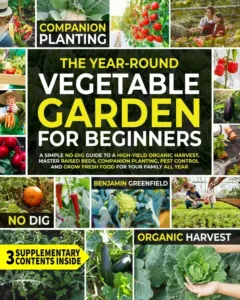
Check out the author’s book here: The Year-Round Vegetable Garden for Beginners.
Leave a Reply