
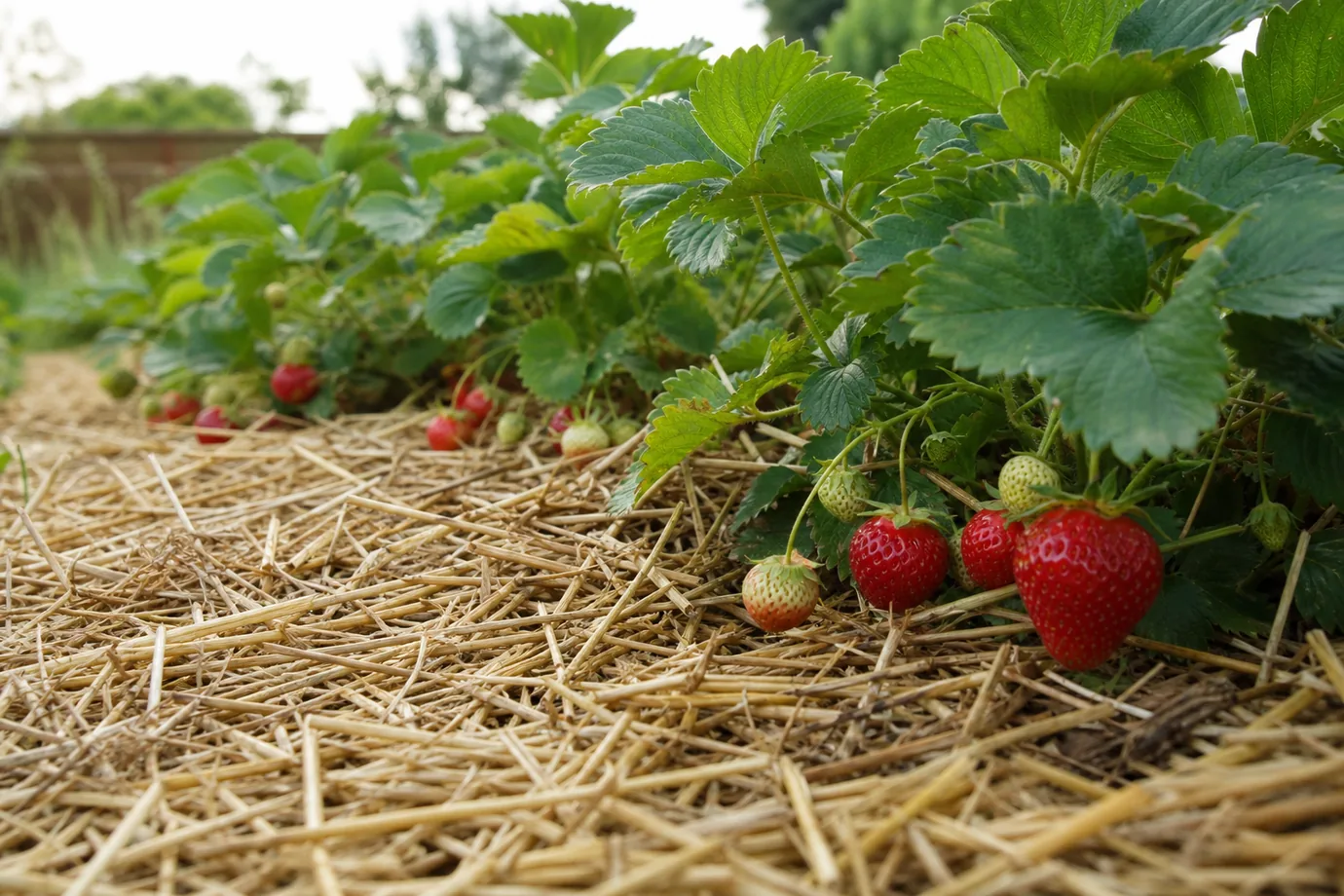
A homegrown strawberry picked warm from the plant is a different fruit from the ones shipped across the country. Growing Strawberries is also easier than most people expect: the plants are small, they tolerate pots and raised beds, and a well-kept bed crops for several years. What decides the size of the harvest is a handful of choices made in the first season, most of which feel wrong at the time.
This guide covers those choices, from picking the right type to renovating the bed after harvest. The figures come from University of Illinois Extension, Penn State Extension and Oregon State University Extension, whose guide Growing Strawberries in Your Home Garden is one of the clearest on the subject.
Growing Strawberries at a Glance
- Sun: full sun, and at least 6 hours a day.
- Soil: well drained, rich in organic matter, slightly acid.
- Planting: early spring, as soon as the soil can be worked.
- Spacing: 18 to 24 inches between plants, rows at least 3 feet apart for June-bearers.
- Water: about an inch a week through the season.
- Lifespan: a renovated June-bearing bed can stay productive for five years; day-neutrals about three.
The Three Types of Strawberry
Everything else follows from this choice, so make it first.
June-bearing strawberries give one large crop over two or three weeks in early summer. They produce plenty of runners and are the classic choice for a matted row, and they are the type for anyone who wants enough berries at once for jam or freezing.
Everbearing strawberries give a crop in early summer and a second, smaller one in late summer or autumn. They make fewer runners.
Day-neutral strawberries flower and fruit in flushes from late spring until frost, as long as the weather stays mild. Penn State notes that they are sensitive to heat above 85°F, so in hot summers the flushes pause. Oregon State recommends day-neutrals for containers, because they fruit almost continuously and make few runners.
If you have room for only a few plants, choose day-neutrals. If you want a big harvest and have a bed to give over to them, choose June-bearers.
Choosing the Site
Strawberries need sun. Illinois Extension asks for full sun and at least 6 hours a day; the plants will grow in less, but they will not fruit well. The berries grow in partial shade too, but they stay small, as Shade Tolerant Vegetables: A Guide to Growing Without Full Sun explains.
Drainage matters as much as light. Crowns sitting in wet soil rot, so heavy ground is better handled in a raised bed; Raised Bed Soil Mix: The Perfect Ratio for Growth gives a mix that drains well and still holds moisture.
Site history is the rule most gardeners miss. Illinois Extension advises against planting where tomatoes, peppers, eggplant or potatoes have grown, because those crops carry verticillium wilt, a soil disease that also kills strawberries. Plan the bed into your rotation the same way you would any vegetable; Vegetable Crop Rotation: An Essential Guide for Soil Health Families shows how to track what grew where.
Preparing the Soil
Test before you plant. Strawberries like slightly acid soil, roughly pH 5.5 to 6.5, and correcting the pH is far easier before the bed is planted than after. Soil pH Testing: How to Take a Sample That Means Something explains how to take a sample the lab can use.
Penn State points out that in clay loams about 90 percent of strawberry roots sit in the top 6 inches, so that is the layer to improve. Work in compost and fix the pH if needed; Soil Amendments: Natural Methods for Rejuvenating Earth sets out which amendments suit which soil. Clear perennial weeds completely at this stage. Strawberries compete poorly, and a bed full of couch grass is very hard to clean once the plants are in.
Planting Strawberries: The Crown Depth Rule
Plant in early spring, as soon as the soil is workable and not wet. Illinois Extension plants in March or April, and Penn State in April to early May.
The single most important detail is depth. Penn State puts the crown at the soil line: above the roots, but without covering the growing point in the centre. Set too deep, the crown rots; set too high, the roots dry out. Spread the roots in the hole, firm the soil and water straight away.
Spacing depends on the system you choose:
- Matted row: Illinois Extension sets June-bearing mother plants 18 to 30 inches apart in rows 3 to 4 feet apart, and lets the runners root freely until the row is about 2 feet wide.
- Spaced row: the same planting, but daughter plants are kept at least 4 inches apart and the extra runners are removed. The berries are larger.
- Hill system: for everbearing and day-neutral types. All runners are removed, plants stand about a foot apart, and a 2-foot path runs between groups of rows. It suits small gardens well.
The First Year: Pinch Off the Flowers
This is the step that feels wrong. Illinois and Penn State both advise removing the flowers of newly planted June-bearers throughout the first summer. The plant then puts its energy into roots and runners instead of fruit, and the following year’s crop is much bigger.
Day-neutrals are treated differently. Penn State removes their flowers and runners only until early July, and then lets them fruit the same summer.
Watering, Mulching and Feeding
Illinois Extension recommends about an inch of water a week during the growing season. Penn State adds that timely watering while the berries swell can increase their size dramatically, though overwatering dilutes the flavour. Drip lines are ideal, because they keep the leaves and fruit dry; Drip Tape Installation: DIY Micro-Irrigation for Efficient Veggie Gardens walks through the setup.
A layer of straw between the rows keeps the berries clean, holds moisture and slows weeds. Organic Garden Mulch: How Deep to Lay It and When to Wait covers depths and timing.
Feed lightly. Penn State applies a small amount of balanced fertilizer at planting and again in late August, and Illinois Extension warns against feeding in spring of the fruiting year, because it produces soft berries. Pale older leaves are a sign the plants need more; Nutrient Deficiency in Plants: A Visual Guide to What Your Vegetables Are Telling You helps read the symptoms.
Growing Strawberries in Containers
Pots, hanging baskets and grow bags all work, and they keep the fruit away from slugs. Choose day-neutral varieties, as Oregon State advises, and use a light, free-draining potting mix rather than garden soil; Best Soil for Container Vegetables: Air Space Before Nutrients explains why. A fabric bag of about 5 gallons holds three or four plants; Grow Bags for Vegetables: Sizes, Fabric, and What Grows Best in Each compares the sizes.
Containers dry out fast in summer, so check them daily in warm weather. In cold regions, move them to a sheltered spot or bury the pots in the ground for winter, because the roots are much less protected than in a bed.
Harvesting Strawberries
According to Penn State, berries ripen 28 to 30 days after full bloom. Pick them when they are fully coloured, with the cap still attached, ideally in the cool of the morning. Refrigerate straight away and wash only just before eating, because washed berries spoil quickly.
Birds find ripe strawberries as fast as you do. Netting over hoops is the reliable answer; Animal Proof Vegetable Garden: Keeping Deer and Rabbits Out of Your Crops covers barriers for larger visitors too. Good pollination also gives larger, better-shaped fruit, so bees are worth encouraging; Pollinator Friendly Garden: Attracting Bees and Butterflies to Your Vegetables lists the flowers that bring them in.
Renovating a June-Bearing Bed
Renovation is what keeps a matted row productive year after year. Do it immediately after the last harvest:
- Mow or cut the leaves about an inch above the crowns, taking care not to damage the crowns themselves, and rake the debris away.
- Narrow the rows to 6 to 12 inches wide with a hoe or spade.
- Thin the remaining plants to about 3 to 4 inches apart and remove old mother plants.
- Weed thoroughly, feed lightly and water well to push new growth.
With yearly renovation, Penn State reports plantings productive for at least five years. Day-neutrals are not renovated; replace them about every three years.
Winter Protection
Unprotected crowns can be damaged or killed by hard cold. Once a few frosts have hardened the plants, Illinois Extension covers the bed with three to four inches of clean straw, and Penn State applies about four inches in December. Pull the straw off the plants in early spring and leave it between the rows as a clean floor for the berries. If a late frost threatens open flowers, cover the plants for the night; Floating Row Covers: Protecting Brassicas from Pests and Frost explains how the fabric works.
Frequently Asked Questions
How long does Growing Strawberries take before the first harvest?
June-bearers planted in spring crop the following summer, after a year without flowers. Day-neutrals can give berries in late summer of the planting year.
Is Growing Strawberries possible in a small garden?
Yes. A hill system or a few containers of day-neutral plants give a steady supply of berries from a few square feet.
Why are my strawberries small?
The usual causes are too little sun, dry soil while the berries swell, an overcrowded bed that has not been renovated, or poor pollination.
Do strawberries come back every year?
Yes, they are perennial, but the plants weaken after a few years. For how they compare with longer-lived crops, see Edible Perennials: Planting Once for Lifetime Harvests.
A Bed That Pays for Years
Pick the type that fits your space, set each crown at the soil line, sacrifice the first flowers and renovate after every harvest. Those four habits are most of what growing strawberries takes, and they turn a dozen plants into a patch that feeds you every June.
Check out the author’s book here: The Year-Round Vegetable Garden for Beginners.


Leave a Reply