

Root Cellar Storage fails for one reason more often than any other, and it is not the temperature. It fails because one room is asked to hold crops that want four different climates at once. Onions want dry air, while carrots want air that is almost saturated. Potatoes want darkness and cold, so apples in the same corner quietly ruin them. The old advice pictures a single cool room that keeps everything, but the numbers say otherwise. This guide sorts your harvest into four storage groups, then gives the temperature and humidity each one needs. It also covers ethylene, ventilation, damp sand, and the checks that catch trouble early.
Root Cellar Storage at a Glance
| Question | Short answer |
|---|---|
| Can one room store everything? | No, because crops split into four groups with different temperature and humidity needs. |
| What are the two main groups? | Cold and moist at 32-35°F, and cold and dry at 32-40°F with 65-70% humidity. |
| Which crops must stay warmer? | Sweet potatoes and winter squash, which sit at 50-60°F and suffer below that. |
| How much ventilation? | Roughly one air exchange an hour keeps ethylene and carbon dioxide from building up. |
| What ruins potatoes fastest? | Light, warmth, and ethylene from stored fruit, which wakes the eyes and starts sprouting. |
| How long do carrots keep? | Seven to nine months at 32°F with humidity near saturation, packed in damp sand. |
Why One Room Cannot Hold Everything
A root cellar is not a single climate, so treating it as one guarantees losses. Carrots hold for months at 98 to 100 percent humidity, yet onions rot in that same air. Sweet potatoes need 55 to 60°F, while a cellar cold enough for cabbage damages them within weeks.
The University of Maine sets the broad frame in Bulletin 4135. Cool-season crops store at 32 to 35°F, warm-season crops at 45 to 55°F, and humidity runs from 80 to 95 percent depending on the crop. Those two bands do not overlap, so one thermostat cannot serve both.
The practical answer to Root Cellar Storage is zoning rather than one uneasy compromise. Cold air settles, so the floor of a cellar often runs several degrees below the ceiling shelves. You can use that gradient instead of fighting it, then handle the outliers somewhere else entirely.
The Four Storage Groups
Sorting the harvest before it reaches the cellar makes every later decision simpler. Cold and moist covers carrots, beets, turnips, rutabagas, parsnips, cabbage, and potatoes. These sit between 32 and 40°F with humidity from 90 to 100 percent, and they shrivel when the air dries out.
Cold and dry is the onion and garlic group, at 32 to 40°F with humidity near 65 to 70 percent. Iowa State’s winter storage guide gives both five to eight months under those conditions. Put them in damp air and they mould from the neck down.
Cool and dry holds winter squash and pumpkins at 50 to 55°F. Warm and moderately dry holds sweet potatoes at 55 to 60°F with 85 to 90 percent humidity. Both groups suffer chilling injury in a proper cellar, so a spare bedroom closet usually serves them better.
Root Cellar Storage Numbers Worth Knowing
A few Root Cellar Storage figures do most of the work, so they are worth writing on the cellar door. Carrots keep seven to nine months at 32°F with humidity at 98 to 100 percent. Potatoes hold five to eight months at 40°F and 90 to 95 percent humidity, which is the classic cellar setting.
Beets manage one to three months, turnips four to five, and garlic six to seven in dry air. Sweet potatoes run four to six months once cured, provided they never drop below 55°F. Horseradish outlasts everything at ten to twelve months, sitting just above freezing.
Temperature drives the whole system, since shelf life falls by about a quarter for every 10°F of warmth. A cellar running at 45°F instead of 35°F therefore costs you months, not days. That single relationship explains why the coldest corner deserves the crops you want longest.
Ethylene: The Invisible Reason Potatoes Sprout
Ripening fruit gives off ethylene gas, and that invisible gas undoes careful Root Cellar Storage by waking the eyes on potatoes. Apples are the usual culprit, because a bushel of them near the potato bin sets off sprouting within weeks. Keep the two at opposite ends of the space, or in separate rooms when you can.
The University of Georgia’s quick storage guide sorts crops by how much ethylene they make and how badly they react. Broccoli and pumpkins are heavy producers, while broccoli and cucumbers yellow and decay when exposed. Bell peppers and watermelons barely notice, so they make useful neighbours.
Winter squash loses storage life next to fruit as well, which surprises people who stack everything together. Storing winter squash covers the curing and the shelf life in detail. The rule is simple enough to remember: fruit belongs with fruit, and roots belong with roots.
Humidity Is Harder Than Temperature
Temperature is easy to read, so humidity is where most Root Cellar Storage quietly fails. Dry air pulls water out of carrots and beets until they go rubbery, and no amount of cold undoes that. Damp air suits roots, yet it turns onions and garlic into a mess of soft necks and mould.
Maine’s bulletin makes one point that saves a lot of guessing. Judge conditions with a hygrometer or a sling psychrometer, not by how the produce looks, since damage shows up long after the air went wrong. A cheap hygrometer on each shelf is the best ten dollars in the cellar.
Raising humidity is straightforward once you know it is low. A pan of water, a damp earth floor, or roots packed in moist sand all lift the reading. Lowering it means more air movement, so a small gap under the door often solves the onion corner.
Ventilation and the One Air Exchange an Hour
Crops in Root Cellar Storage keep breathing, so they give off carbon dioxide, ethylene, and heat the whole winter. Roughly one air exchange an hour clears that load, which is the figure extension guides settle on. Without it the air turns stale and the crops age faster than the thermometer suggests.
The classic arrangement uses two pipes rather than one opening. A low intake brings cold air in near the floor, while a high outlet lets warm stale air leave at the ceiling. The temperature difference drives the flow on its own, so no fan is needed.
The symptoms tell you which way to adjust. Shrivelling means the humidity is too low or the airflow too strong, while surface mould means high humidity with poor airflow. Carbon dioxide buildup and a musty smell call for slightly more air, not less.
Curing Comes Before Root Cellar Storage
Several crops need a curing period first, and skipping it costs months of shelf life. Potatoes cure at 50 to 60°F with 85 to 90 percent humidity for two weeks, which heals the skin. Onions need two to three weeks in dry, airy conditions until the necks are fully dry.
Sweet potatoes want the warmest treatment of all, at 85°F and 80 to 90 percent humidity for seven to ten days. At home a warm shaded spot for ten to fourteen days does the same job. Winter squash cures at 80 to 85°F and 80 to 85 percent humidity, with acorn squash as the exception.
Curing onions walks through the drying stage and the signs that a bulb is ready. Growing sweet potatoes covers the ten-day cure that turns starch into sugar. Only after curing does anything go down the cellar steps.
Packing Roots in Damp Sand
Damp sand is the oldest trick in Root Cellar Storage, and it still beats most modern containers. Layer carrots or beets so they never touch each other, then cover each layer with more sand. The sand holds moisture against the roots while it keeps a little air moving around them.
Moist peat, sawdust, or sphagnum moss work the same way, so use whatever you can get cheaply. Perforated plastic bags are the quick alternative, since the holes allow air movement and stop condensation forming. Sealed bags trap water and turn a good carrot slimy in a fortnight.
Trim the tops down to half an inch before packing, because leaves keep pulling water from the root. Growing carrots and golden beets both cover harvest timing, which decides how well a root stores. Damaged roots never keep, so they go to the kitchen first.
What to Check Every Two Weeks
Root Cellar Storage needs regular visits, and a fortnight is about the right interval through the winter. Read the thermometer and hygrometer first, then note both numbers somewhere you will find them again. A garden journal template makes that record easy to keep year to year.
Then look at the crops themselves, starting with the ones that fail first. Soft spots on potatoes, sprouting eyes, mould on onion necks, and shrivelled carrot shoulders are the early signs. Remove anything soft immediately, since a single rotting root spreads through a whole crate quickly.
Sort as you go rather than saving it for spring. Crops that look tired move to the kitchen queue, while the sound ones go back into the sand. That habit alone saves more produce than any change to the building.
Small Spaces That Work Without a Cellar
Most gardeners do not have a stone cellar for Root Cellar Storage, and they do not really need one. An unheated garage, a cold porch, or a north-facing closet can each hold one storage group properly. Choosing one group per space beats trying to average the conditions.
An outdoor clamp handles roots where the winter is cold but not brutal. You pile carrots or beets on straw, cover them with more straw and soil, then leave a small vent at the top. A cold frame buried against a wall performs a similar job on a smaller scale.
Some crops skip storage entirely, because the garden holds them better than any room. Parsnips, leeks, and kale stand through frost under a mulch blanket. Organic garden mulch explains how deep to lay that cover before the ground freezes.
Frequently Asked Questions
What temperature should Root Cellar Storage hold?
It depends on the group, so there is no single answer. Roots and potatoes want 32 to 40°F, onions and garlic the same but drier, and sweet potatoes 55 to 60°F. Pick the group that fills most of your space, then house the outliers elsewhere.
Can I store apples and potatoes together?
No, because apples release ethylene and that gas starts potatoes sprouting. Keep them in separate rooms when possible, or at opposite ends with good airflow between them. The same warning applies to squash stored beside ripening fruit.
How do I raise the humidity in Root Cellar Storage?
Set out a shallow pan of water, dampen an earth floor, or pack roots in moist sand. Check the result with a hygrometer rather than by eye, since roots look fine long after the air dried out. Aim for 90 percent or above for the moist group.
Do I need a fan for ventilation?
Usually not, since a low intake and a high outlet move air on their own. Warm air leaves at the ceiling while cold air enters near the floor, which gives roughly one exchange an hour. A fan only helps when the two pipes cannot be placed far enough apart.
How long will my vegetables actually keep?
Carrots run seven to nine months near freezing, potatoes five to eight months, and garlic six to seven. Those figures assume correct humidity and a crop that was sound at harvest. Remember that shelf life drops about a quarter for every 10°F of extra warmth.
Root Cellar Storage: The Short Version
Sort the harvest into the four Root Cellar Storage groups before you carry anything down the steps. Cold and moist takes the roots and potatoes, cold and dry takes the alliums, and the two warm groups stay upstairs. Cure what needs curing, then pack roots in damp sand and keep fruit well away.
After that the work is mostly watching. A thermometer and a hygrometer on each shelf, a low intake and a high outlet, and a visit every fortnight will hold the whole system steady. Harvesting vegetables matters here, since a crop lifted at the wrong moment never stores well.
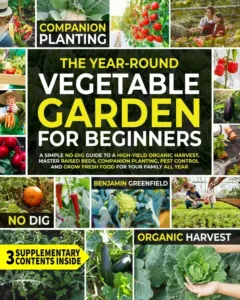
Check out the author’s book here: The Year-Round Vegetable Garden for Beginners.
Leave a Reply