
During World War II, Americans planted more than 20 million victory gardens in backyards, vacant lots and city parks. Together they grew about 10 billion pounds of produce, according to University of Vermont Extension. Today the idea is back, pushed by grocery prices, empty shelves during past shortages and a plain wish to eat food you grew yourself. A Modern Victory Garden borrows that old goal, but it works on a much smaller and more personal scale.
Let’s be honest from the start. A backyard plot will not make most families self-sufficient. However, a well-planned garden can put real food on the table for months and cut a visible slice from the produce bill. In this guide, I’ll start with the history in numbers and the right site. Then we’ll look at the crops that feed you, how much to plant and how to keep the harvest going into winter.
What a Modern Victory Garden Really Is
The first wave came during World War I, when Americans called them liberty gardens. Then the movement grew much larger in World War II. Home gardens freed commercial food for the troops, and they eased the pressure of rationing at home. Many families also kept small backyard flocks of chickens, which people called victory flocks.
The crops were plain and practical. Gardeners grew potatoes, sweet potatoes, peas, tomatoes, cucumbers, onions, beans, carrots, turnips, radishes, beets and leafy greens. Government guides also encouraged succession planting, so one bed produced more than one crop each year.
A few of those gardens still exist. The Fenway Victory Gardens in Boston date from 1942 and cover 7.5 acres with more than 500 plots. In Minneapolis, the Dowling Community Garden opened in 1943 and still holds nearly 200 plots on 3 acres.
The idea has come back several times since then. According to NDSU Extension, victory gardens surged again during the COVID-19 pandemic, and they are trending once more in 2026. In other words, the modern version is a response to uncertainty, just like the original.
Set Honest Expectations
Feeding one adult entirely from a garden takes far more space, skill and labor than most people imagine. So set a narrower goal. For example, aim to stop buying tomatoes, onions and winter squash for part of the year. Alternatively, grow enough potatoes and carrots to last until midwinter. These targets are realistic, and each one saves money you can actually measure.
Pick the Right Site for Your Modern Victory Garden
Sunlight comes first. Most vegetables need six to eight hours of direct sun each day. Fruiting crops such as tomatoes, peppers and squash need the full amount. Leafy greens can manage with three to five hours, especially in spring and fall. Before you dig, it helps to map the sun in your yard through the day.
Next, look at what grows nearby. University of Wisconsin Extension advises keeping the garden about 50 feet away from black walnut trees. Their roots release a compound that stunts tomatoes and several other crops. The same handout suggests running rows north to south, with tall crops on the north side so they don’t shade shorter ones.
Water matters just as much. A garden needs at least one inch of water per week from rain or irrigation. Therefore, place the beds close to a spigot, because a long walk with a watering can gets old quickly in July.
Build the Soil Before You Plant
Test your soil before the first season, and then repeat the test about every five years. The results tell you what to add, so you don’t waste money on the wrong fertilizer. After that, work four to six inches of organic matter into an in-ground bed. Raised beds need a thinner layer of two to three inches each year. Homemade compost is the cheapest way to supply it.
If your spot is currently lawn, you don’t need to strip the sod by hand. Instead, cover the grass with cardboard, pile compost on top and wait about six weeks. The grass dies, the worms move in, and you can plant straight into the new layer. For more low-cost ideas, see my guide to vegetable gardening on a budget.
Crops That Actually Feed a Household
Salad greens are lovely, but they add very few calories. If food security is the goal, focus on crops that fill a plate and keep for months. NDSU Extension lists potatoes, winter squash, onions, carrots and beets as the best candidates for storage.
Potatoes and sweet potatoes are among the most filling crops you can grow in a small space. Winter squash is another staple, and it can sit on a shelf for months once it is properly stored. Dry beans are another solid choice, since they store for a year or more in a jar.
Tomatoes deserve a place too, even though they are not calorie-dense. They produce heavily in a small space, and you can can, freeze or dry the surplus. Meanwhile, onions and carrots fill the gaps in everyday cooking.
Small Spaces and Perennial Crops
If you only have a balcony, you can still take part. NDSU suggests tomatoes, peppers, basil, parsley and cilantro in containers. These crops won’t replace a grocery trip, but they cover the expensive fresh items.
In a yard, consider a corner for perennials such as asparagus and rhubarb. You plant them once, and they return every spring for many years. My list of edible perennials covers other long-lived options.
How Much to Plant in a Modern Victory Garden
The Wisconsin handout gives expected yields for a 30-foot row, which makes planning much easier. Here are the numbers for the most useful crops:
- Tomatoes: about 200 pounds from 8 plants.
- Winter squash: 75 to 125 pounds from 8 plants.
- Cabbage: about 60 pounds from 15 plants.
- Onions: about 50 pounds from 90 plants.
- Sweet potatoes: about 50 pounds from 8 plants.
- Turnips: about 50 pounds from 120 plants.
- Potatoes: 30 to 45 pounds from 24 plants spaced 15 inches apart.
- Carrots: about 30 pounds from 180 plants.
- Beets: about 30 pounds from 120 plants.
- Spinach: about 25 pounds from 180 plants.
- Peas: 15 to 25 pounds from 180 plants.
- Beans: 10 to 30 pounds from 90 plants.
Treat these figures as a ceiling, not a promise. They assume good soil, steady water and a decent season. Your first year will probably land lower, and that’s normal.
A Sample Two-Bed Modern Victory Garden
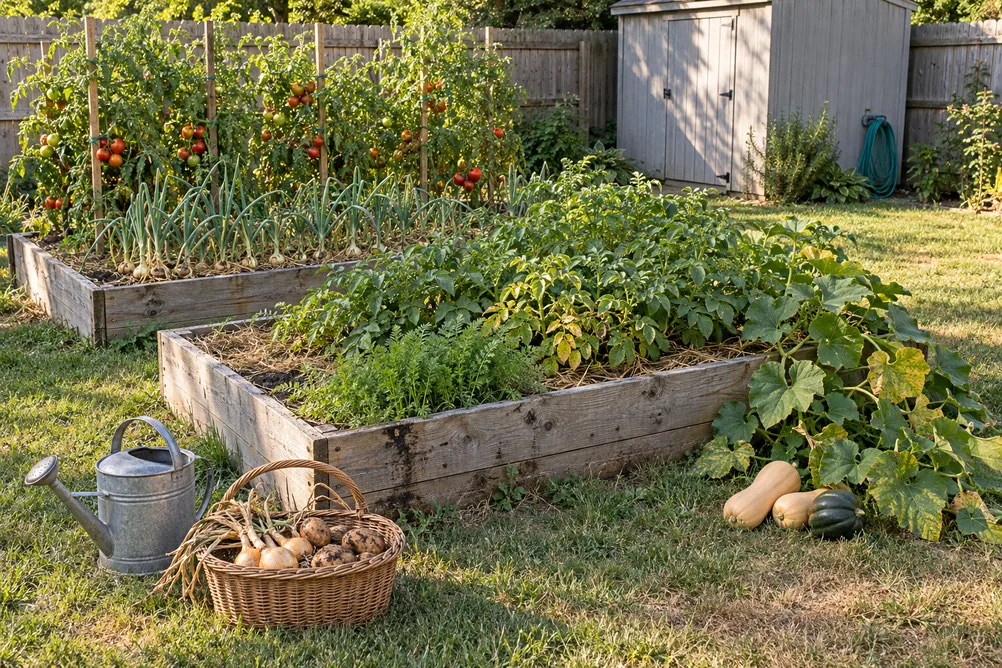
Numbers are easier to use with a concrete example. Imagine two raised beds, each four feet wide and eight feet long. That gives you 64 square feet, which fits in most small backyards.
In the first bed, plant four tomato plants along the north edge and a double row of onions in front of them. In the second bed, set out a block of potatoes and leave one end for a single winter squash vine to spill over the side. Then tuck a short row of carrots or beets wherever a gap opens up.
This small Modern Victory Garden won’t feed a family for a year. Even so, it can supply most of your summer tomatoes, several weeks of onions and a basket of potatoes for fall meals. Once you see what grows well, you can add a third bed for beans or a second squash.
Still, the list shows where to put your space. Tomatoes and squash return the most weight per row. Onions and potatoes, on the other hand, give you food that lasts. A good first plan for a Modern Victory Garden combines both types. To turn these numbers into a layout, follow my step-by-step vegetable garden layout.
Plan Your Modern Victory Garden for a Long Season
A single planting in May wastes half the year. Instead, use succession planting to follow one crop with another in the same bed. For instance, sow peas and spinach in early spring, pull them in early summer, and then plant bush beans in their place.
Group crops by plant family as well. Keep tomatoes, peppers and potatoes together, and do the same with cabbage, turnips and radishes. This makes it easy to rotate each family to a new bed the following year, which slows the buildup of pests and diseases in the soil.
Finally, plan the second half of the season now. Carrots, beets, spinach and turnips all do well from a midsummer sowing. My fall vegetable gardening guide explains how to time those sowings before the first frost.
Store the Harvest So It Lasts
Growing food is only half the job. Without good storage, a big harvest turns into a big compost pile. Each storage crop has its own needs, so learn them before the harvest arrives.
Onions need a few weeks of drying in a warm, airy spot before they go into storage. I cover the method step by step in my guide to curing onions. Winter squash also benefits from a short curing period, which hardens the skin.
Carrots, beets and potatoes prefer the opposite conditions. They keep best in a cold, humid and dark place. An unheated basement, a garage corner or a simple root cellar can hold them well into winter. Always check your stored crops every week or two, and use anything soft or damaged right away. A few rotten potatoes can spoil a whole box, so this simple habit protects the rest of the harvest.
Share the Surplus the Safe Way
Even a modest garden can overflow in August. Food pantries often welcome fresh produce, but you should always call first. Some pantries lack cold storage, and others only accept donations on certain days.
NDSU Extension also recommends basic hygiene for donated food. Wash your hands before harvesting, use clean containers and keep pets out of the garden. These small steps protect the families who receive your vegetables.
If you’d like to grow more for your neighborhood, consider joining forces with others. My guide to starting a community garden explains how to find land, split plots and set simple rules. After all, the original victory gardens in Boston and Minneapolis were community projects too.
Modern Victory Garden Questions
How Big Should a Modern Victory Garden Be?
Start with something you can manage, such as two raised beds of four by eight feet. That space can grow tomatoes, onions and a row of potatoes in the first year. You can always expand once you know how much time the garden takes.
What Should I Plant First?
Begin with crops you already buy often and that store well. For most households, that means onions, potatoes and tomatoes. After the first season, add winter squash and a fall planting of carrots and beets.
Can a Garden Really Improve Food Security?
It can help, but it won’t replace the grocery store for most people. The real gains are fresher food, lower bills for certain crops and useful skills. Moreover, a stocked shelf of squash and onions offers real comfort when prices jump.
Start Small and Grow What You Eat
The original victory gardeners didn’t grow everything, and neither do you have to. Pick a sunny site, build the soil and choose a few crops that feed you and keep well. Then use the yield numbers to plant enough of them to matter. Year by year, your Modern Victory Garden will grow along with your skills.
Check out the author’s book here: The Year-Round Vegetable Garden for Beginners.

Leave a Reply