
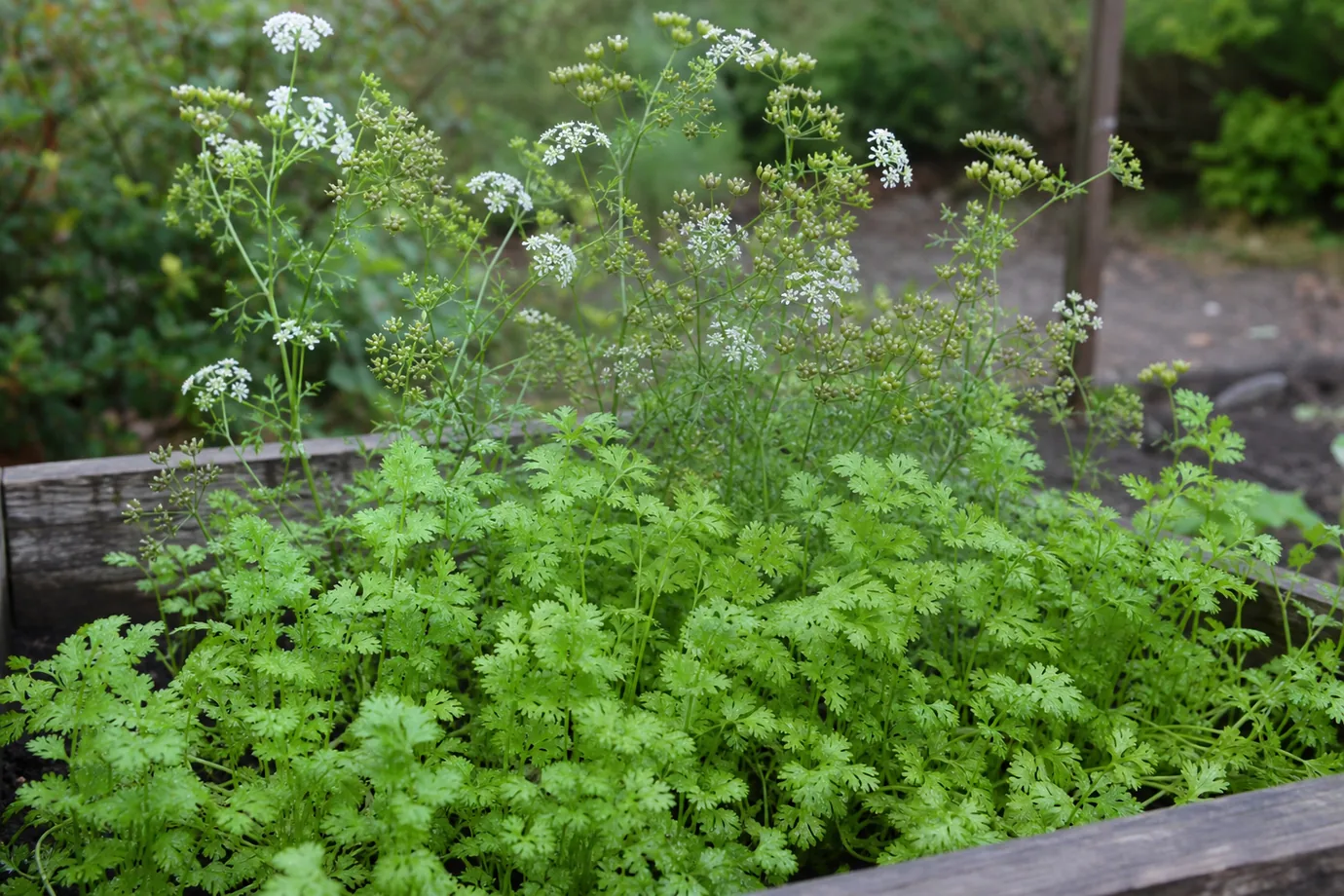
Cilantro is one of the easiest herbs to sow and one of the hardest to keep. It comes up quickly and tastes wonderful, and then, the moment summer heat arrives, it shoots up a flower stalk and stops making leaves. The good news is that this habit is predictable. Growing Cilantro well is mostly a matter of sowing at the right time, sowing little and often, and making use of the seed when the plants bolt anyway.
This guide covers the crop from sowing to the coriander seed harvest. The advice comes from Utah State University Extension, University of Wisconsin-Madison Extension and Oregon State University Extension.
Cilantro and Coriander: One Plant, Two Crops
Cilantro and coriander are the same plant, Coriandrum sativum. In North America, the fresh leaves are called cilantro and the dried seeds coriander. The plant gives you both, one after the other. First it makes a rosette of lacy leaves; then it flowers and sets round seeds.
Wisconsin describes it as a cool-season crop that tends to bolt in hot weather. The leaves reach 1 to 1½ feet, while the flower stems climb to 2 to 3 feet. So whether you want leaves or seed decides almost everything else, from spacing to sowing date.
When to Sow Cilantro
Timing is the heart of growing cilantro. Oregon State recommends sowing from early spring through early summer, and then again in early autumn. It also gives a soil temperature of 55 to 68°F for germination.
The problem is midsummer. Oregon State notes that plants sown in late June or early July meet long, hot days and flower almost at once. In warm weather, it adds, cilantro typically bolts and sets seed within four to six weeks. In the cool of spring and autumn, by contrast, plants keep making leaves for several weeks or months before they flower.
In practice, this gives you two seasons:
- Spring. Sow as soon as the soil can be worked, and keep sowing until early summer. Seed Starting Calendar: How to Plan Your Vegetable Gardening Year helps you place those dates in your own year.
- Autumn. Wisconsin suggests sowing in mid-August for a fall leaf crop. Oregon State adds that mature plants tolerate light freezing, so autumn cilantro often lasts well into the cool season. Fall Vegetable Gardening Guide: Crops That Thrive in Cooler Weather shows what else fits that window.
Why Cilantro Bolts So Fast
Bolting is the switch from leaves to flowers. Both heat and lengthening days push cilantro towards it, which is why a June sowing can flower before it has made much leaf. Once the flower stalk rises, the new leaves become thin and feathery, and the flavour turns sharper.
You cannot stop bolting, but you can delay it. What is Bolting: How to Prevent Your Leafy Greens from Flowering Early explains the process in detail. For cilantro in particular, the extensions suggest four tactics:
- Choose slow-bolting varieties. Wisconsin lists ‘Calypso’, ‘Confetti’, ‘Cruiser’, ‘Leisure’, ‘Marino’, ‘Santo’ and ‘Slo Bolt’.
- Sow in succession. Wisconsin recommends a new sowing every 2 to 3 weeks, so a fresh batch is always coming on.
- Find a cooler spot. In summer, a place with afternoon shade keeps the plants leafy longer; Shade Tolerant Vegetables: A Guide to Growing Without Full Sun lists other crops for that corner.
- Keep the soil moist. Dry soil stresses the plants and hurries them into flower.
Succession sowing is the most useful of the four. Small sowings every few weeks give a steady supply, instead of one big crop that bolts all at once. Succession Planting: A Guide to Continuous Harvests shows how to plan the rhythm.
Soil and Site for Growing Cilantro
Cilantro is not fussy about soil. It needs full sun in spring and autumn, good drainage and moderate fertility. USU recommends working in 2 to 4 inches of well-composted organic matter per 25 square feet before sowing.
A near-neutral pH suits it, as it does most vegetables. If you have not tested your soil recently, Soil pH Testing: How to Take a Sample That Means Something explains how to do it properly.
Sowing and Spacing Cilantro
Cilantro grows a long taproot, so it dislikes being moved. As a result, sow it directly where it will grow rather than in trays. Each round “seed” is in fact a husk holding two seeds, so expect seedlings in pairs.
- Sow the seed. Wisconsin sows ¼ to ½ inch deep, and Oregon State covers the seed with ½ inch of soil, at 10 to 15 seeds per foot of row.
- Space the rows. Wisconsin keeps rows about a foot apart, USU at least 15 inches, and Oregon State 18 to 24 inches.
- Be patient. USU notes that the seeds can take about 21 days to germinate, so keep the surface damp.
- Thin the seedlings. For leaves, Wisconsin thins to 3 to 6 inches apart. For seed, it leaves 12 inches between plants.
Watering and Feeding
Keep the soil evenly moist, especially in spring when the seedlings are small. Water at the base, and let the surface dry slightly between waterings. A thin layer of mulch keeps the soil cool and slows evaporation; Organic Garden Mulch: How Deep to Lay It and When to Wait explains how deep to go.
Cilantro needs little fertilizer. USU suggests ¼ cup of a nitrogen fertilizer such as 21-0-0 per 25 square feet, applied once or twice during the season. More than that gives soft, lush growth with less flavour.
Growing Cilantro in Containers
Cilantro grows well in pots, as long as they are deep enough for the taproot. Use a container at least 8 inches deep, filled with a light, free-draining mix; Best Soil for Container Vegetables: Air Space Before Nutrients explains what to use.
USU advises keeping the soil in the pot below 75°F. On a hot patio, therefore, move the container into shade in the afternoon. Sow a new pot every few weeks, just as in the garden.
Harvesting Cilantro Leaves
Wisconsin says the leaves can be picked any time after the plants reach about 6 inches, and it gives 45 to 80 days to harvest. Oregon State adds that the leaves are most flavourful when young and tender.
Cut the outer leaves first and leave the centre to keep growing. Alternatively, cut a whole plant just above the soil and rely on the next sowing. Take no more than a third of a plant at a time if you want it to regrow.
Fresh leaves keep in the refrigerator for about a week, according to Wisconsin. Cilantro loses most of its flavour when dried, so it is better to freeze the chopped leaves in a little water or oil.
Letting Cilantro Go to Seed
When a plant bolts, do not pull it straight away. The flowers are useful in their own right. The small white umbels attract hoverflies, parasitic wasps and bees, which in turn help control aphids. Beneficial Insects for Garden: Creating a Haven for Natural Predators explains why these visitors matter. The flowers are edible too; Edible Flowers: Adding Color and Flavor to Your Plot has ideas for using them.
After the flowers come the seeds. Wisconsin notes that a seed crop needs a season of at least 100 days, and that the seeds are ready 2 to 3 weeks after flowering, when they turn light brown. Oregon State warns to harvest them before they drop.
To harvest, cut the seed heads, put them upside down in a paper bag, and let them dry for a week or two. Then rub the heads to release the seeds. Wisconsin says dried seeds keep for months in an airtight container. Keep a handful for next year’s sowings; Saving Vegetable Seeds: A Step-by-Step Guide for the Home Garden explains how to store them.
Some seed always escapes. That is not a problem, because self-sown cilantro often comes up in autumn or the following spring, exactly when it grows best. Oregon State also notes that the roots, valued in Thai and Vietnamese cooking, are best dug in autumn.
Pests and Problems
Wisconsin notes that cilantro has no serious pest problems, although commercial growers have reported bacterial leaf spot. Aphids sometimes gather on the flower stalks; Aphid Control Methods: When to Spray and When to Wait helps you decide whether to act. Usually the beneficial insects drawn by the flowers deal with them first.
The most common “problem” is simply early bolting. If a sowing flowers after a few weeks, it is almost always a matter of heat or day length, not disease.
Make Growing Cilantro a Habit
Sow a short row every two or three weeks in spring, pause in the heat of summer, and start again in late summer for the autumn crop. Pick the leaves young, let a few plants flower for the insects and the seed, and let the rest self-sow. With that rhythm, growing cilantro stops being a race against bolting and becomes a steady supply for most of the year.
Check out the author’s book here: The Year-Round Vegetable Garden for Beginners.


Leave a Reply