
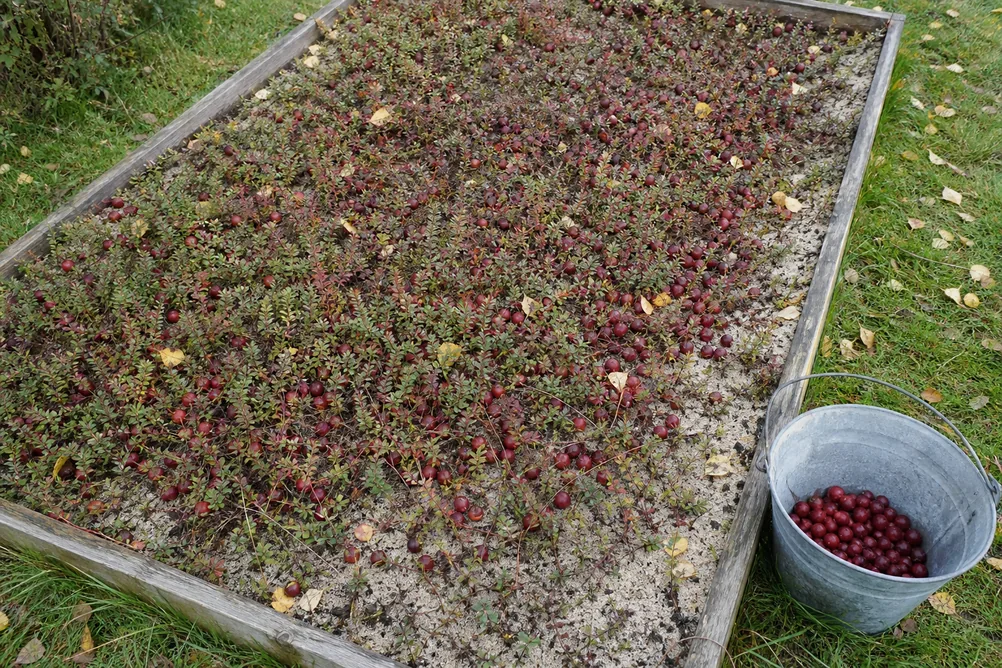
Growing cranberries at home sounds like a job for a farmer with a flooded bog. In fact, the vine that fills the Thanksgiving sauce boat is a small, tough ground cover. It grows happily in a backyard bed, as long as the soil is acid, sandy and moist.
A patch the size of a door can give you several pounds of berries each fall. The plants are evergreen, they live for decades, and they turn a rich burgundy in winter. This guide explains how to build the right bed, how the plant grows, and how long you will wait for your first homegrown cranberry sauce.
Growing Cranberries at a Glance
| Plant type | Low, woody, evergreen vine, Vaccinium macrocarpon |
| Climate | Cool regions, roughly zones 2 to 7, with a cold winter |
| Soil pH | 4.0 to 5.5, more acid than almost any other crop |
| Soil | Sandy, rich in organic matter, moist but never waterlogged |
| Spacing | About one rooted plant per square foot |
| First crop | Light crop in year 3, fuller crops from year 4 |
| Yield | Roughly 1 pound of fruit for every 4 square feet |
| Harvest | September to October, when berries are deep red |
Do Cranberries Need a Bog?
No, and this is the biggest myth about growing cranberries in a backyard. Illinois Extension explains that commercial growers flood their beds only at harvest and in winter. The water makes the ripe berries float for easy skimming, and in winter it protects the vines from frost. Even in those bogs, the plants never grow underwater.
In a home garden, you can skip the flooding altogether. What the vines really need is a root zone that stays moist and cool, drains freely, and is very acid. Standing water in summer actually harms them, because it starves the roots of air and invites root rot.
Where Growing Cranberries Works Best
Cranberries are native to the cool northeast and north-central United States and southern Canada, so they need a real winter. As a result, the vines expect about three months of temperatures between roughly 32 and 45 °F to flower well the next year. In warm, humid regions without that chill, they rarely crop.
Pick an open spot in full sun, well away from tall trees. Six hours of direct light is the minimum, and more is better for flowering and color. A low spot is fine, but avoid any place where water puddles after a storm.
Building a Bed for Growing Cranberries
Most garden soil is too heavy and not nearly acid enough. For this reason, almost every home grower builds a dedicated bed rather than planting straight into the ground.
- Test the soil first. A lab test shows your starting pH and organic matter. The post on soil pH testing shows how to take a sample that tells you where you really stand.
- Dig out the bed about 6 to 8 inches deep. A bed of 4 by 8 feet is a practical size.
- Line the bottom, if your soil is sandy. A layer of heavier soil or peat at the base helps the bed hold moisture.
- Fill with an acid mix. A common recipe is one part peat moss, one part compost and one part coarse sand.
- Top with sand. University of Maine Extension recommends at least 4 inches of coarse sand at the surface, where the new roots will grow.
- Adjust the pH. If the mix tests above 5.5, work in elemental sulfur and wait a few months before planting.
Acid-loving plants share most of this work, which saves effort in a small yard. If you already have a bed for growing blueberries, cranberries can go right next to it. Keep in mind that they want soil a little more acid still. The guide on how to read a soil test report explains what the pH and buffer numbers mean before you add sulfur.
Pro Tip: Water an acid bed with rainwater whenever you can. Hard tap water carries lime, and over a few seasons it slowly pushes the pH back up.
Planting Vines When Growing Cranberries
Buy rooted cuttings or small potted plants from a nursery that sells named varieties. ‘Stevens’ is the most widely grown, while ‘Early Black’, ‘Ben Lear’ and ‘Howes’ are old favorites with different ripening times.
Plant in spring, after the soil can be worked, at about one plant per square foot. Set each one at the same depth it grew in the pot and firm the sand around it. Water well, and keep the bed evenly moist for the first summer, while the roots settle in.
At that spacing, the vines should cover the bed in one to two years. During that time, weed the bed carefully every couple of weeks. Grass and weeds compete hard with young cranberries, and pulling them later tears the tangled runners.
Runners and Uprights: How the Plant Grows
Understanding the plant makes growing cranberries far less mysterious, because a cranberry vine spreads in two quite different ways.
Runners are long, trailing stems that creep across the surface. They can grow several feet in a season, and they root wherever they touch moist sand. In the first two years, runners are what fill the bed.
Uprights are short vertical shoots, a few inches tall, that grow from buds along the runners. The flower buds form at the tips of the uprights in late summer. They open the next June as small, pale pink flowers, and bees turn them into berries.
This is why a young bed produces so little fruit: it is still building runners. Once the mat is full, the plant shifts its energy into uprights, and the crop begins.
Sanding, Feeding and Watering
Sand. Every two to three years, spread a thin layer of coarse sand, about half an inch, over the whole bed. Fall or early spring is the best time for it. It buries old runners, which then root and send up new uprights. In addition, it smothers small weeds and keeps the surface draining well.
Feeding. Cranberries need very little fertilizer, and too much nitrogen gives lush runners and few berries. Use a small dose of an acid-forming fertilizer in spring, such as one made for blueberries and rhododendrons. Never add lime, wood ash or mushroom compost to the bed.
Water. Give the bed about an inch of water a week in summer, more in sandy soil during heat waves. The surface should feel moist to the touch but never soggy. A thin mulch of pine needles or shredded leaves helps hold moisture. The guide to organic garden mulch explains which materials keep soil cool without matting down.
Winter Care for Cranberries
Cranberry vines are very hardy, but dry winter wind can burn exposed leaves. Therefore, in cold and open sites, cover the bed with evergreen boughs or loose straw once the ground freezes. Take the cover off in early spring before new growth starts.
Late spring frost is the bigger danger in northern gardens. The new shoots and flower buds are tender, and a single frosty night in May can wipe out the crop. Keep an old sheet or a row cover handy for those nights, just as you would for growing strawberries in bloom.
Warning: Do not confuse the true cranberry with the “highbush cranberry”, which is a Viburnum shrub. Its red fruit is edible when cooked, but it tastes quite different. Some related viburnums are not safe to eat, so buy plants labeled Vaccinium macrocarpon.
Harvesting Cranberries for Thanksgiving
In most gardens the berries ripen from mid-September through October, well before the holiday. They are ready when they are fully red or deep burgundy and the seeds inside have turned brown. A ripe berry also bounces when dropped on a hard surface, thanks to the air pockets inside it.
Pick by hand, or run your fingers through the vines like a comb. Harvest before a hard freeze, because frozen berries turn soft once they thaw.
Fresh cranberries keep for several weeks in the fridge in a sealed bag. That means an October harvest is still perfect for Thanksgiving dinner. For longer storage, freeze them whole on a tray, then pack them in bags. Frozen berries keep for about a year and go straight into sauce, bread or muffins without thawing.
What Goes Wrong When Growing Cranberries
| Problem | Cause | Fix |
|---|---|---|
| Yellow leaves with green veins | pH too high, iron locked up | Test the soil and add sulfur, water with rainwater |
| Lots of runners, no berries | Young bed or too much nitrogen | Wait for uprights, cut back fertilizer |
| Flowers but no fruit | Late frost or no bees at bloom | Cover on frosty nights, plant flowers for bees nearby |
| Vines die back in patches | Waterlogged soil, root rot | Improve drainage, add sand, water less often |
| Leaves brown after winter | Dry wind on exposed vines | Cover with evergreen boughs after the ground freezes |
| Bed full of grass and weeds | Gaps in the young mat | Hand weed early and sand every few years |
Growing Cranberries Questions Answered
Can you grow cranberries in a container?
Yes, in a wide, shallow pot of acid mix. Keep it moist and protect it from hard freezes, since roots in pots are less hardy.
How long do cranberry plants live?
A well-kept bed can produce for decades, and some commercial bogs have cropped for over a century.
Do cranberries need a pollinator?
The flowers are self-fertile but need bees to move the pollen, so a pollinator friendly garden nearby helps the fruit set.
Can you grow cranberries from store-bought berries?
Seeds from fresh berries can sprout, but they are slow and variable, while rooted cuttings of a named variety are far faster.
A Holiday Crop Worth the Wait
Growing cranberries at home asks for patience and some sand, peat and sulfur. In return you get an evergreen ground cover that feeds the Thanksgiving table for decades. Build the bed this winter, plant in spring, and count on a first real harvest in the third fall.
Check out the author’s book here: The Year-Round Vegetable Garden for Beginners.


Leave a Reply