
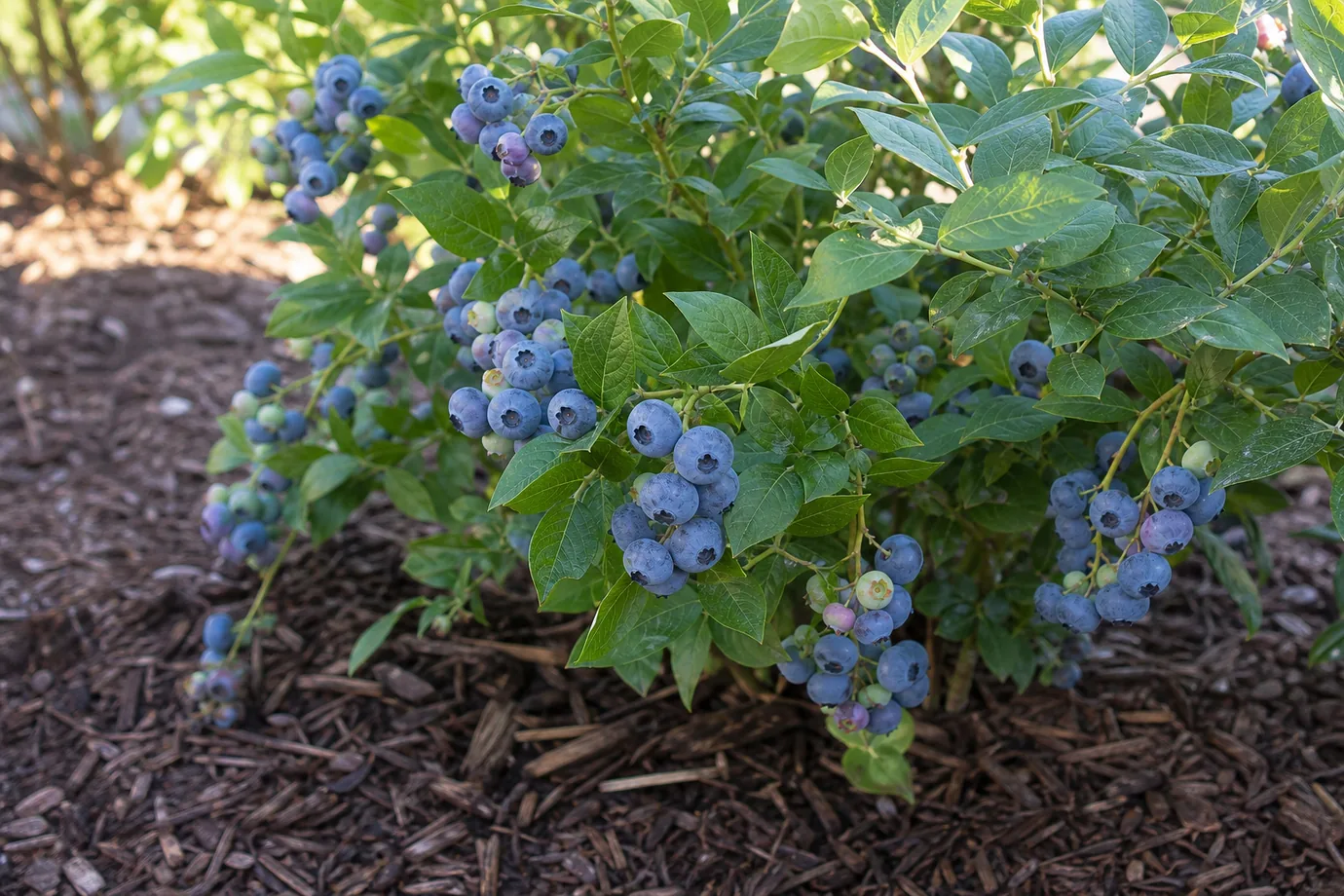
Blueberries are one of the few fruits that a home garden can grow better than a farm. A ripe berry left on the bush for a few extra days is sweeter than anything picked early for shipping, and a well-placed bush keeps cropping for decades. Growing Blueberries does ask for one thing most garden plants do not: a strongly acid soil. Get that right before planting, and the rest is ordinary care.
This guide covers the whole process, from choosing a type to pruning a mature bush. The figures come from University of Illinois Extension, whose guides to growing and caring for blueberries and pruning blueberries are clear and practical, and from Penn State Extension’s advice on site selection and preparation and establishing a planting.
Growing Blueberries at a Glance
- Soil pH: 4.5 to 5.0, or up to 5.2 in clay soils. This is the rule that matters most.
- Sun: full sun for the best crop, though partial shade still gives good yields.
- Spacing: 6 to 8 feet between bushes.
- Water: about an inch a week, kept even.
- Mulch: about 4 inches of organic mulch, topped up every year.
- Pollination: plant at least two varieties for bigger berries and heavier crops.
- Patience: remove the flowers for the first two years.
Choosing the Right Type of Blueberry
There are four main groups, and your climate decides between them.
Northern highbush blueberries are the classic garden bush, reaching about 5 to 6 feet. They need a cold winter: Penn State notes that most varieties want about 750 hours below 45°F. Half-high blueberries are crosses between highbush and lowbush types. They are shorter and very winter-hardy, which makes them the best choice for cold regions and for large containers. Lowbush blueberries are the wild, knee-high type, grown mostly as ground cover. Rabbiteye and southern highbush blueberries are bred for the South, where winters are too mild for northern types.
Choosing varieties that ripen at different times stretches the harvest. Penn State’s variety list runs from early types such as Duke and Patriot, through midseason Bluecrop, to late ones such as Elliott, which together cover the summer from July to mid-September.
Why You Need Two Varieties
Most northern highbush varieties are self-fertile, but cross-pollination from a second variety gives larger berries and a heavier crop. Half-high and rabbiteye blueberries need a partner to fruit well at all. Plant at least two varieties of the same type that flower at about the same time, and let the bees do the rest; Pollinator Friendly Garden: Attracting Bees and Butterflies to Your Vegetables shows how to bring them in.
Soil pH: The Step That Decides Everything
Most failed blueberry bushes fail here. Penn State puts the ideal range at 4.5 to 5.0, and Illinois Extension at 4.8 to 5.2. Above that, the plants cannot take up iron, and the leaves turn yellow between green veins. Below it, manganese and aluminium can become toxic.
Start with a soil test a year before planting. Soil pH Testing: How to Take a Sample That Means Something explains how to take a sample the lab can use, and How to Read a Soil Test Report: Unlocking Your Garden’s True Potential shows how to read the result.
If the pH is too high, lower it with elemental sulfur, and do it early. Soil bacteria convert sulfur to acid slowly, so it takes months to work. Illinois Extension gives these rates for soil at pH 6.0, applied a year before planting:
- Sandy soil: 0.5 pound of sulfur per 100 square feet.
- Loamy soil: 0.75 pound per 100 square feet.
- Clay soil: 1 pound per 100 square feet.
Penn State adds a warning that is easy to miss: once the bushes are in, surface sulfur does little to lower the pH, and the plants will not thrive. For more on how pH affects nutrients, see Soil pH Level: Testing and Balancing for Maximum Yield.
When the Soil Is Too Alkaline
Where the pH sits between about 5.2 and 6.2, Illinois Extension suggests a planting hole two feet across and at least twelve inches deep, filled with half acid sphagnum peat and half topsoil. Above 6.2, it is simpler to grow blueberries in large containers of at least 25 gallons.
Choosing and Preparing the Site
Pick a sunny spot with good drainage. Blueberries have shallow, fine roots that rot in waterlogged soil and dry out fast in sandy ground, so they need soil that drains freely but stays evenly moist. Organic matter helps with both. Penn State recommends mixing plenty of moist peat into the planting area, and building up organic matter with cover crops the year before; Green Manure Cover Crops: How Much Nitrogen You Actually Get Back explains how. Clear perennial weeds completely at the same time, because blueberry roots compete poorly.
If you are unsure where the sun falls in summer, Garden Sun Map: Count the Hours, Not the Shadows shows how to track it before you commit.
Planting Blueberry Bushes
Illinois Extension recommends two-year-old, container-grown plants. Set them at the same depth they grew in the nursery pot, 6 to 8 feet apart. At planting, cut back half to two thirds of the cane growth. It feels drastic, but it balances the top with a root system that has just been disturbed.
Water well, then mulch straight away. Illinois Extension lays 4 to 6 inches of mulch soon after planting, and Penn State keeps it at about 4 inches. Sawdust, wood chips, pine needles and shredded bark all work. Avoid mushroom compost, which Penn State warns is too alkaline. Organic Garden Mulch: How Deep to Lay It and When to Wait covers the options in detail.
The First Two Years: Remove the Flowers
This is the hardest advice to follow. Both Illinois and Penn State recommend removing the flowers during the first two years. A young bush that fruits early puts its energy into berries instead of roots and shoots, and it takes longer to reach full size. Pinch off the flower buds in spring, and the bush repays you with bigger crops for decades.
Watering Blueberries
Blueberry roots are shallow and sensitive to swings in moisture. Illinois Extension recommends about an inch of water a week, and Penn State advises having drip irrigation ready for dry spells. A drip line under the mulch is the easiest way to keep the soil evenly moist; Drip Tape Installation: DIY Micro-Irrigation for Efficient Veggie Gardens walks through the setup. If you can, water with rainwater. Tap water is often alkaline and slowly raises the pH; Rainwater Harvesting for Vegetable Gardens: What One Barrel Actually Waters explains how to collect it.
Feeding Blueberries
Blueberries need modest amounts of nitrogen, in the right form. Ammonium sulfate is the standard choice, because it supplies nitrogen as ammonium, which blueberries use well, and it helps keep the soil acid. Illinois Extension waits four weeks after planting and then applies one ounce of ammonium sulfate in a band 12 to 18 inches from the base of the plant. From the next spring, it applies two ounces per plant in late March or early April, adding an ounce each year up to a total of eight ounces per plant.
Avoid manures and fertilizers that contain nitrate or lime, which can push the pH up. For organic options, see Organic Plant Food: Feeding Your Veggies for Maximum Growth. Yellow leaves with green veins usually mean the pH has crept too high rather than a lack of food; Nutrient Deficiency in Plants: A Visual Guide to What Your Vegetables Are Telling You helps tell the symptoms apart.
Pruning Blueberries
Illinois Extension says pruning is generally not needed until the third year after planting. After that, prune in early spring before growth begins. Remove dead or damaged wood, short stubby branches near the ground, and old stems with little vigour.
On a mature bush of five to seven years, keep five to seven older canes plus one or two new ones. Each year, remove one or two of the oldest canes at the base and let one or two new canes replace them. This steady renewal keeps the bush productive, because the best berries grow on younger wood. If a bush sets heavy fruit buds, Illinois Extension suggests cutting the tips back to four to six buds for larger berries.
Harvesting Blueberries
Blueberries turn blue several days before they are fully ripe. Wait until the berries come off with a gentle touch, and taste one before picking the whole bush. The berries on each cluster ripen over several weeks, so plan to pick every few days.
Birds are the main competitor. Illinois Extension recommends netting, and it is the only reliable answer: drape it over a frame so that birds cannot reach the fruit through the mesh. Deer and rabbits may also need fencing; Animal Proof Vegetable Garden: Keeping Deer and Rabbits Out of Your Crops covers the options.
Growing Blueberries in Containers
Containers are the easiest way around alkaline soil, because you control the mix. Choose half-high or compact varieties, and use a pot of at least 25 gallons, as Illinois Extension advises for high-pH gardens, filled with an acid mix rich in peat or pine bark. Grow Bags for Vegetables: Sizes, Fabric, and What Grows Best in Each compares the larger fabric pots. Water with rainwater where possible, and in cold regions protect the pot in winter, because roots above ground freeze far more easily than in a bed.
Frequently Asked Questions
How long does Growing Blueberries take before the first real harvest?
With the flowers removed in the first two years, expect a small crop in the third year, and a full crop once the bush reaches about five to seven years.
Is Growing Blueberries possible in alkaline soil?
Yes, but not by adding sulfur around established bushes. Use a large container or a planting hole filled with half peat and half soil, and keep testing the pH every year or two.
Do I need two blueberry bushes to get fruit?
Half-high and rabbiteye types need a second variety to fruit well. Most northern highbush varieties will fruit alone, but a second variety gives bigger berries and a heavier crop.
Are blueberries a good perennial crop?
They are one of the best. For other plants that crop for years from a single planting, see Edible Perennials: Planting Once for Lifetime Harvests, and for another fruit to grow alongside them, Growing Strawberries: Choosing a Type, Planting the Crown and Keeping a Bed for Years.
A Bush for the Long Run
Test the soil a year ahead, bring the pH down before planting, choose two varieties that suit your climate and mulch them well. Then pinch off the first flowers and wait. Growing blueberries takes a few years to pay off, but a bush planted this way can feed you every summer for a generation.
Check out the author’s book here: The Year-Round Vegetable Garden for Beginners


Leave a Reply