
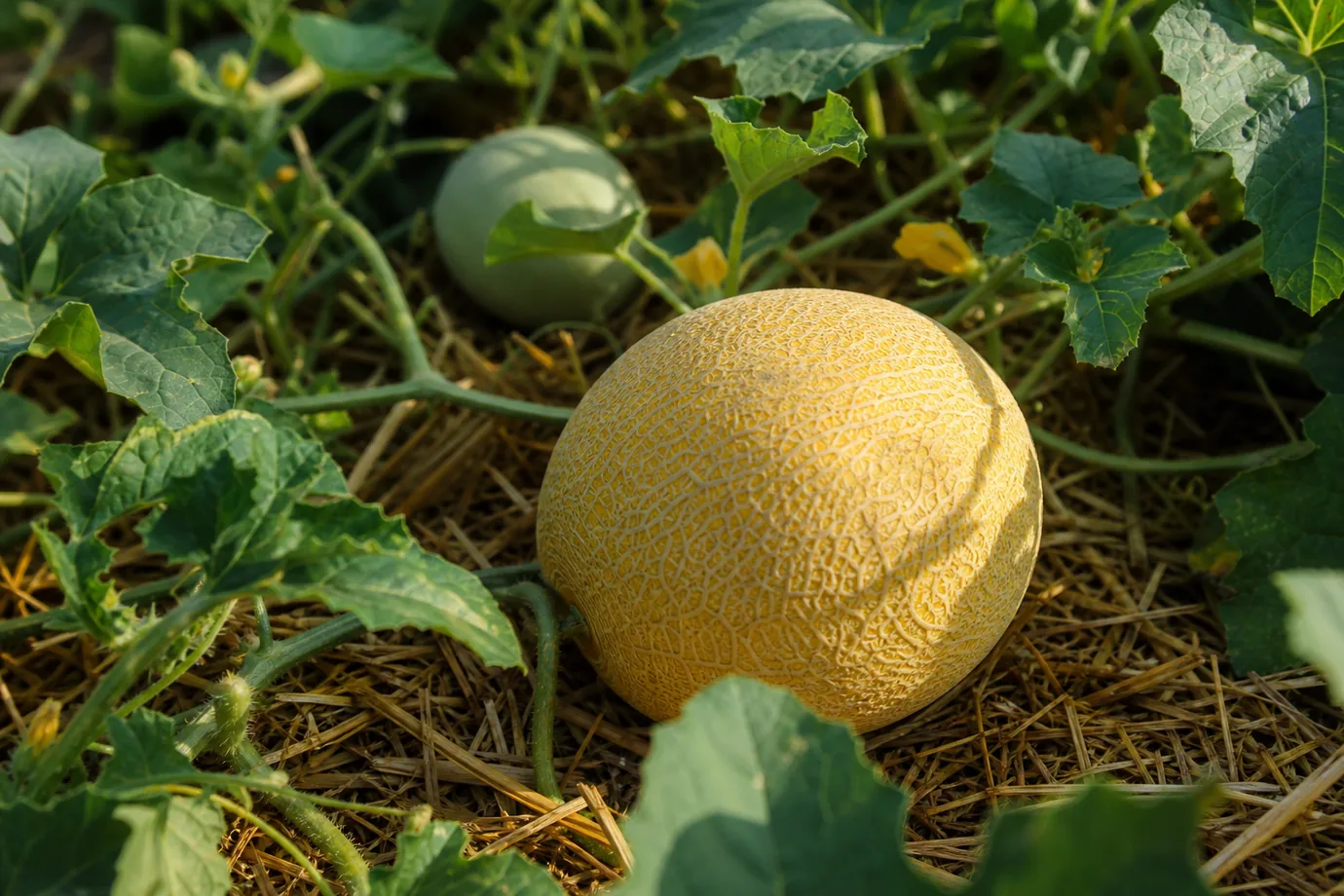
A cantaloupe picked at the right moment is one of the best things a summer garden can give, and one of the hardest things to buy. Shop melons are harvested before they are ready so they survive transport, and they soften on the shelf without getting any sweeter. Growing Cantaloupe yourself puts the timing back in your hands, and the plant is less fussy than its reputation suggests, as long as it gets warmth, sun, steady water and a little patience at the end.
The figures in this guide come from three university extension services: Utah State University’s fact sheet on cantaloupe in the garden, the University of Maryland’s guide to growing melons in a home garden, and University of Illinois Extension’s page on muskmelon.
Growing Cantaloupe at a Glance
- Sun: full sun, at least 6 hours a day; Maryland Extension says the plants prefer 8 to 10.
- Soil: fertile, well drained, rich in organic matter; sandy soils warm fastest.
- Planting: when the soil reaches 65°F and all danger of frost has passed.
- Spacing: about 2 feet between plants, 4 to 6 feet between rows.
- Water: 1 to 2 inches a week, deep and infrequent, less as the fruit ripens.
- Time to harvest: 80 to 100 days from transplanting; 35 to 45 days from flower to ripe fruit.
- Yield: 2 to 4 melons per plant, depending on the variety.
Cantaloupe or Muskmelon?
In North America the two words mean the same fruit. Maryland Extension explains that most “cantaloupes” grown in home gardens are botanically muskmelons, the netted, rough-skinned melons that slip from the stem when ripe. The true European cantaloupe, such as ‘Charentais’, is smaller, smooth-skinned and does not slip. Honeydew and Crenshaw belong to the same species but are grown a little differently at harvest, as explained below. Watermelon is a different plant altogether; it has its own guide in Growing Watermelon: Warm Soil, Room to Run and How to Tell When It Is Ripe.
Utah State recommends ‘Ambrosia’, ‘Classic Hybrid’, ‘Hales Best’, ‘Mission’, ‘Rocky Sweet’ and ‘Summit Hybrid’. Illinois Extension advises choosing varieties resistant to fusarium wilt and to leaf diseases such as powdery mildew and Alternaria blight, which is worth more in a humid summer than any flavour claim on the packet.
When to Plant Cantaloupe
Cantaloupe is a very tender warm-season crop. Frost kills it, and seed sown into cold, wet soil tends to rot before it comes up. Utah State sets the threshold at a soil temperature of 65°F, reached after the last frost. A soil thermometer is the only reliable way to know; Soil Temperature for Planting: When to Safely Sow Warm-Season Crops explains how and when to take the reading.
In a short season, transplants are the better choice. Maryland Extension notes that melons grown from transplants can be harvested as much as four weeks earlier than those sown directly. Utah State suggests allowing about 6 weeks to raise a transplant with 2 to 3 true leaves, while Illinois and Maryland start them 3 to 4 weeks before planting out. Either way, sow in individual pots, because melon roots do not like being disturbed. Direct Sow vs Transplant: Which Method is Better for Your Vegetable Garden? weighs the two approaches, and Hardening Off Plants: How Much Stress Is Enough covers the week of adjustment before the seedlings go outside.
Preparing the Bed
Choose the sunniest spot in the garden, where water never sits after rain. Utah State recommends a soil test first, then working any fertilizer into the top 6 inches; if you use compost, it suggests no more than 1 inch of well-composted organic matter per 100 square feet. Illinois Extension adds well-rotted manure before planting on less fertile ground.
Black Plastic and Row Covers
Black plastic is the single most useful trick for growing cantaloupe in a cool climate. Both Maryland and Illinois report larger, earlier harvests from melons grown on black plastic or black landscape fabric, because it warms the soil, holds moisture and keeps weeds down. Lay it from a few days to 2 or 3 weeks before planting, secure the edges with soil and cut holes for the plants. Running a drip line underneath makes watering much easier; Drip Tape Installation: DIY Micro-Irrigation for Efficient Veggie Gardens shows how to set one up.
With plastic and row covers together, Utah State says you can plant about 2 weeks before the last frost date. Ventilate the covers when the air under them passes 80°F, and take them off when the plants start to flower, so that bees can reach them, or when temperatures exceed 90°F. Floating Row Covers: Protecting Brassicas from Pests and Frost explains how the fabric works.
Planting and Spacing Cantaloupe
Sow seed 1 to 2 inches deep. Utah State plants 4 to 6 seeds per mound, with mounds 4 feet apart, and thins to the 2 strongest plants once they have two leaves. Transplants go 2 feet apart in the row, with rows 4 to 6 feet apart; Maryland allows up to 5 to 6 feet between rows. Set transplants without breaking the root ball, since root damage slows establishment.
The vines will run several feet. Lifting and turning them so they grow in one or two directions, as Maryland suggests, keeps the bed orderly and the paths clear.
Growing Cantaloupe on a Trellis
In a small garden, cantaloupe can climb a strong fence or trellis, which allows closer spacing. The catch is the fruit: once the melons start to swell, each one needs a sling, made of a material that dries quickly so the fruit does not rot, tied to the frame. This works best with small-fruited varieties. Vegetable Trellis: Five Designs, What They Cost, and Which Crop Goes on Each compares the frames that can carry the weight, and Vertical Vegetable Garden: Growing Up Instead of Out shows how climbing crops fit into a small plot.
Watering and Feeding
Water deeply and infrequently, 1 to 2 inches a week, preferably by drip so the leaves stay dry. Keep the plants well watered while they establish and while the fruit is swelling. Then ease off: both Utah State and Maryland advise reducing water as the melons ripen, and Maryland suggests stopping altogether unless a long dry spell sets in. Less water at the end concentrates the sugars and lowers the risk of split fruit. If you are unsure whether the bed is too wet, Signs of Overwatering: Are You Loving Your Plants to Death? lists what to look for.
Hold back organic mulches such as straw until the soil has warmed past 75°F, as Utah State advises; laid too early, they keep the ground cold. Once it is warm, a thick layer smothers weeds and keeps developing fruit off damp soil. Organic Garden Mulch: How Deep to Lay It and When to Wait covers depth and timing. A board, a piece of cardboard or a handful of straw under each melon does the same job on bare ground.
Feeding is moderate. When the vines begin to run, Utah State side-dresses each plant with 3 to 4 tablespoons of a nitrogen fertilizer, watered in. Do not overdo it: Maryland warns that too much nitrogen gives big vines with lower yield and quality.
Flowers, Bees and Fruit Set
The first flowers on a cantaloupe vine are male, and they drop off without leaving any fruit. This is normal, and Utah State answers the question in its FAQ. The flowers that can become melons appear later and have a small swelling at the base. Bees carry the pollen between them, so fruit set is poor in rainy weather, in very hot spells or when the plants are short of water. Avoid spraying pesticides while the vines are in bloom. A garden planted to feed pollinators, as in Pollinator Friendly Garden: Attracting Bees and Butterflies to Your Vegetables, makes a visible difference.
Utah State also notes that cantaloupes do not cross with cucumbers, watermelons, squash or pumpkins, so they can share a bed with them. Different cantaloupe varieties do cross, but this only matters if you save seed; Vegetable Cross Pollination: How to Prevent Hybridization in Seed Saving explains why.
Harvesting Cantaloupe at Full Slip
This is where growing cantaloupe pays off. A muskmelon is at its best at full slip: the stem separates cleanly from the fruit with a light push of the thumb, leaving a smooth scar. Utah State adds two more signs: the netting becomes coarse and raised, and the background colour under the netting turns from green to creamy yellow. Illinois Extension mentions a small crack forming around the stem as the melon approaches ripeness. If the stem needs a pull, the melon is at half slip or earlier; it will soften on the counter, but it will not get sweeter.
Honeydew and Crenshaw melons do not slip. Maryland advises cutting them from the vine once they have turned fully yellow, and Illinois notes that they keep improving for a few days at room temperature. For the ripeness signs of other crops, see A Beginner’s Guide to Harvesting Vegetables: Knowing When to Pick.
Check the vines every other day at the start of the harvest and daily at its peak, as Illinois suggests. Utah State stores whole cantaloupes for 1 to 2 weeks at 45 to 50°F; once cut, keep them covered in the refrigerator.
Common Problems
- Cucumber beetles: striped or spotted beetles that chew leaves and spread bacterial wilt. Illinois lists them as the key pest. Row covers until flowering keep them off young plants.
- Bacterial wilt: whole vines wilt and do not recover. There is no cure; remove affected plants and control the beetles that carry it.
- Powdery mildew: white patches on older leaves that spread and expose the fruit to sun scald. Resistant varieties are the first defence; Powdery Mildew Treatment: Buying Weeks, Not Winning the War covers what to do once it appears.
- Aphids: they curl the leaves and can spread viruses. A strong jet of water or insecticidal soap is usually enough; see Aphid Control Methods: When to Spray and When to Wait.
- Fruit rot: melons lying on wet soil rot from below. Mulch, straw or a board under the fruit prevents it.
- Poor fruit set: too few bees, very hot weather or dry soil during flowering.
Frequently Asked Questions
How long does Growing Cantaloupe take from seed to harvest?
Maryland Extension gives 80 to 100 days from transplanting, and Utah State counts 35 to 45 days from flower to ripe fruit, depending on the variety and the weather.
Is Growing Cantaloupe possible in a container or a small garden?
Yes. Utah State notes that cantaloupe can be grown in a large pot or trained up a fence or trellis, as long as the swelling fruit is supported. Grow Bags for Vegetables: Sizes, Fabric, and What Grows Best in Each helps with choosing a container large enough.
Why are my cantaloupes not sweet?
The usual reasons are picking before full slip, too much water or nitrogen while the fruit ripens, and leaf loss to disease, which leaves the plant without the leaves that make sugar. A melon does not gain sweetness after picking.
How many cantaloupe plants should I grow?
Utah State suggests 3 to 4 plants per person for fresh eating. With 2 to 4 melons per plant, that is plenty for a summer.
A Summer Worth Waiting For
Wait for warm soil, give the vines sun and room, water deeply until the fruit is full and then hold back, and let the melon tell you when it is ready by slipping from the stem. That is most of what growing cantaloupe takes, and the first melon you pick at full slip will show why it is worth the space.
Check out the author’s book here: The Year-Round Vegetable Garden for Beginners


Leave a Reply