
Coffee grounds for plants is one of the most repeated tips in gardening. Every morning millions of people throw away a damp, dark, soil-like material. It seems obvious that it should go straight onto the beds. Social media promises that it acidifies soil, feeds tomatoes, keeps slugs away and turns blueberries blue.
Some of that is true, some is half true, and some is simply wrong. Used grounds are a useful material, but they work best when you know what they actually do. This guide separates the research from the folklore and shows how to use them without harming your soil.
Coffee Grounds for Plants at a Glance
| pH of used grounds | Close to neutral, about 6.5 to 6.8 |
| Nitrogen | Roughly 1 to 2 percent, released slowly |
| Best use | As a green ingredient in compost, up to about 20 percent of the pile |
| Direct use | A thin layer worked into soil, about half an inch |
| As mulch | Only a thin layer, covered with leaves or bark |
| Seedlings | Keep them out of seed-starting and potting mixes |
| Slugs | Weak evidence for grounds, better evidence for caffeine solutions |
| Where to get more | Coffee shops often give away used grounds for free |
Are Coffee Grounds Acidic?
This is the myth that sends most people to the coffee pot. Brewed coffee is mildly acidic, but most of that acid dissolves into the cup. As a result, what is left in the filter is close to neutral. Oregon State University Extension puts used grounds at about pH 6.5 to 6.8, and notes that any change they make to soil pH is temporary.
That means coffee grounds will not turn an alkaline bed into a home for acid-loving plants. If you are growing blueberries in soil that is too sweet, you need elemental sulfur and a soil test, not a daily cup of grounds. The post on soil pH testing explains how to take a sample that tells you where you really stand.
Fresh, unbrewed grounds are more acidic, but few gardeners have them in any quantity, and they carry far more caffeine.
Do Coffee Grounds Feed Plants?
Used grounds contain about 1 to 2 percent nitrogen, plus small amounts of potassium, phosphorus, calcium and magnesium. On paper that looks like a mild fertilizer. However, the nitrogen is locked inside organic matter and only becomes available as soil microbes break it down.
There is a twist. When you dig fresh grounds into a bed, those microbes multiply fast and borrow nitrogen from the soil to do it. As a result, for a few weeks, plants nearby can actually get less nitrogen, not more. OSU suggests adding a nitrogen fertilizer at the same time if you work grounds straight into the soil.
So treat coffee grounds for plants as a soil conditioner that feeds the soil life, not as plant food. If your vegetables are hungry, the post on organic plant food covers fertilizers that release nutrients when the plants need them.
The Compost Pile Comes First
The single best place for coffee grounds is the compost bin. In composting terms, grounds count as a green, nitrogen-rich material, even though they are brown. Their carbon-to-nitrogen ratio is about 20 to 1, which makes them an ideal partner for dry leaves and straw.
Informal trials by OSU and Lane County Extension recorded compost piles holding 140 to 160 °F for up to two weeks when grounds made up a quarter of the pile. Most guides suggest keeping them below 20 percent of the total volume, because a pile made mostly of grounds packs down and loses air.
A simple recipe is three parts leaves to one part fresh grass clippings and one part coffee grounds, by volume. In addition, used paper filters can go in with them, torn into pieces. If you are new to building a pile, Composting 101 walks through the basics of greens, browns, air and water.
Pro Tip: Keep a lidded bucket by the coffee maker and empty it into the bin once a week, always under a fresh layer of shredded leaves. Buried grounds do not mold on the surface or attract fruit flies.
Using Coffee Grounds for Plants Directly in Beds
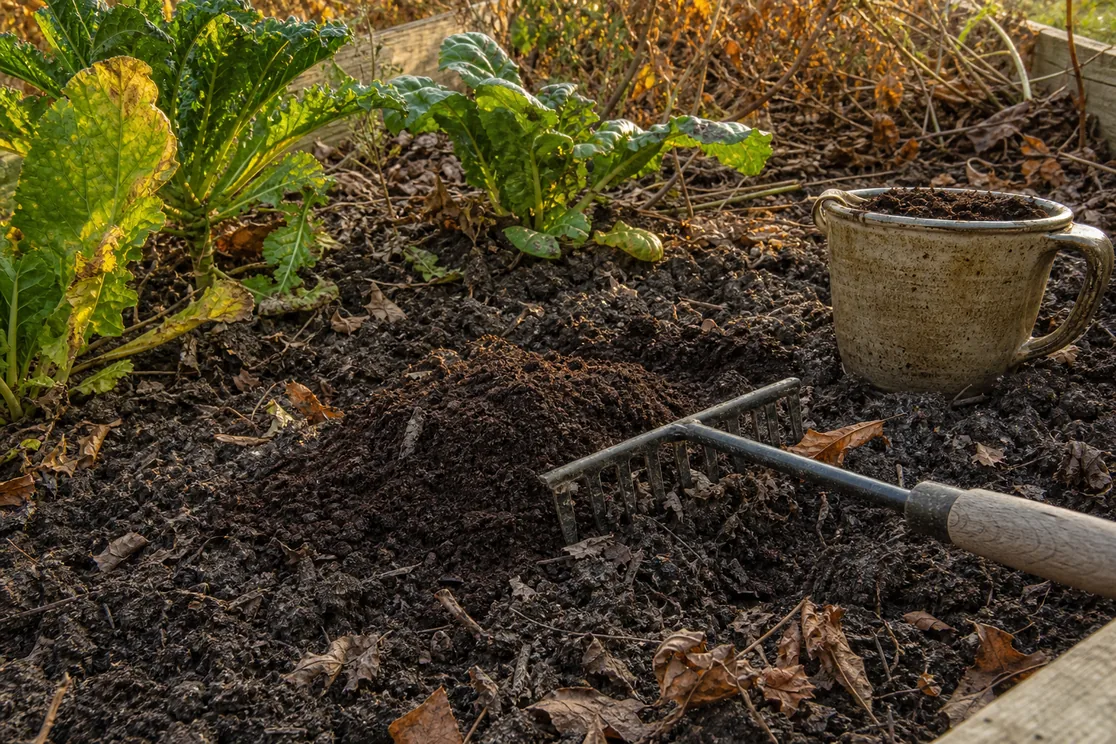
You can skip the compost pile, as long as you keep the layer thin. OSU recommends working about half an inch of grounds into the top 4 inches of soil. Spread them evenly with a rake so they mix with the soil instead of sitting in clumps.
For this reason, it works best in fall, on beds you are resting for winter. By spring, the microbes have finished their work and the brief nitrogen dip is long over. In addition, it pairs well with other slow additions such as leaf mold and aged manure. The post on soil organic matter explains why that steady supply of carbon matters more than any single amendment.
Avoid dumping grounds in thick piles around the base of a plant. A heavy layer can stay wet at the bottom, turn moldy and keep oxygen away from the roots.
Coffee Grounds as Mulch
Grounds look like a perfect dark mulch, and this is where many gardeners get into trouble. The trouble is that fine particles pack together as they dry. Illinois Extension warns that a thick layer can reduce water infiltration and even form a crust that sheds water.
If you want to use them on the surface, spread no more than about half an inch. Then cover them with a coarser mulch such as shredded leaves, straw or bark. The coarse layer keeps the grounds moist and stops them from crusting. The guide to organic garden mulch lists safe depths for fine materials and explains why grounds should stay thin.
Seedlings, Pots and Caffeine
Coffee grounds for plants and seedlings are a poor match. In a germination test run by Extension, lettuce seeds grew poorly and came up stunted when grounds made up 25 percent of the potting mix. Caffeine and other compounds in the grounds seem to hold back young roots. Some plants are more sensitive than others.
Therefore, keep grounds out of seed-starting mixes and small pots altogether. A good seed starting mix should be sterile, light and low in nutrients, and grounds are none of those things. Composted grounds are a different story, because the caffeine has broken down with everything else.
Do Coffee Grounds Keep Slugs Away?
The honest answer is: not reliably. Research at the USDA found that a caffeine solution of 1 to 2 percent, used as a soil drench, drove slugs away and killed many snails. That is a concentrated solution, far stronger than anything left in used grounds. By contrast, a ring of grounds around a lettuce plant has very little caffeine left.
A dry, gritty ring can slow slugs a little, but grounds soften in the first rain. Treat them as a soil amendment, and rely on proven methods such as traps, hand picking and evening patrols for slugs.
Worm Bins, Bokashi and Other Uses
Composting worms like coffee grounds in moderation. Add them in small amounts, mixed with shredded paper, and they help keep an indoor worm bin balanced. On the other hand, large doses at once make the bin too wet and can upset the worms.
Grounds also go into a bokashi composting bucket along with other kitchen scraps. Whatever route you choose, the finished product ends up in the soil as organic matter, which is where the real benefit of coffee grounds lies.
Warning: Keep used grounds away from dogs and cats. Caffeine is toxic to pets, and a dog that digs into a fresh heap of grounds can eat a harmful amount. Bury grounds under leaves and use a closed bin.
What Goes Wrong With Coffee Grounds for Plants
| Problem | Cause | Fix |
|---|---|---|
| Crust that water runs off | Thick layer of grounds used as mulch | Keep it thin and cover it with leaves or bark |
| Pale, yellowing plants after adding grounds | Microbes borrowing nitrogen from the soil | Add a little nitrogen fertilizer, or compost the grounds first |
| Mold on top of the soil | Wet clumps sitting on the surface | Rake grounds in or bury them in the compost pile |
| Seedlings stunted or failing to sprout | Grounds mixed into potting or seed mix | Use only fully composted grounds, or none, in pots |
| Compost pile dense and sour | Too many grounds, not enough browns | Keep grounds under 20 percent and add dry leaves |
| No change in soil pH | Used grounds are near neutral | Use a soil test and sulfur or lime instead |
Coffee Grounds for Plants Questions Answered
Which plants like coffee grounds?
No plant needs them, but most vegetables tolerate a thin layer worked into the soil. The main benefit is to soil life and structure, not to any particular crop.
Are coffee grounds good for tomatoes?
In compost, yes. Worked lightly into a bed in fall, they are fine too. Do not pile fresh grounds around tomato stems in summer.
Can I put coffee grounds on houseplants?
It is better not to, because in a small pot grounds hold too much water and can grow mold on the surface.
How often can I add coffee grounds to the garden?
A thin layer once or twice a year is plenty. Put the rest in the compost pile, where they do the most good.
Grounds for the Soil, Not a Cure-All
Coffee grounds for plants are not magic, and they are not a problem either. They are a free, steady source of organic matter that works best after a few months in the compost bin. Above all, keep the layers thin, keep them out of seed trays, and let the soil life do the rest.
Check out the author’s book here: The Year-Round Vegetable Garden for Beginners.


Leave a Reply