
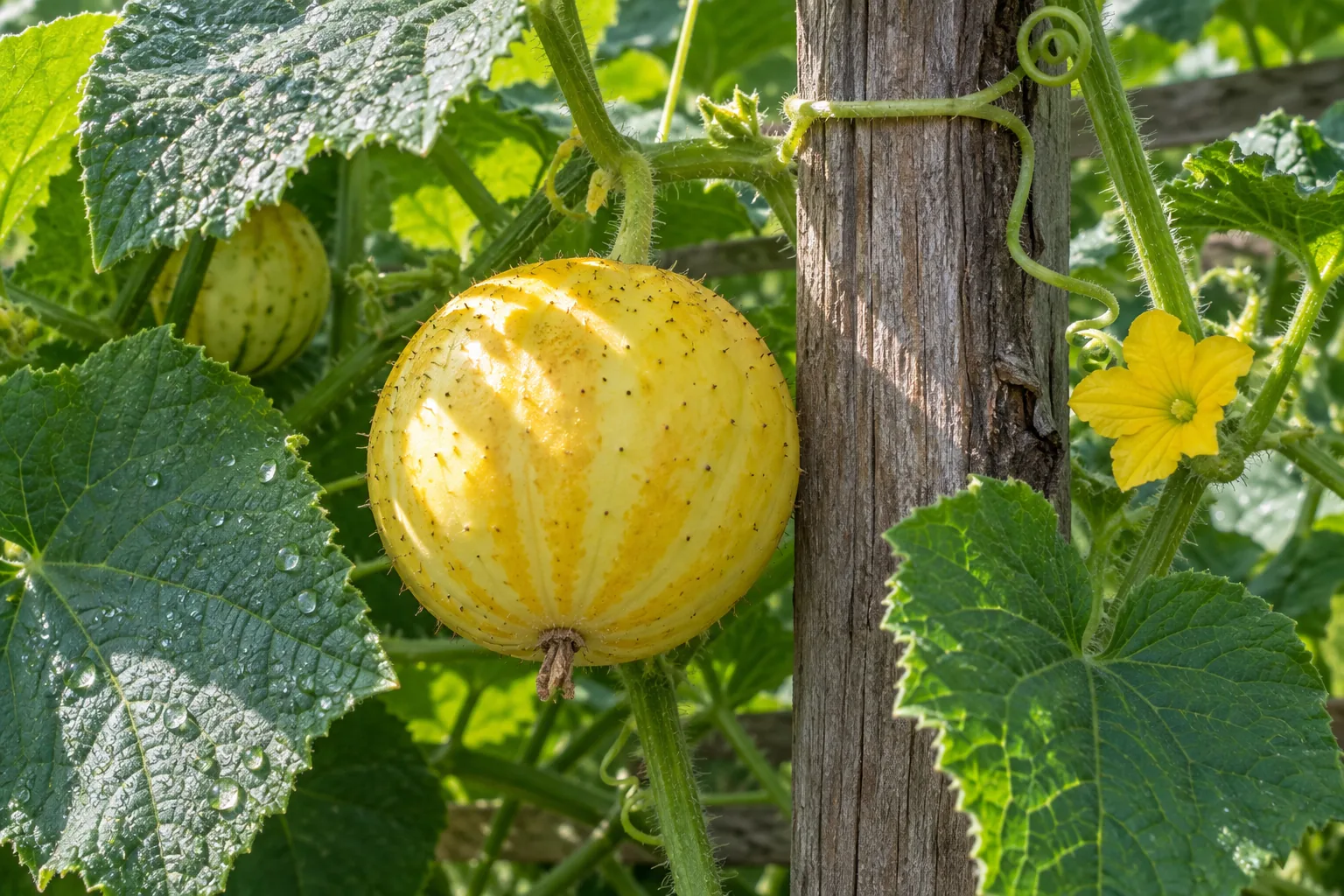
The first time I grew a lemon cucumber I nearly threw the fruit on the compost heap. Something, I was convinced, had gone badly wrong with the vine. The cucumbers were round, pale and about the size of a tennis ball. Nothing about them looked like the long green slicers I had grown for years. Then I cut one open, and found flesh that was crisp and sweet. There was none of the bitterness that ruins so many late summer cucumbers.
The name is a description of the fruit and nothing more, since this heirloom tastes of cucumber rather than citrus. It grows exactly like any other cucumber, which means it wants warmth, steady water and something to climb. In return, a single healthy vine will hand you fruit from midsummer until the first cool nights of autumn. Often it comes faster than the kitchen can keep up.
In this guide I walk through the whole season with this variety. First come the soil and the sun it needs, and the moment to sow. Then the trellis, and the watering routine that decides whether the fruit tastes sweet or sour. After that come pollination, the two pests that matter, and the harvest window, which is narrower than most beginners expect. Finally, I cover seed saving, because this heirloom is open-pollinated. Next year’s crop can come straight out of this year’s best fruit.
Lemon Cucumber at a Glance
| Question | Short answer |
|---|---|
| Days to maturity | 60 to 70 days from sowing |
| Sow outdoors when | Soil is 70 °F and nights stay above 55 °F |
| Sowing depth | 1/2 to 1 inch |
| Spacing | 12 inches in the row, or three plants per hill |
| Sun | 6 hours minimum, 8 to 10 hours far better |
| Soil pH | 6.0 to 6.8, well drained, rich in organic matter |
| Water | 1 to 2 inches a week, more once fruit sets |
| Support | Trellis 5 to 6 feet tall, or a cattle panel arch |
| Pick at | Pale yellow, tennis ball size, skin still thin |
| Yield | 8 to 10 pounds per 10-foot row |
What a Lemon Cucumber Actually Is
Botanically this plant is Cucumis sativus, the same species as every slicing and pickling cucumber in the seed catalogue. It reached American gardens in the 1890s and has stayed in circulation ever since. Gardeners passed it along, rather than any seed company keeping it alive. Because it is open-pollinated, the seed you save comes true. That is one reason it survived a century of hybrids bred for shipping rather than flavor.
Why Gardeners Keep Growing It
The flavor is the honest answer. The skin is thin enough to eat unpeeled, and the seed cavity stays small if you pick on time. Above all, the flesh carries almost none of the bitter compounds that build up in stressed plants. My family eats them out of hand, the way you would eat an apple. No long green slicer has ever managed that in this house.
Productivity is the second reason. One vine set out in late May will carry two or three dozen fruit over the season. For a household of four, I usually grow two plants. If you are choosing between old and modern varieties, the trade-offs sit in heirloom vs hybrid vegetable gardening.
The One Thing It Is Not
It is not a citrus fruit, and it is not a melon either, despite the shape. It is also not the “burpless” type in the strict sense, although it behaves like one in the kitchen. Maryland Extension notes that plant breeders removed the bitterness from burpless types deliberately. In this heirloom the mildness arrived the old way, through a century of gardeners saving the best fruit.
Where to Plant a Lemon Cucumber
Site choice matters more here than soil amendments, because a cucumber that starts cold never really recovers its vigor. Warmth and light are the two things you cannot add later in the season.
Sun, Warmth, and the Calendar
Give the vines six hours of direct sun as an absolute floor. Eight to ten hours is far better, if your garden can spare the spot. Maryland Extension puts the same numbers on it in its guide to growing cucumbers in a home garden. The same page warns that frost will injure the top growth of the plant. In practice, that means you sow two or three weeks after your last frost date, not on it.
Soil temperature is the number that actually governs germination. Illinois Extension is blunt about it: warm soil is necessary both for the seed to sprout and for the plant to grow properly. I wait for 70 °F at two inches deep, which in zone 6 falls in the last ten days of May. The reasoning behind that reading, and how to take it, is in soil temperature for planting. The wider season map sits in my planting schedule.
Soil for a Lemon Cucumber Bed
These are shallow-rooted plants with a large canopy, so they want soil that holds moisture without staying wet. Work two or three inches of finished compost into the bed before sowing. Aim for a pH between 6.0 and 6.8. Heavy clay is the one situation where I would build up instead of digging down. The ratio I use is in raised bed soil mix.
In a cool spring, lay black plastic over the bed a fortnight before sowing. It lifts the soil temperature several degrees and buys you an earlier crop. Illinois Extension recommends exactly this in its guide to growing cucumbers, particularly when it is paired with a floating row cover over the young plants.
Sowing Lemon Cucumber Seed
Cucumbers resent root disturbance, and that single fact shapes every decision about how to start them. Whenever the season is long enough, sow where the plants will grow.
Direct Sowing Is Usually Better
Sow seed half an inch to an inch deep, then thin to one plant every twelve inches in the row. The hill system works just as well: three plants in a group, with three feet between groups. Because germination is fast in warm soil, you will know within a week whether the sowing took. There is still time to sow again if it did not.
When to Start a Lemon Cucumber Indoors
North of zone 5, start seed indoors in peat pots three to four weeks before the frost-free date. The same trick brings fruit a fortnight earlier anywhere else. Illinois Extension warns against letting those transplants grow too large in their containers. An overgrown cucumber seedling sulks for weeks after planting out. Sow two or three seeds per pot, thin to the strongest, and plant the whole pot without touching the roots. The general comparison between the two methods is in direct sow vs transplant.
Succession for a Longer Season
One sowing of a lemon cucumber will produce for six or seven weeks before the vine tires and powdery mildew moves in. Therefore I make a second sowing around the first of July, which carries the harvest into late September in most years. The arithmetic behind that habit is in succession planting.
Trellising the Lemon Cucumber Vine
Left on the ground, these vines sprawl six to eight feet in every direction and bury a quarter of the bed. Trained upward, they occupy a strip a foot wide and produce more fruit per square foot than they ever did lying down.
What Vertical Growing Buys You
Maryland Extension lists the benefits plainly: higher total yield, cleaner fruit with no soil rot, and faster drying foliage. The picking period lasts longer too, because you can actually see what is ready. Bees reach the flowers more easily on a trellis, too, which matters more for this crop than for most.
Use a cattle panel, a sturdy net, or an A-frame five to six feet tall. Set it in place before you sow, rather than after. The tendrils will do most of the climbing themselves, although a young vine needs guiding onto the support for the first fortnight. My construction notes are in vegetable trellis, and the wider approach to growing upward is in vertical vegetable garden.
When Not to Trellis
In an exposed garden, wind whipping a tall trellis can do more damage than the sprawl it prevents. Illinois Extension makes the same point, and suggests wire cages as the compromise. Round fruit is also heavier for its size than a long slicer. A net with a wide mesh holds these cucumbers better than a string system that cuts into the stems.
Water, Mulch, and Feeding
A cucumber is almost entirely water, and the fruit is where the plant sends most of what it drinks. Consequently, uneven watering shows up on the plate as bitterness and misshapen fruit rather than as wilted leaves.
Steady Moisture, Never a Flood
Aim for one to two inches a week from rain and hose together. Raise that as soon as the fruit begins to swell. Maryland Extension advises watering more frequently once fruits develop, and warns that working among wet vines spreads disease. Water at the base in the morning, therefore, and keep the foliage dry. Drip is the least troublesome way to do it, as I explain in drip tape installation.
Soggy soil causes its own troubles, and shallow cucumber roots suffocate quickly in a bed that never drains. The symptoms are easy to misread, so I keep a list of them in signs of overwatering. The underlying principles are in efficient watering techniques.
Mulch After the Soil Warms
Once the ground is properly warm in early summer, lay two inches of straw or shredded leaves around each plant. The mulch keeps the moisture even, which is precisely what prevents bitter fruit. It also stops the weed seeds that would otherwise compete with those shallow roots. My reasoning about timing and materials is in organic garden mulch.
Feeding Without Overdoing It
Cucumbers have a moderate appetite rather than a large one. Side-dress a week after the first blossoms open, and again three weeks later if the leaves look pale. Too much nitrogen gives you a magnificent vine carrying almost no fruit. That is the commonest mistake I see in a first cucumber season. A dilute liquid feed is plenty, whether from compost tea or from the recipes in organic plant food.
Flowers but No Fruit
This is the complaint I hear most often in July. The cause is almost always pollination, rather than anything the gardener did wrong.
How the Flowers Work
A lemon cucumber is monoecious, which means each plant carries separate male and female flowers. The first ten to twenty blossoms are usually male, so an empty first week of flowering is normal rather than alarming. The female flowers are the ones with a tiny fruit already formed behind the petals. Each needs eight to twelve bee visits before it swells into a full, straight cucumber, a figure Maryland Extension confirms.
Poor fruit set therefore points at the bees, not the vine. Plant borage, zinnias or sunflowers within a few steps of the bed. Avoid spraying anything at all while the flowers are open. My longer answer is in pollinator friendly garden. In a desperate season you can move the pollen yourself with a soft brush. The method is the one in hand pollinating squash.
Pests and Diseases of the Lemon Cucumber
Two problems account for nearly every failed cucumber vine I have seen, and both are manageable if you act before midsummer.
Cucumber Beetles and Bacterial Wilt
Striped and spotted cucumber beetles chew the leaves, but the real damage is the bacterial wilt they carry from plant to plant. Illinois Extension explains that the bacterium overwinters inside the beetles themselves. By the time the vines collapse, it is far too late to intervene. That is usually the moment the first fruits are half grown. Control the beetles from the moment the seedlings emerge, then.
Row covers over the young plants are the cleanest answer. Remove them the day the first flowers open, so that the bees can get in. The method is in floating row covers. A ring of Blue Hubbard squash around the patch draws the beetles away from the cucumbers. I describe the trick in trap crops.
Powdery Mildew and the Late Season
White patches on the upper leaves in August are powdery mildew. Maryland Extension’s key to common problems of cucumbers records that it infects between 50 and 90 °F. Almost any level of humidity will serve. Spacing, trellising and morning watering slow it down; a vine that has already fruited for six weeks is usually allowed to finish. What I do about it in detail is in powdery mildew treatment.
Finally, plant something the beetles dislike nearby rather than leaving bare ground between the hills. Radish and nasturtium both earn their space in a cucumber bed, as set out in my vegetable companion planting chart.
Harvesting a Lemon Cucumber at the Right Size
Here is where this variety catches people out, because the name suggests you should wait for a deep lemon color. You should not.
The Window
Pick when the fruit is pale yellow or still faintly green, roughly the size of a tennis ball. The skin should be thin enough to dent under a thumbnail. A deep yellow or orange fruit has gone past its moment. The skin toughens, the seeds harden, and the flesh turns watery and bitter. Illinois Extension puts the general rule for all cucumbers the same way, which is to pick before the seeds become hard.
Check the vines every other day at the height of summer. A fruit can go from perfect to overgrown in forty-eight hours of July heat. Pick with pruners or a sharp twist rather than a pull, since a torn stem lets disease into the vine. The signs to look for across the whole vegetable garden are in harvesting vegetables.
Why the Missed Fruit Matters
One overripe cucumber left hanging tells the plant its work is finished, and flower production slows within days. Illinois Extension states it outright: if a single cucumber is left to ripen on the vine, the vine stops producing. Consequently, I pick the ugly ones too and put them in the compost. It costs nothing, and it keeps the harvest running for weeks longer.
In the Kitchen and in the Seed Jar
The thin skin of this heirloom needs no peeling, although the tiny spines rub off under a tap in a second or two. Cut crosswise, the fruit gives you coin-sized slices; cut in wedges, it goes straight into a lunchbox with a little salt. Pickled whole in a wide-mouth jar, small fruits keep their crunch better than the long varieties do.
Home-canned pickles are a low-acid vegetable in a vinegar brine, so follow a tested recipe from your state extension service rather than an old family ratio. Maryland Extension’s cucumber pages point to the same tested sources for preserving.
Storage is short, because thin skin and high water content are not a keeping combination. A week in the crisper drawer at around 45 to 50 °F is realistic, and Maryland Extension gives those figures for cucumbers generally.
Saving Seed for Next Year
Choose one good fruit early in the season and leave it on the vine until it turns deep orange and hard. That takes about five weeks past eating size. Scoop out the seeds with their gel and ferment them in a jar of water for three days. Then rinse them and dry them on a screen out of the sun. Store them cool and dark, and expect them to stay viable for five years.
Keep in mind that other cucumber varieties in the same garden will cross with this one. The effect shows up only in next year’s plants. The details sit in saving vegetable seeds and in vegetable cross pollination.
Frequently Asked Questions
Does a lemon cucumber taste like lemon?
No, and the name refers only to the shape and the color of the fruit. The flavor is mild, sweet cucumber, generally less bitter than a long green slicer grown in the same bed.
How long does a lemon cucumber take to grow?
Most seed packets say 60 to 70 days from sowing, and that matches what I see in zone 6. A cool June pushes the first harvest back a week or more, which is another argument for warm soil at sowing.
Can I grow a lemon cucumber in a container?
Yes, provided the pot holds at least five gallons and you give the vine a trellis. Container plants dry out fast in midsummer, so expect to water daily. The mix I use is in best soil for container vegetables.
Why are my cucumbers bitter?
Bitterness comes from stress, and uneven watering is the usual culprit, followed by heat and crowded roots. Steady moisture and a layer of mulch fix it in most gardens within a fortnight.
Do I need more than one plant?
Two vines feed a family of four comfortably through the summer, with enough surplus for a few jars of pickles. A single plant is plenty if you are gardening for one or two people.
Are the yellow ones safe to eat?
They are safe, but a deep yellow fruit has hard seeds and tough skin, and the flavor has turned sour. Pick it anyway and compost it, because leaving it on the vine costs you the rest of the harvest.
A Century-Old Cucumber Worth the Space
The lemon cucumber earns its place in my garden every summer, and not because it is unusual to look at. It produces heavily, and it tastes better than anything I can buy. The seed comes true, so next year’s crop costs nothing but a jar and a label.
Give it warm soil, something to climb, and water it steadily rather than generously. Pick it pale and small, every other day, and you will find yourself giving fruit away by August. That is a fair return on a packet of seed and twenty feet of trellis.
Check out the author’s book here: The Year-Round Vegetable Garden for Beginners.


Leave a Reply