
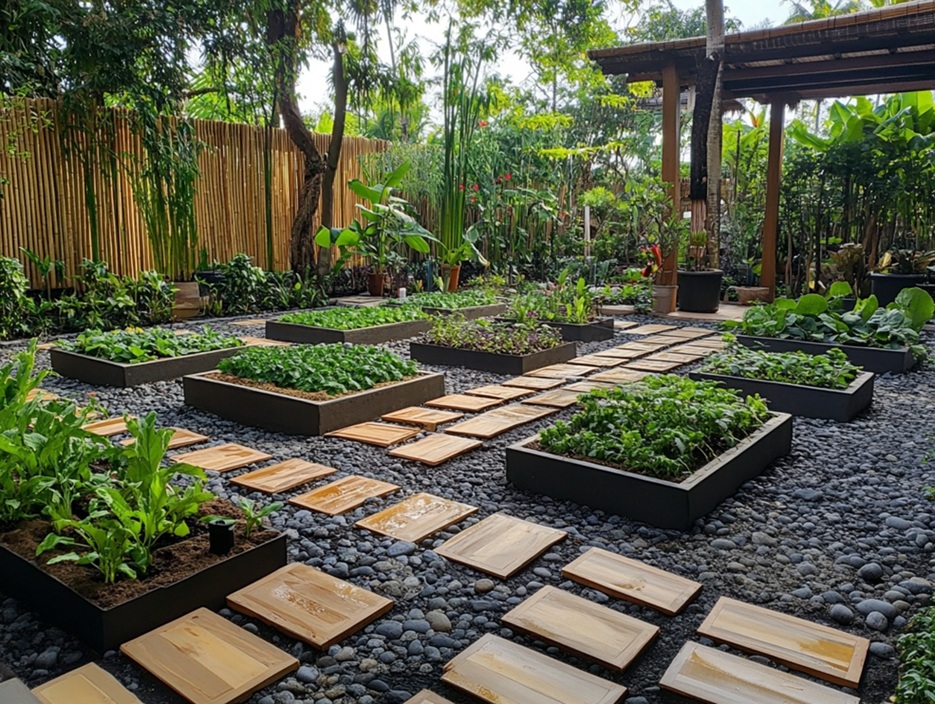
I did not set out to build a feng shui garden. Rather, I set out to stop walking through mud every time I wanted a lettuce. Then a neighbor who practices feng shui walked my plot with me one spring. Most of what she said was advice I already followed for other reasons. Put the water where you can see it, and do not let the path run straight from the gate to the far fence. Give yourself a place to sit, and keep the entrance clear of hoses and barrows. Her reasons were about chi, whereas mine were about sunlight, drainage, and my knees. Even so, we ended up drawing exactly the same garden on the same piece of paper.
That is the point of this guide, and the reason I finally wrote it. A feng shui garden is a garden laid out with intention. Moreover, every rule in the tradition that survives contact with a vegetable bed turns out to have a practical twin. Accordingly, I will give you both, so you can take the layout on whichever terms you like. The plot that comes out of it is calmer to work in, easier to water, and better for pollinators, and none of that depends on believing anything at all.
Feng Shui Garden at a Glance
| The short answer | |
|---|---|
| What it is | A vegetable plot laid out with intention: sun, water, paths, and rest all placed on purpose |
| The five elements | Wood (plants and timber), fire (color and light), earth (soil, stone, clay), metal (tools, edging, chimes), water (a dish or a barrel) |
| The key rule | Chi flows where you flow: curved paths, a clear entrance, no dead corners |
| Where the beds go | South-facing, on level ground that drains, with tall crops on the north side |
| Where the water goes | Where you can see it from the house, changed twice a week in summer |
| Balance | Asymmetrical, not mirrored: a tree on one side, a bright bed on the other |
| Time to lay out | One afternoon with string and stakes, then a season of adjusting |
What a Feng Shui Garden Is
Feng shui, to begin with, is the Chinese art of placement. The two words mean wind and water. Originally, the practice was a way of siting houses and graves out of the wind and above the flood. Over centuries, it grew a large vocabulary of energy, direction, and element. However, at its root it asks one question, and that question is the one every gardener asks. Where should this go so that it thrives and so that I enjoy it?
In a feng shui garden, the answer is organized around chi, the energy that is said to move through a space. Ideally, chi is meant to flow gently, like water in a meandering stream, and not rush like water in a pipe. By contrast, it stagnates in cluttered corners and races down long straight lines. Whether or not you believe in chi, you have certainly felt both things. For instance, a shed corner full of broken pots feels heavy. Equally, a path that runs like a ruler from gate to fence pulls you through the garden without looking at it. The tradition names those feelings, and afterwards it tells you what to do about them.
For my part, I treat the vocabulary as a checklist. It reminds me to think about the entrance, the corners, the balance of heavy and light, and the place to rest. Those are exactly the things I skip when I plan a garden by yield alone. Yet they are the things that decide whether I spend time out there in August.
Siting the Feng Shui Garden
Placement comes first in the tradition, and likewise it comes first in horticulture. A feng shui garden wants an open view to the south and a protected back to the north. It also prefers a gentle rise to a hollow, for the same reasons. The classic image, for instance, is an armchair: hills behind, open ground in front, and the house or the garden in the seat. That is also, almost word for word, the site that a vegetable garden needs.
Illinois Extension’s guide to starting a garden with a plan asks for three things. First, it wants a minimum of six hours of direct sun each day. Second, it wants loose and level soil that drains after rain. Third, it wants a spot away from trees and shrubs that cast shade. It adds that tall crops such as corn and tomatoes belong on the north side of the plot. There, at least, they do not shade the rest of the beds. In feng shui terms, the tall wood element stands at the back and the low, bright crops face the sun. The reasoning differs, but the drawing that comes out of it is the same.
Before you commit to a spot, then, watch the light for a few days. Fortunately, the sun map I describe in garden sun map takes a day and saves years of wondering why the peppers sulk. Also avoid the low spot where cold air and water both collect. If the only sunny ground slopes, run the beds across the slope rather than down it, so rain soaks in instead of racing off. A racing stream of runoff is bad chi and bad soil management at the same time.
Paths and the Flow of Chi
Paths carry chi the way they carry you, and the tradition dislikes a straight shot from the gate to the far end. It prefers a path that bends, so that the eye and the feet slow down. I resisted this for years, because a straight path is easier to build. Eventually I laid a gentle dogleg through my main plot, and the garden felt twice as large. Because you cannot see the whole thing from the gate anymore, you walk into it.
A feng shui garden also asks for a clear, welcoming entrance, and here the practical twin is obvious. If the gate sticks, the hose lies across the opening, and a wheelbarrow blocks the first bed, you visit less. As a result, the weeds win the summer. Instead, keep the entrance open, put the wheelbarrow at the far end, and hang the hose on a hook beside the tap.
In practice, width matters more than shape when you build the paths. Main paths should take a wheelbarrow, which means three feet at least. Similarly, the paths between beds need eighteen inches so you can kneel. Generally, the wider ones I surface with wood chips over cardboard and the narrower ones with straw. Likewise, I cover both materials in organic garden mulch. A dry path is a path you use in March. In addition, a used path is where the chi goes, if you like the word, or where the gardener goes, if you do not.
The general plan of beds and paths, with the numbers, is in vegetable garden layout. Lay that out first, and afterwards soften it with the bends, the seat, and the water that this guide adds.
The Five Elements in a Vegetable Plot
The five elements of a feng shui garden are wood, fire, earth, metal, and water. Each is meant to be present, and none is meant to dominate. In a vegetable garden the first three take care of themselves, and the last two need a small deliberate act.
First, wood is the plants themselves and the timber around them. Raised beds of cedar, a bean trellis, and every leaf in the plot all count. If you build the frames yourself, for example, the designs in vegetable trellis are wood and nothing else. A garden made only of wood, however, is a garden of green rectangles, and the tradition is right that it feels flat.
Second, fire is color, warmth, and light in every form. For instance, marigolds and nasturtiums along the bed edges, a row of red-stemmed chard, and the tomatoes and peppers themselves bring it in. Besides, the flowers do double duty, since the ones I list in edible flowers also feed the pollinators and the salad bowl. In addition, a solar lantern by the seat keeps the garden in view after supper, which is the fire element’s practical job.
Third, earth is the soil, the stone, and the clay. For example, a gravel path, a few large stones set at a bend, and terracotta pots ground the design. In the beds, the soil is the earth element. Consequently, the mix I use in raised bed soil mix is the most important placement decision in the whole garden.
Fourth, metal is the element that vegetable gardeners most often forget. Steel edging, for instance, a galvanized water tank, a metal obelisk for the beans, or a wind chime at the far corner: all serve equally. The tradition says metal brings clarity and structure, and a crisp steel edge along a bed does exactly that to the eye.
Finally, water is the last, and I give it its own section, because it is the one that changes the garden most.
Water in the Feng Shui Garden
Water represents wealth in the tradition, and a feng shui garden without visible water is thought to leak prosperity. Set aside the wealth and keep the instruction anyway, because still water is the best thing you can add to a vegetable plot. Specifically, a birdbath, a half barrel, or a shallow dish on a stump brings birds, which eat caterpillars, and bees, which pollinate the squash.
The University of Maine’s page on providing water for pollinators gives the practical rules. For example, add stones that stand above the surface so insects can land and drink without drowning. Then change the water two or three times a week in warm weather so mosquitoes cannot breed in it. Above all, keep it filled all season, because a source that dries up in July is worse than none. Certainly that is a small chore, and the return is a plot alive with wings.
The tradition says the water should be seen from the house, and I agree for a different reason. A dish I can see from the kitchen window gets refilled, whereas one behind the shed goes green. Ideally, place it where the morning sun catches it and where the path bends, so you pass it every time you go in. Meanwhile, the bigger water story, the rain barrel and the gutter, is in rainwater harvesting for vegetable gardens, and a barrel counts as water and metal both.
Meanwhile, moving water, such as a small solar fountain, is prized in feng shui and is optional in a vegetable garden. The sound is pleasant, and the birds like it as much as I do. The one rule, in that case, is that the flow should point toward the house, not away from it. In practice, that means the pump and the overflow should not drain across the path.
Balance Without Symmetry
Beginners who hear the word harmony usually reach for symmetry, and the tradition tells them not to. A feng shui garden balances visual weight, not shape. A tall tree on one side is answered by a wide, bright bed on the other. As a result, the two feel level even though they do not match.
Utah State University Extension makes the same case in its note on feng shui and the landscape. Symmetrical balance, where one side mirrors the other, looks formal and rigid. Furthermore, it falls apart the day one shrub dies and no matching replacement exists. Asymmetrical balance, where different sizes and shapes carry the same visual weight, is softer, more welcoming, and easier to maintain. If a plant fails in that kind of design, nobody notices the gap.
In a vegetable plot, this translates into a simple rule. To begin with, put the heavy things, the compost bins, the water tank, and the shed, on one side. Then answer them on the other side with the tallest and brightest planting, the sunflowers and the bean tower. Vary the bed lengths a little as well, so the plot does not read as a grid. The compost system in composting is an earth element and a heavy one, so it wants a light, colorful counterweight across the path.
Likewise, yin and yang belong in this part of the plan. Yin is shade, stillness, and soft surfaces, whereas yang is sun, movement, and hard ones. A plot that is all sun and gravel tires the eye, whereas one that is all shade grows nothing. Hence, keep a corner of dappled shade with a bench and the crops I list in shade tolerant vegetables, and let the rest blaze.
Plants for a Feng Shui Garden
The tradition assigns crops to elements, and on the whole the assignments are sensible. Leafy greens and tall crops are wood, and tomatoes, peppers, and chilies are fire. Roots such as carrots, beets, and potatoes are earth, while white-flowered and silver-leaved plants, such as garlic chives and sage, are metal. Cucumbers and melons, being mostly water, are naturally water.
A bed that contains all five is, not by accident, also a bed with good companion planting. In other words, the tradition asks for a mix of heights, root depths, and flowering times. That, in turn, is the same mix that keeps pests confused and the soil covered. Indeed, the pairings in vegetable companion planting chart and the herbs in herb companion planting fill out each element without any extra thought.
There are two things the tradition dislikes, and I agree with both. First, dead plants left standing carry stagnant chi, and they also carry disease into next year. So pull them out and compost them before the season ends. Second, thorny plants pointed at the path are a bad omen, and they are also a torn sleeve. Therefore, put the gooseberries at the back where nobody brushes past.
Near the seat and the entrance, rounded, lush leaves are favored over spiky ones. Squash, chard, and lettuce fit that description well. Instead, save the onions and the leeks, handsome as they are, for the middle beds.
A Place to Sit
Every feng shui garden includes a place of rest, and I did not have one for the first ten years I gardened. A bench, however, changes how you use a plot from the first day. To begin with, you sit, and you notice the aphids on the kale before they become a problem. Then you see which bed the sun leaves first in the evening. Finally, you drink the coffee you carried out and forgot about.
Accordingly, put the seat with its back to something solid, a fence, a hedge, or the shed wall, and facing the garden. The tradition calls that the commanding position. In plain terms, it is the seat from which you can see the gate and everything in between. Give it a little shade after noon as well, from a tree or a vine. Lastly, a small table for the seed packets and the notebook finishes it.
Nearby, the tradition also likes a wind chime or a bell, which is a metal element that moves. I have one, and I make no claims for it. Still, it tells me when the wind has shifted and the row covers need pegging down. The pollinator friendly garden I planted beside the bench does more for the mood of the place than any ornament.
Keeping the Garden Clear
Clutter, of course, is the enemy of chi and of everything else. The tradition’s most repeated instruction is to keep the garden tidy. Specifically, it means the corners, the entrance, and the view from the seat. A pile of broken pots, a stack of old bamboo canes, and a dead shrub by the gate all count equally.
For that reason, I keep one screened corner for the things a garden needs and nobody wants to look at. There the compost bins, the spare pots, and the stakes live behind a panel of woven willow on the north side. That corner is heavy, so, in turn, the bed across from it is the brightest in the plot. Everything else in the garden stays open to view.
Once a season, in early spring, I therefore walk the garden the way my neighbor did. Where does the eye stop, and where do my feet hesitate? What is blocking the path, the view, or the water? Happily, the answers are always small, and equally always fixable in an hour. That walk is the whole of the practice as far as I follow it. In short, a plot that gets it every year is, by any definition, a feng shui garden. The rest of the planning, from bed sizes to sowing dates, is in starting a vegetable garden.
Frequently Asked Questions
What is a feng shui garden?
A garden laid out with intention according to the Chinese art of placement. It asks for a protected site facing the sun, curved paths, a clear entrance, and visible water. It also wants all five elements, a balance of heavy and light, and a place to sit. Every one of those, moreover, has a practical reason as well.
Which direction should a feng shui garden face?
South, or southeast, with something solid to the north as shelter. That gives the plants the six or more hours of sun that vegetables need and shelters them from the coldest wind. Meanwhile, tall crops go on the north side so they do not shade the rest.
Do I need a water feature?
A birdbath or a shallow dish with stones in it is certainly enough. Change the water twice a week in summer, keep it filled, and put it where you can see it from the house. In return, it brings the birds and bees that a vegetable garden needs.
Can a feng shui garden have straight raised beds?
Yes, the beds can certainly be rectangles. Rather, it is the paths, the entrance, and the placement of water and seating that carry the flow. Bend the main path once, and then soften the bed corners with flowers.
What plants are bad feng shui?
Dead plants left standing, thorny plants pointed at a path or a door, and anything that blocks the entrance. In short, pull the dead ones, move the thorny ones to the back, and keep the gate clear.
Check out the author’s book here: The Year-Round Vegetable Garden for Beginners.

Leave a Reply